
Alumni Remembered - Dr Hekmat Beshir Antaki (1923-1993)
Remembering Dr Hekmat Beshir Antaki - PhD Chemistry, Queen Mary College, University of London, 1950
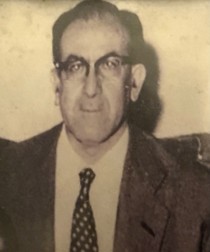
Dr Hekmat Beshir Antaki, c. 1970
Dr Hekmat Beshir Antaki was born in Cairo on 14 April 1923. Orphaned at the age of five, he was raised by an uncle. An Egyptian Government scholarship brought him to London to pursue doctoral studies in organic chemistry at Queen Mary College, under the supervision of Professor J. R. Partington, D.Sc., M.B.E. (1886–1965) — a towering figure in twentieth-century British chemistry, best known for his monumental four-volume A History of Chemistry.
At Queen Mary, Antaki’s research focused on the synthesis of nitrogen-containing ring compounds, key building blocks for many important drugs. In collaboration with V. Petrow of The British Drug Houses, he published three papers in the Journal of the Chemical Society in 1951. The first corrected a structural error that had persisted in the literature since 1911. The second reported the first systematic synthesis of steroid-based ring compounds for biological testing, combining academic and pharmaceutical chemistry in a way that was ahead of its time. The third explored compounds related to vitamin B12, contributing to a field then in its infancy.
After completing his doctorate, Antaki returned to Egypt to join the Research Institute for Tropical Medicine in Cairo, focusing on diseases endemic to the region, including malaria. Between 1958 and 1967, he published five further sole-authored papers in leading journals, including the Journal of the American Chemical Society, Journal of Organic Chemistry, and Journal of the Chemical Society. That a sole author based in Cairo could repeatedly publish in these journals, without the backing of a major Western university, speaks to the quality of his work.
His most consequential paper, published in 1963, described a method for synthesising hexahydroquinoline compounds — molecules that would later become major pharmaceutical candidates. In 2017, a study in Nature Microbiology highlighted hexahydroquinolines as potent antimalarials, and the scaffold Antaki first systematically synthesised has since attracted research interest across fields including cardiovascular medicine and Alzheimer’s disease. His 1963 procedure was formally designated the “Antaki method” in a 2026 review in Frontiers in Chemistry, alongside the Hantzsch and Stankevich reactions.
The industrial significance of his work is reflected in four independent patent families filed between 1977 and 2014 — by companies including Imperial Chemical Industries, E. R. Squibb & Sons, and Gilead Sciences — each citing his published research as prior art."
Antaki’s final paper was received by the Journal of the Chemical Society in July 1966. In 1971, his wife died of cancer, leaving him as the sole parent to three young children. He raised them on a government pension in Cairo while continuing to respond to international scientific inquiries about his methods and compounds. He never sought recognition for his pioneering work.
Fluent in five languages, Dr Antaki was known for his generosity, quiet dignity, and devotion to his children. He was rarely without a smile, cared for stray cats, and followed scientific literature until the end of his life. He passed away on 31 December 1993 at the age of seventy.
The Antaki method was named without his knowledge, and after his death. The foundations of that work were laid at Queen Mary College.
Charles H. Antaki, engineer, is his son.