Research / Department Research / Drama / Drama Research Projects
Introduction
Department Research
Featured Research
Research Events
Research News

Component 1, Relative Values: Research Process

RELATIVE VALUES (2016-17): Creating a prototype toolkit to enable arts organisations to measure the impact of their own work in fragile urban territories.

LINK TO OVERALL INVESTIGATION ON RELATIVE VALUES: In previous research (The Art of Cultural Exchange (2019); The Point of Culture 2nd Ed. (2018)), HERITAGE demonstrated how hyper-local arts organisations based in fragile territories can make a unique and dynamic contribution to social development, and  provide entrepreneurial spaces in which experimentation and risk are possible. In the four components of this multi-platform Research Output HERITAGE collaborated with Leandro VALIATI [Professor in Cultural Economics  and Director of NECCULT, a research centre at UFRGS, Porto Alegre, Brazil] to develop a methodology which would enable arts organisations to measure the socio-economic impact of their work. In component one, HERITAGE and VALIATI established a pilot project with four arts organisations from Brazil and the UK to develop a methodology that would enable arts organisations to produce quantifiable socio-economic evidence about cultural value.  

1.1.1. ARTICLE: ‘Creative Economy and disparities’ (2018)

Research Output (Physical Item)

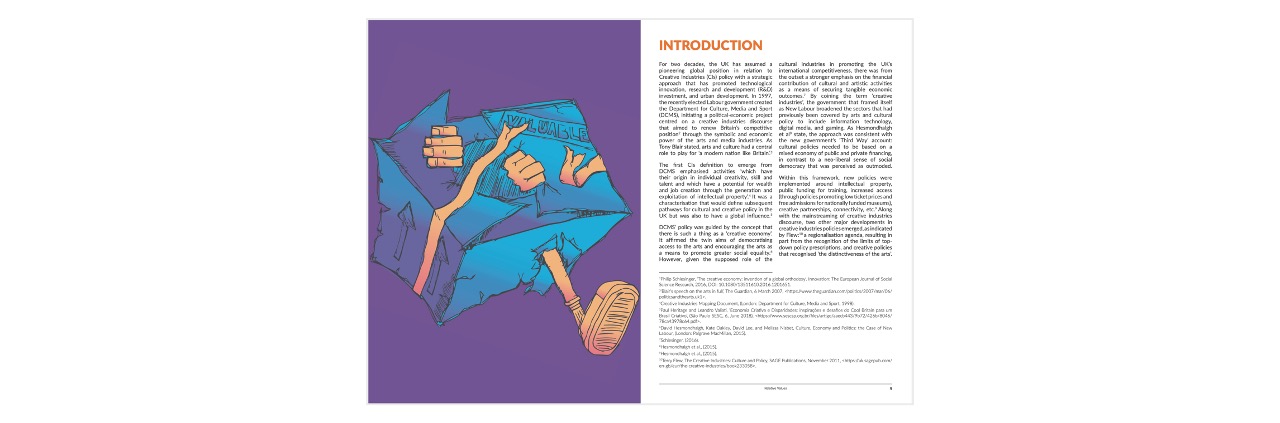
‘Creative Economy and disparities: inspirations and challenges from Cool Britain to a Creative Brazil’ (2018). Leandro VALIATI and Paul HERITAGE. Journal from the Research and Training Centre (SESC), n.6.

The foundational ideas for Relative Values were first laid out in the position paper 'Creative Economy and disparities: inspirations and challenges from Cool Britannia to a Creative Brazil' (2018) which followed a joint presentation by HERITAGE and VALIATI at the 10th Congress of the Brazilian Association of Researchers in Organisational Communication and Human Resources (Abrapcorp) in May 2016.

1.1.2 INTRODUCTION: Relative Values Report (2020)

Research Output (Physical Item)

With AHRC funding under the ‘Cultural Value’ theme [Relative Values: AH/P014658/1] HERITAGE set up a collaborative process between four arts organisations to identify and co-create key indicators that they could use to produce data about the transformative impact of their work on young people’s lives and on fragile urban territories in Brazil and the UK. The introduction provides a detailed overview of the project, which involved four partner organisations: Battersea Arts Centre (BAC) and Contact Theatre Manchester (Contact) from the UK, and Redes da Maré (Maré Development Networks) and Agência de Redes para Juventude (Agência) from Brazil. These four arts organisations were identified as collaborators because of their vision for the social role of theatre in relation to local communities, as well as their long-standing commitment to international knowledge-exchange programmes between Brazil and the UK. HERITAGE had first brought BAC, Contact, Agência and People’s Palace Projects together in 2013 to set up The Agency UK – an action research programme on youth creative entrepreneurship that will continue to 2021, with over £1M funding from the Calouste Gulbenkian Foundation and UK National Lottery. Maré Development Networks and Agência are long-time collaborators of PPP in Rio de Janeiro. Representatives of both BAC and Contact had visited Maré Development Network's arts centre (Centro de Artes da Maré) as part of previous research visits to Brazil in 2015. 

Your browser does not support the video tag.

1.1.3 UK workshops, October 2017

Research Output

Presentation Slideshow: Relative Values workshops with BAC and Contact Theatre Manchester. UK, October 2017.

HERITAGE led two-day workshops at both Contact Theatre and BAC to discuss the research instruments and indicators. Workshops included the presentation of a draft of the research indicators, which were then further developed with UK partners according to local needs. Attendees included representatives from the senior leadership team from BAC and Contact Theatre, as well as participants from the action-based research project The Agency UK, an existing collaboration between BAC, Contact Theatre, Agência and PPP. 

Your browser does not support the video tag.

1.1.4 Rio workshops, October, 2017

Research Output

Presentation Slideshow: Relative Values workshops with Agência and Maré Development Networks, Rio de Janeiro. October, 2017.

Two-day workshop led by HERITAGE at Casa Rio to discuss the research instruments and indicators. Workshop included the presentation of a draft of the research indicators which were then further developed with Brazilian partners according to local needs. Attendees included representatives from the senior leadership team from Agência and Maré Development Networks. 

1.1.5 Research instruments and data collection

Research Output

Questionnaires in both English and Portuguese were finalised by VALIATI (NECCULT) and HERITAGE (QMUL), based on the workshops and refined in discussion with all partners. The academic research team (NECCULT/PPP) gathered secondary data of socio-economic indicators that characterise each territory. There were two stages to the primary data collection with each organisation:   

a) the academic research team collected information about each partner organisation in the form of a structured questionnaire;  

b) the partner organisations applied a survey of approximately 40 questions to 100 of young people who participated in their projects.  

Specific training in data collection was undertaken with each organisation based on their capacity, context and experience. 

1.1.5.1 Questionnaire

Research Output (Physical Item)

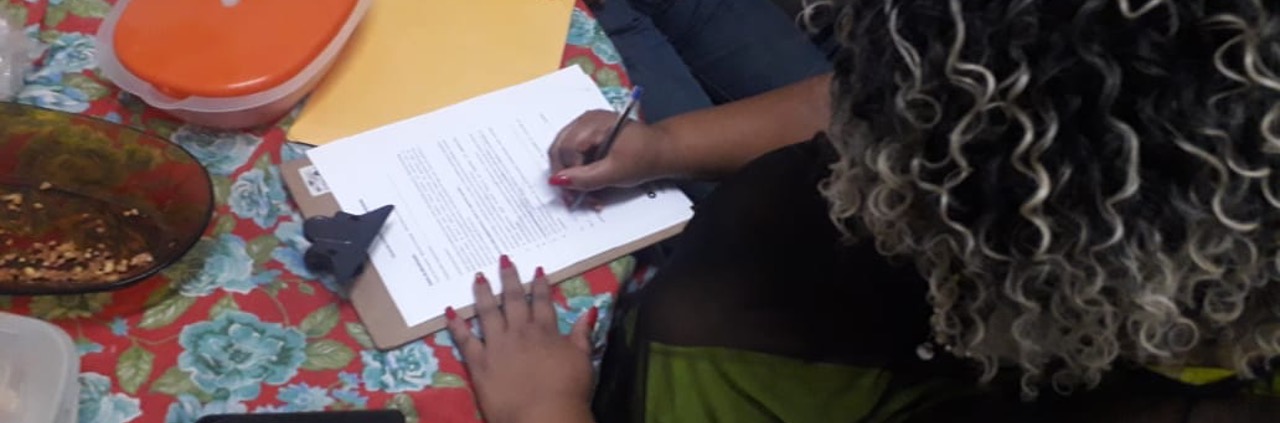
A questionnaire (in English and Portuguese) focusing on the organisation was prepared and applied by the research team with staff of each of the four arts organisations.

1.1.5.2 Questionnaire

Research Output (Physical Item)

A questionnaire for participants (in English and Portuguese) was prepared and applied by each of the arts organisations' research teams with 100 individuals.