
Pillar Two - Fundamentals and Practice
/filters:format(webp)/prod01/channel_123/centre-for-commercial-law-studies/media/ccls/images/events/Pillar-Two.png)
The Centre for Commercial Law Studies, Queen Mary University of London, is pleased to offer an Executive Education course on the fundamentals and practice of Pillar Two, in collaboration with STI Taxand and WTL. The course can be used in preparation for the CIOT’s Pillar Two Award, as the syllabus is specifically designed for candidates sitting the December 2026 examination.
The course provides a structured, syllabus-driven and practice-oriented approach to the OECD Global Anti-Base Erosion (GloBE) Rules, equipping participants with the technical depth, computational skills and interpretative capability required to succeed in the Pillar Two Award and to apply Pillar Two rules confidently in real-world multinational contexts.
The course reflects the full scope and weighting of the Pillar Two Award syllabus, combining academic rigour with the practical insights of leading international tax practitioners.
This course will offer live-online seminars with leading experts, which will be recorded and available in your study materials. The study materials will also include slides, handouts, exam practice questions and revision notes.
A certificate of attendance will be provided.
Key information
When: The course is taught on Thursdays, 14.00-17.00 BST
- Day 1 Thursday 17/09
- Day 2 Thursday 24/09
- Day 3 Thursday 01/10
- Day 4 Thursday 08/10
- Day 5 Thursday 15/10
- Day 6 Thursday 22/10
- Day 7 Thursday 29/10
- Day 8 Thursday 05/11
- Day 9 Thursday 12/11
- Day 10 Thursday 19/11
- Revision Day 1 Thursday 26/11
- Revision Day 2 Thursday 03/12
- Revision Day 3 Thursday 10/12
- Exam date: Friday 18/12
Location: Online
Fee:
- Early Bird Rate: £2,600 + VAT (until 1st September 2026)
- Standard Rate: £2,900 + VAT (from 1st September 2026)
We are pleased to offer a 10% discount for QMUL alumni.
A group discount of 20% is available to organisations registering 3 or more people. Please get in touch for further information.
A discount of 20% is available to those who do not wish to sit for the Pillar Two Award and do the three revision classes.
A certificate of completion will be provided to participants upon conclusion of the course. Please note that registration to the CIOT and the examination fees for the Pillar Two Award are not included in our course fees. It is the candidates' responsibility to register with the CIOT and pay for any examination fees.
Syllabus and Topics Covered
The course fully covers the Pillar Two Award Syllabus, including all examinable areas:
- Scope of the GloBE Rules
- MNE groups, constituent entities, excluded entities.
- Ultimate Parent Entities and consolidated revenue threshold
- Charging Provisions
- Income Inclusion Rule (IIR)
- Undertaxed Profits Rule (UTPR)
- Ordering rules and allocation of top-up tax
- Computation of GloBE Income or Loss
- Financial accounting starting point.
- Adjustments, permanent establishments and flow-through entities
- Adjusted Covered Taxes
- Definition and allocation of covered taxes
- Temporary differences and post-filing adjustments
- Effective Tax Rate and Top-Up Tax
- ETR calculation mechanics
- Substance-based income exclusion
- De minimis exclusion and QDMTT
- Corporate Restructurings and Holding Structures
- Mergers, demergers, joint ventures and multi-parented groups
- Distribution regimes and tax neutrality rules
- Administration, Safe Harbours and Transition Rules
- Filing obligations and GloBE Information Return
- Transitional CbCR safe harbours
- Deferred tax adjustments and transitional reliefs
- Subject to Tax Rule (STTR)
- Inclusive Framework Policies and Governance
Learning Objectives
By the end of the course, participants will be able to:
- Demonstrate detailed and advanced knowledge of the Pillar Two GloBE Rules across all syllabus areas.
- Apply Pillar Two rules in written and computational exam-style scenarios.
- Analyse complex fact patterns involving ETR calculations, top-up tax and allocation mechanisms.
- Identify and resolve issues arising from group restructurings, hybrid entities and transitional rules.
- Confidently approach the CIOT Pillar Two Award examination with a structured exam strategy
Who is it for?
This course is designed for new and experienced international tax professionals alike:
- International tax advisers and lawyers
- In-house tax professionals of multinational groups
- International Tax & Transfer pricing and tax policy specialists
- Professionals preparing for the CIOT Pillar Two Award
- Individuals seeking deep technical competence in Pillar Two
CIOT Pillar Two Award – Further Information
You can find below the most important information:
/filters:format(webp)/prod01/channel_123/centre-for-commercial-law-studies/media/ccls/testimonials/1741540518928.jfif)
I found the session absolutely fantastic—a view echoed by many other participants. Despite the complexity of the subject matter, Christos explained everything with great clarity and patience. We managed to cover a remarkable amount of ground, and I’m genuinely looking forward to the next six weekly sessions. I’m confident that by the end of the course, we’ll be even better equipped to advise our MNC clients on Kuwait’s DMTT Law and, with our Global Pillar Two Working Group, on broader Pillar Two challenges worldwide.— Tuhin Chaturvedi, Tax Partner at RSM Kuwait
Instructors
The course is mainly taught by Mr Christos Theophilou, though there will be a number of guest speakers.
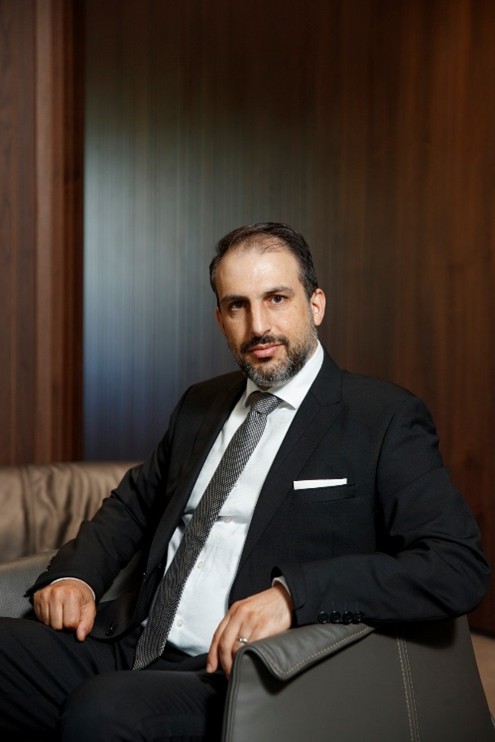
Christos Theophilou is an international tax and transfer pricing partner at STI Taxand. Christos is a tax attorney with a strong accounting and international tax background who advises clients on complex international tax and transfer pricing matters, such as cross-border investments, private equity structuring, structured finance, IP structuring and international trade.
Christos holds an MSc in Tax Law from Oxford University, a Bachelor's degree in Economics, and an LLB Law degree. He is a Chartered Accountant in England & Wales and has obtained the Advanced Diploma in International Taxation (ADIT) from the UK Chartered Institute of Taxation.
Christos is a prolific contributor to various esteemed international tax publications, including IBFD, Tax Notes International, Bloomberg Tax, International Tax Review, Edward Elgar, and IFA. He is co-author of the book, "Pillar Two of the Inclusive Framework on BEPS – A Problem-solving Approach", contributing Chapter 2 Individual GloBE income or loss (Publication Date: September 2024). He is currently a member of the Τax Policy and Strategy committee of ICPAC.
Christos Theophilou also serves as a freelance lecturer for Tolley's (LexisNexis), the IBFD and QMUL, where he lectures on ADIT Paper 1 Principles of International Tax, Transfer Pricing, and Pillar 2. He is a frequent speaker at international tax conferences, sharing his extensive knowledge and insights with the global tax community.

Shee Boon Law is a consultant in International Tax and Transfer Pricing and is based in the Netherlands. In this role, he advises clients, including governments and tax authorities, on corporate international tax structuring for outbound investments, as well as tax policy and controversy approaches in transfer pricing, international tax and EU law, including Pillar One and Pillar Two rules. The technical aspects covered may include tax issues related to supply chain structures, global transfer pricing policies, permanent establishment issues, withholding tax assessment, treaty application, dispute resolution and mutual agreement procedures.
Dr Law has 30 years of international tax advisory experience based on a unique blend of background with the New Zealand tax authorities, the OECD in France, IBFD in the Netherlands and DLA Piper in the United Kingdom and the Netherlands.

Peter A. Harris is a solicitor whose primary academic interest is in tax law. He is a Professor in Tax Law at the Faculty of Law of the University of Cambridge, United Kingdom and Director of Studies and Fellow of Churchill College. He earned a Doctorate of Philosophy and a Master of Laws from the University in 1996 and 1992 respectively (Darwin College), as well as a Bachelor of Laws (Honours) from the University of Queensland in 1991. Previously, Prof Harris was a Senior Lecturer at the Law Faculty of the University of Sydney. From January 1999 until July 2000 he served in the Washington D.C. based position of Technical Assistance Advisor for the Legal Department of the International Monetary Fund where he engaged in drafting income tax laws for developing countries. He continues to advise for the IMF as an external consultant. He has taught tax law (mainly as a visiting professor) at numerous universities including the University of Georgetown, the University of Sydney, the University of Leiden, Ecole Nationale des Ponts et Chaussées (Paris), the University of Florida, the University of Pretoria, the University of Auckland, the University of Melbourne, the Vienna University of Economics and Business, Utrecht University, the Norwegian School of Management, the Queensland University of Technology and London University. Professor Harris has had a consultancy arrangement with KPMG London since 2001. Since 2013 he has acted as a consultant for the Financing for Development Office of the UN.
Professor Harris is the author of numerous books, contributions to books and refereed articles. In particular, he is the author of Corporate Tax Law: Structure, Policy and Practice (2013: CUP); International Commercial Tax (2010: CUP); Contributing author, Comparative Income Taxation, 5th ed (2025: Kluwer); Editor & contributing author, Comparative Perspectives on Revenue Law (2008: CUP); Income Tax in Common Law Jurisdictions to 1820 (2006: CUP), Metamorphosis of the Australasian Income Tax (2002: ATRF) and Corporate/Shareholder Income Taxation and Allocating Taxing Rights Between Countries: A Comparison of Imputation Systems (1996: IBFD). An abridged version of the latter book won the International Fiscal Association's Mitchell B. Carroll prize presented at the Association's 50th Congress. That version was also awarded a Yorke Prize by the University of Cambridge. Prof Harris is the Director of the Centre for Tax Law at the Law Faculty of the University of Cambridge. He is the Academic Editor of the Cambridge Tax Law Series (CUP) and Assistant Editor (International) for the British Tax Review.
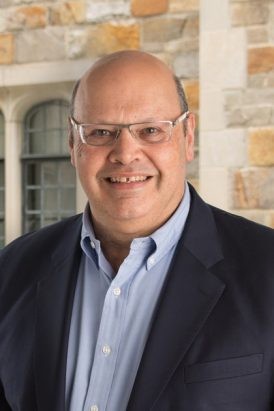
Reuven S. Avi-Yonah is the Irwin I. Cohn Professor of Law at the University of Michigan. He specializes in corporate and international taxation and has served as a consultant to the US Department of the Treasury and the Organisation for Economic Co-operation and Development on tax competition.
Avi-Yonah is a member of the American Law Institute, a fellow of the American Bar Foundation and the American College of Tax Counsel, and an international research fellow at Oxford University’s Centre for Business Taxation. In addition to prior teaching appointments at Harvard University (law) and Boston College (history), he has practiced law with Milbank, Tweed, Hadley & McCloy in New York; with Wachtell, Lipton, Rosen & Katz in New York; and with Ropes & Gray in Boston.
He has published more than 250 books and articles, including The International Tax Revolution (Cambridge University Press, 2025), Advanced Introduction to International Tax Law (Elgar, 2019), Global Perspectives on Income Taxation Law (Oxford University Press, 2011), and International Tax as International Law (Cambridge University Press, 2007).

Christiana HJI Panayi is a Professor in Tax Law at Queen Mary University of London and a leading expert in European and international tax law. Holding dual nationality (British and Cypriot) and qualifications from prestigious institutions including the University of Oxford and the London School of Economics, she has advised governments, testified before the European Parliament, and held visiting professorships at top universities worldwide.
Sam Sim is a member of of the International Fiscal Association Permanent Scientific Committee and is a board member of Tax Analyst (USA). Sim has taught taxation at the graduate level for more than 10 years, including for SUSS Masters of Tax program, Leiden International Tax Centre Executive programs and the IBFD . He has published various books and articles with Wolter Kluwer CCH, Lexis-Nexis, Bloomberg BNA and IBFD. In his academic capacity, he had also served as senior advisor to Prof Dr Jeffrey Owens at the Vienna University (WU) Global Tax Policy Centre, Senior Fellow at the Tax Academy and is presently member of NYU’s International Tax Program Practice Council. He was previously an examiner and member of the UK Chartered Taxation Institute Advance Diploma in International Tax (ADIT) Committee and is one of the co-designers of the Pillar Two syllabus and paper.
Sam held global responsibilities at a Forbes 50 Tech MNE, a FTSE 100 international bank and a sovereign-owned fund. He was previously a tax attorney in New York and served as Asia President and subsequently Regional Vice-President (Europe, Middle-East, Africa, Asia and Latin America) of the Tax Executive Institute, Washington DC. He has a multidisciplinary background with graduate degrees in law (NYU LLM), Accounting (SMU) and economics (Cambridge).

Richard Collier, of Field Court Tax Chambers, London, is a tax lawyer and accountant, specializing in in international tax treaties, transfer pricing and financial instruments. He has testified as an expert before judicial tribunals on behalf of governments and private parties as well as presenting on tax policy issues to the Select Committee on Economic Affairs of the UK’s House of Lords and to the European Parliament’s TAXE Committee. Richard is an Associate Fellow at the University of Oxford Said Business School, a Research Fellow at the University of Amsterdam Centre for Transfer Pricing and he has also lectured at several other universities. Richard worked at the OECD in the role of head of the transfer pricing, treaties, and financial transactions team from May 2019 and from 2020 as a Senior Tax Advisor until May 2021. Until December 2015, Richard was in private practice as a tax partner with PwC, where he was the global leader of the firm’s banking and capital markets tax practice. Richard has degrees in Philosophy and Law and completed academic research in international taxation at the University of Cambridge (LLM) and the University of London (PhD). He qualified as a barrister and chartered accountant.