
PGR Muskaan Aleeza Admani reflects on cross-cultural experience in Kenya
Muskaan travelled to Mombasa to adapt a strengths-based intervention for girls in an under-resourced orphanage, gaining powerful insights into resilience, cultural humility, and the complex realities of global mental health work.
/filters:format(webp)/prod01/channel_266/doctoral-college/media/doctoral-college/dc-blog/dc-blog-images/PGR-Muskaan-Aleeza-Admani.jpg)
PGR Muskaan Aleeza Admani
Bridging Cultures: What Cross-Cultural Research Taught Me About Resilience, Adaptation, and Reality
Conducting research in Kenya – my father’s home country – was not simply an academic milestone. It was an encounter with the realities of global mental health work: the tensions between theory and context, ambition and feasibility, and research design and lived experience. Working with young female orphans in a rural setting reshaped how I think about resilience, intervention science, and the ethical responsibilities of researchers working across cultures.
From Coursework to Context
I began this project shortly after completing my undergraduate degree and before starting my master’s. A final-year undergraduate module on “working with vulnerable groups” had prompted me to design a strengths-based intervention for displaced youth. What started as coursework evolved into a broader question: how do evidence-based psychological interventions translate outside the environments in which they were developed?
Returning to Kenya offered a chance to answer that question in a community that felt personally meaningful. In collaboration with my supervisor, Dr Sevasti Foka, I helped adapt the “Strengths for the Journey” (SFJ) intervention, a seven-day positive psychology programme originally designed for refugee populations. The programme emphasises emotional development, strengths-based reflection, and collective resilience. Our aim was to explore whether its principles could support girls living in an under-resourced orphanage in Mombasa, many of whom navigated chronic instability and limited access to mental health support.
When Theory Encounters Context
Preparation had been meticulous: ethical approval was granted, manuals were printed, and the plan was set. Yet, the first few days in the orphanage unravelled the assumptions embedded in my design.
The friction was immediate. Although English was widely spoken, proficiency varied considerably, and key psychological terms resisted direct translation into Swahili. Words associated with depression, for example, risked being interpreted as “madness,” highlighting how language shapes not only communication but stigma itself.
Standardised questionnaires – routine in academic settings – proved unfamiliar to many of the girls. Questions intended to capture internal states sometimes produced socially desirable answers rather than genuine reflection. What had seemed methodologically robust on paper required constant adaptation in practice. The experience challenged me to reconsider whose frameworks define valid knowledge and whether traditional assessment tools adequately reflect culturally diverse ways of expressing emotion.
Beyond methodological hurdles, the structural realities of the orphanage were impossible to ignore. Chronic underfunding meant that staff prioritised food, shelter, and safety over psychological care. Staff spoke openly about noticing sadness and withdrawal among the girls, yet also acknowledged the persistent stigma surrounding mental health. In this environment, research felt less like an academic exercise and more like a negotiation between aspiration and feasibility.
Adapting the intervention in practice
As the programme unfolded, adaptation became not just necessary but transformative. The girls engaged most readily with creative and social activities – drawing, storytelling, music, and dance – while introspective practices such as mindfulness generated less interest. Rather than viewing this as resistance, I began to see it as a reminder that wellbeing is expressed differently across cultures. Here, it was grounded in shared activity rather than individual reflection.
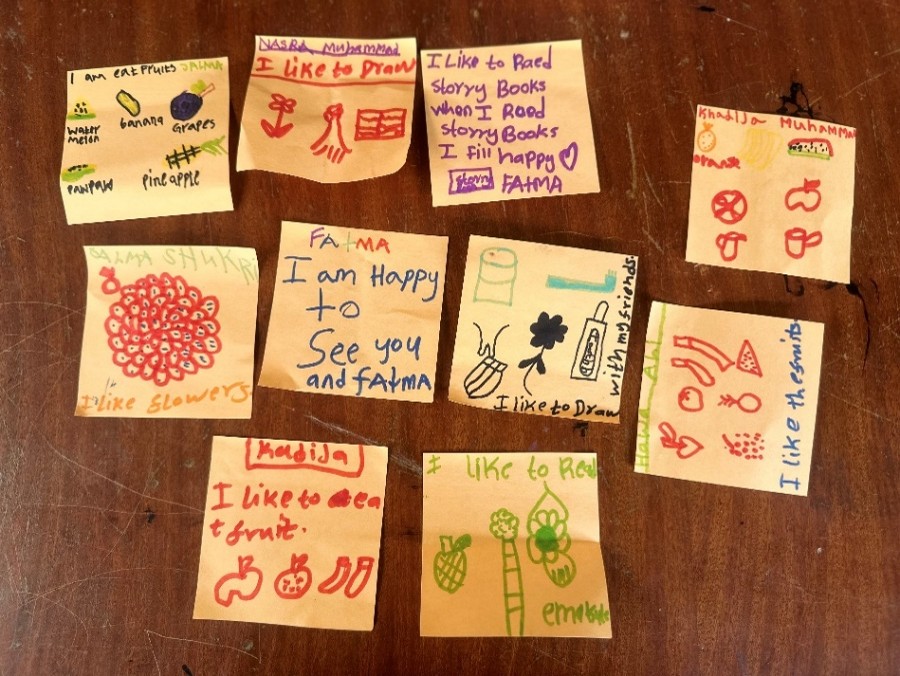
One activity that resonated deeply was the creation of a “happiness jar,” where the girls captured moments of joy through drawings and short messages. The simplicity of the exercise contrasted with the complexity of their circumstances, yet it created space for humour, connection, and collective expression. These moments challenged my assumptions about how resilience is cultivated. It was less about delivering a structured curriculum and more about creating environments where young people could express agency and creativity on their own terms.
An Abrupt Ending and unfinished questions
Unfortunately, the project ended abruptly. Escalating political unrest and violence in the region forced us to terminate the intervention earlier than planned. The sudden disruption underscored the fragility of research timelines when placed against wider socio-political realities. It also raised uncomfortable questions about privilege – about who has the option to leave when instability rises, and who must remain.
Although the project did not conclude in the way I had envisioned, it produced insights that extended beyond measurable outcomes. It revealed how interventions are shaped as much by context as by theory, and how researchers must remain flexible, reflexive, and willing to question their own assumptions.
What the Experience Changed
This fieldwork transformed how I understand cross-cultural research. It highlighted the importance of cultural humility – recognising that interventions require translation not only in language but in values, delivery, and expectations. It also deepened my awareness of power dynamics in global mental health work, where well-intentioned programmes can unintentionally impose external frameworks onto local realities.
The next phase of this work involves further adapting the SFJ intervention alongside local organisations, with the aim of developing training resources that allow community volunteers to deliver culturally responsive, strengths-based programmes. The goal is not to export a finished model, but to co-create approaches that are sustainable within the communities they are designed to support.
Beyond the Narrative of Success
Academic research often privileges completion, outcomes, and measurable impact. My experience in Kenya complicated that narrative. The project was shaped by disruption, uncertainty, and moments where my own ambition had to be recalibrated in response to reality. Yet it ultimately strengthened my commitment to research that listens before it intervenes. Working alongside these young girls shifted resilience from an abstract concept into something lived and negotiated daily. It reinforced a lesson I carry forward into my doctoral journey: meaningful research is not defined by how closely it follows a plan, but by how thoughtfully it responds when reality demands change.
References
Foka, S., Hadfield, K., Pluess, M., & Mareschal, I. (2020). Promoting well-being in refugee children: An exploratory controlled trial of a positive psychology intervention delivered in Greek refugee camps. Development and Psychopathology, 33(1), 1–9. https://doi.org/10.1017/s0954579419001585
Cherewick, M., Dahl, R. E., Bertomen, S., Hipp, E., Priyanka Shreedar, Njau, P. F., & Leiferman, J. A. (2023). Risk and protective factors for mental health and wellbeing among adolescent orphans. Health Psychology and Behavioural Medicine, 11(1). https://doi.org/10.1080/21642850.2023.2219299
Ndeda, M. A. J. (2013). The Gendered Face of Orphanhood: the Double Vulnerability of Female Orphans in Child-headed Households in Kisumu East District. Les Cahiers d’Afrique de LEst, 46-2, 81–104. https://doi.org/10.4000/eastafrica.421