
IEEE EDUCON 2026
We’re delighted to share the successful participation of the Queen Mary University of London team at EDUCON 2026.
/filters:format(webp)/prod01/channel_164/school-of-electronic-engineering-and-computer-science/media/bupt/jtlc-images/1777964226156.jpeg)
The conference provided a valuable opportunity to exchange ideas with the international engineering education community and to discuss how scholarship can inform practical improvements in teaching and student experience.
The Queen Mary team contibuted to a wide range of activities:
- Tutorial: Transnational Education in Practice: Strategies for Quality, AI Integration, and Global Impact
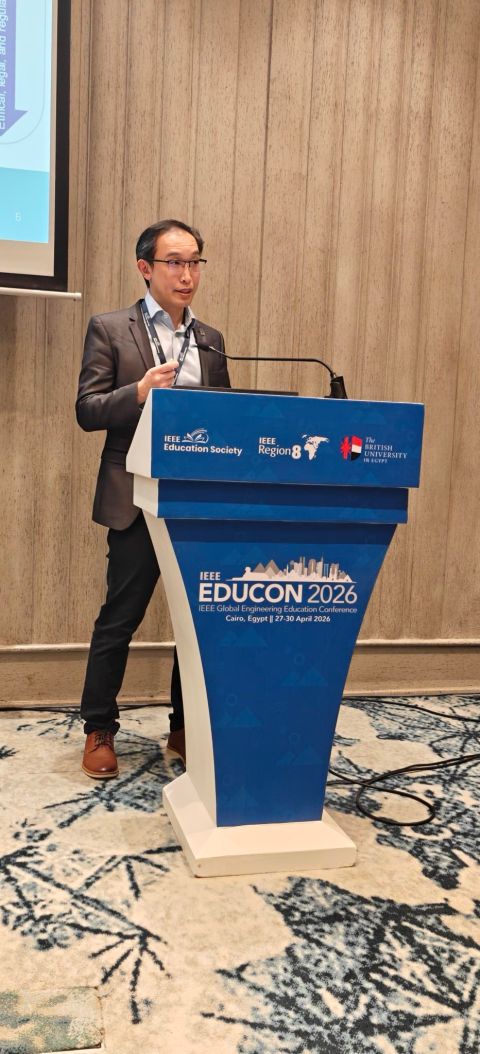 Organised by Yue Chen (QMUL), Kok Keong Chai (QMUL), Li Guo (BUPT), and Fangwei Zhang (BUPT), this tutorial shared real-world strategies from a 20-year UK-China partnership, illustrating how quality assurance, supportive staff development, and AI-enabled innovation can strengthen global collaboration, foster equity, and enhance institutional impact.
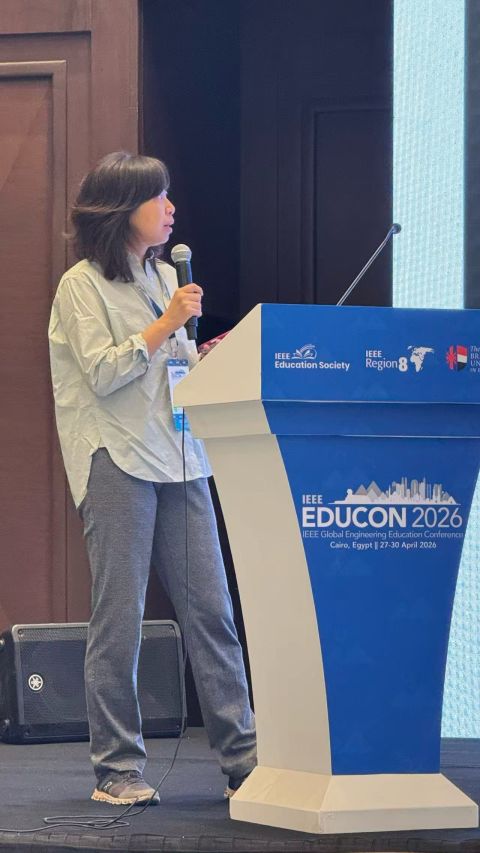
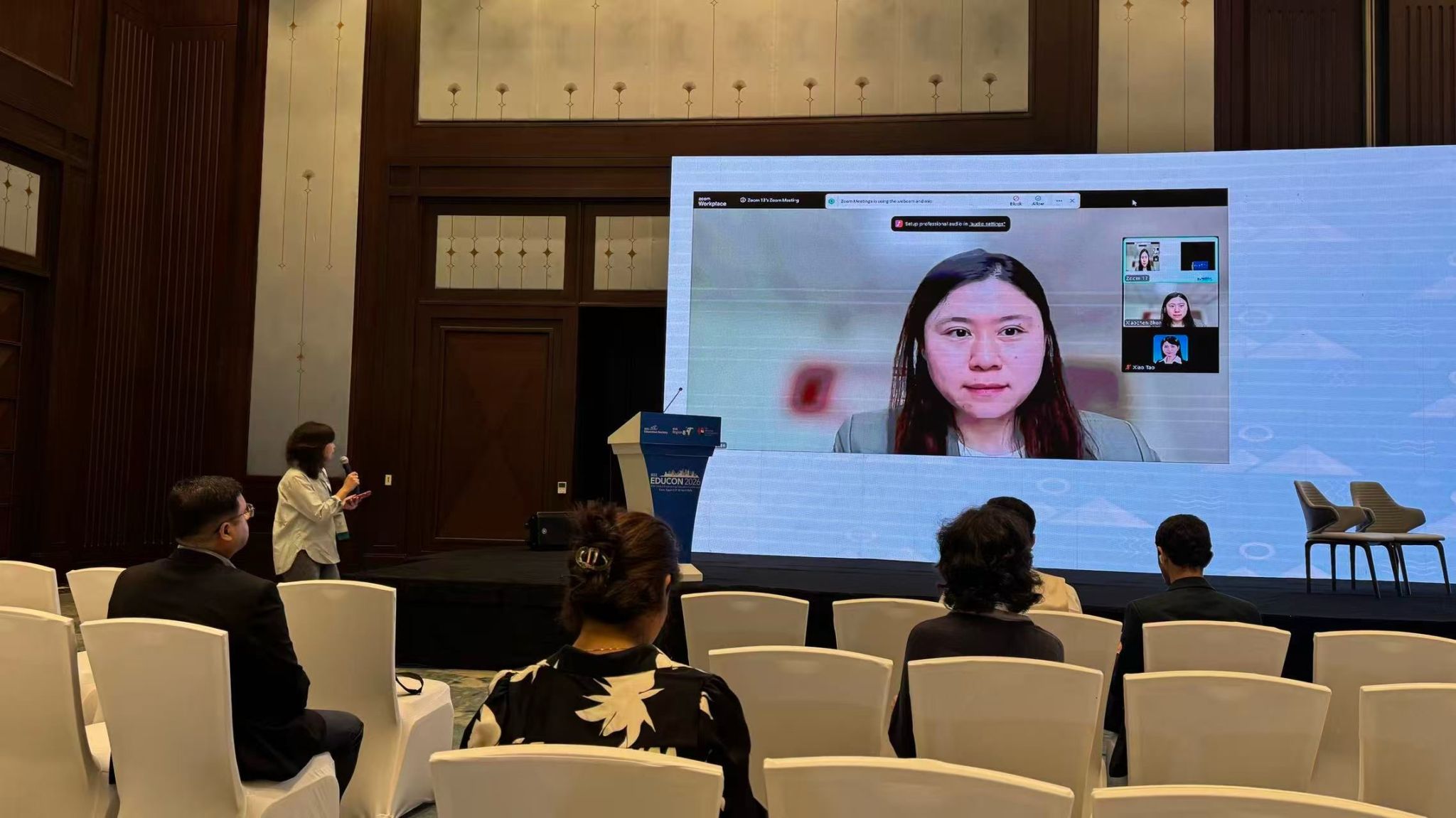
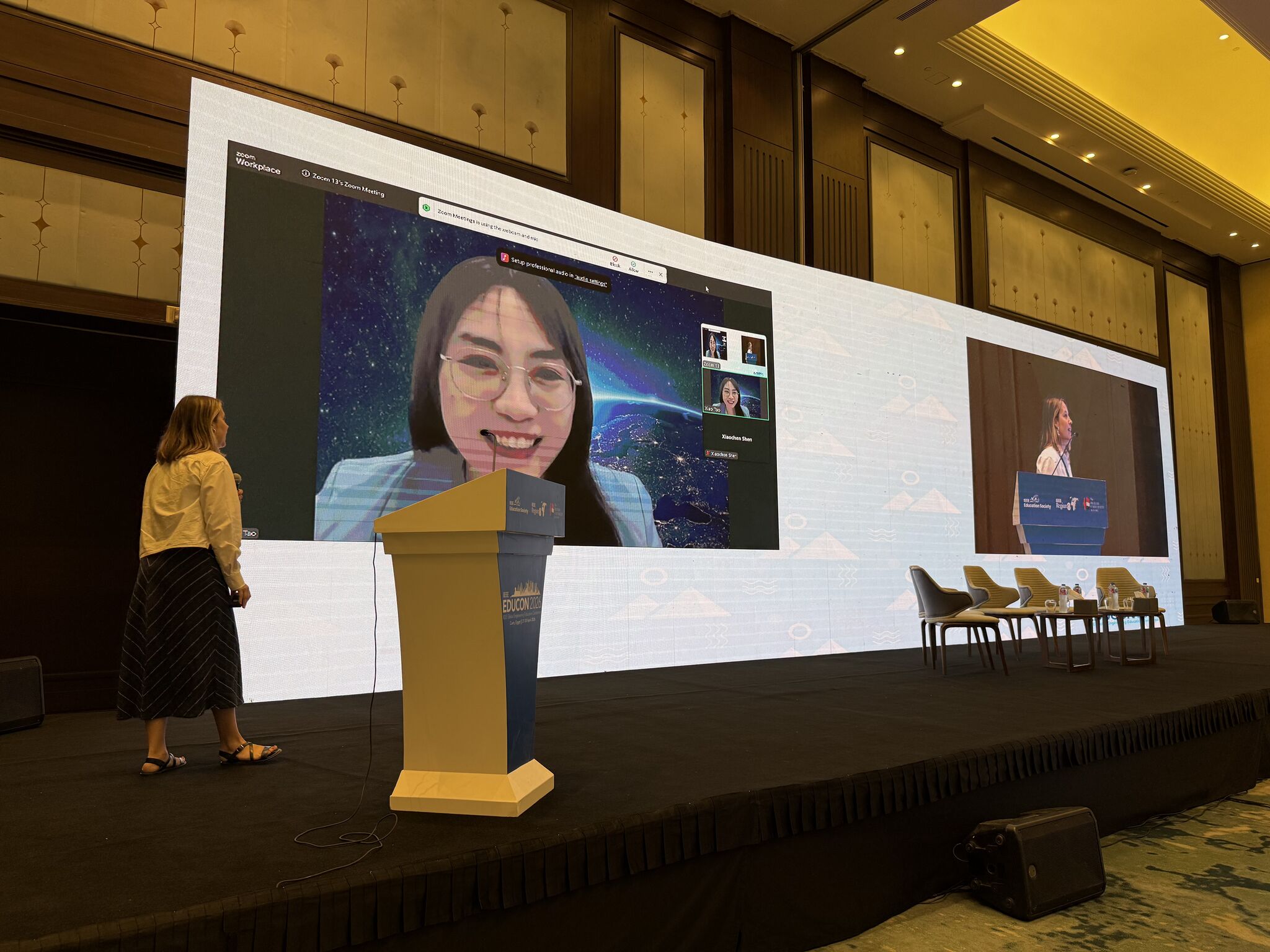
- Special Session: AI-Enabled TNE in Engineering: Fostering Equity, Sustainability and Ethical Competence
Chaired by Ling Ma from QMUL, this session examined practical and research-based approaches to designing human-centered, inclusive, and ethically guided TNE programs — bridging cultural and linguistic gaps, personalizing learning, and promoting sustainable innovation.
- Presentations on Accepted Papers:
- Partnering with AI in Formal Learning: A Johari-Inspired Framework for Co-Agency and Metacognition, by Yue Chen, Michael Chai, Chao Shu (QMUL)
- AICoDE: AI Competence Development in Engineering Education, by Michael Chai, Yue Chen, Chao Shu, Yasir Alfadhl (QMUL)
- GenAI-CDIO Authentic Assessment with Hybrid Qualitative-Quantitative Scoring for Embedded Systems Design, by Jonathan Loo, Yue Chen, Michael Chai (QMUL)
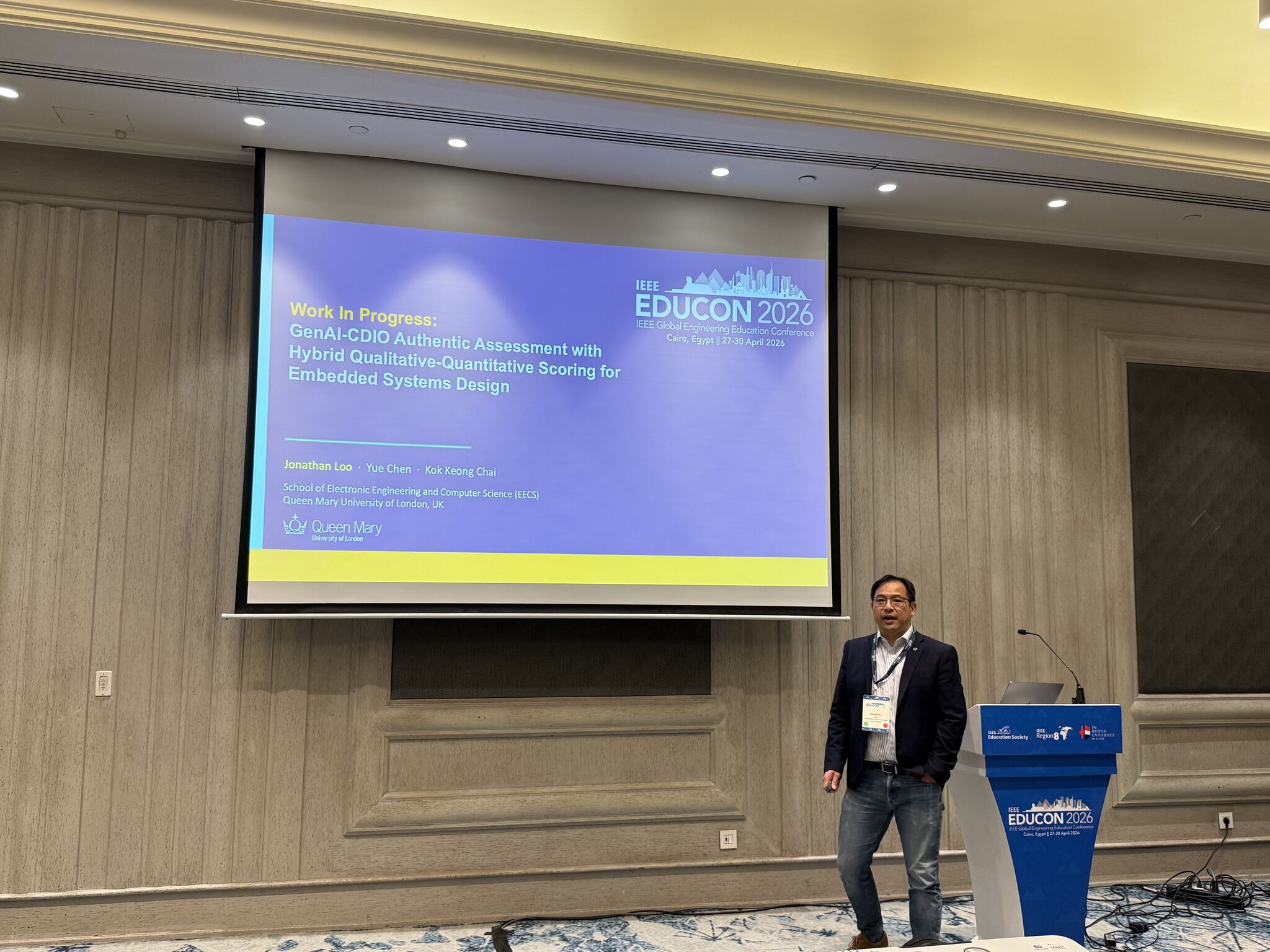
It was particularly encouraging to see colleagues from across the teams contributing to different parts of the conference programme. Their involvement demonstrates the breadth of educational work taking place across the partnership and the shared commitment to enhancing engineering education through collaboration, reflection and research-informed practice.
The participation reflected the growing scholarship activity within the School of Electronic Engineering and Computer Science, where colleagues continue to develop evidence-informed approaches to teaching, assessment and student support. It also highlighted the strong collaboration between QMUL and BUPT, including contributions from colleagues involved in the joint institutions in Beijing and Hainan.
EDUCON 2026 offered an important platform for presenting this work internationally and for strengthening links with colleagues and institutions working on similar challenges in engineering education.