
Panel Discussion “AI in Engineering Education” at ICCIP 2025
The 11th International Conference on Communication and Information Processing (ICCIP 2025, https://www.iccip.org/iccip25.html), held in Lingshui, Hainan on 13th November 2025. The conference featured a Transnational Education (TNE) panel discussion on AI in Engineering Education.
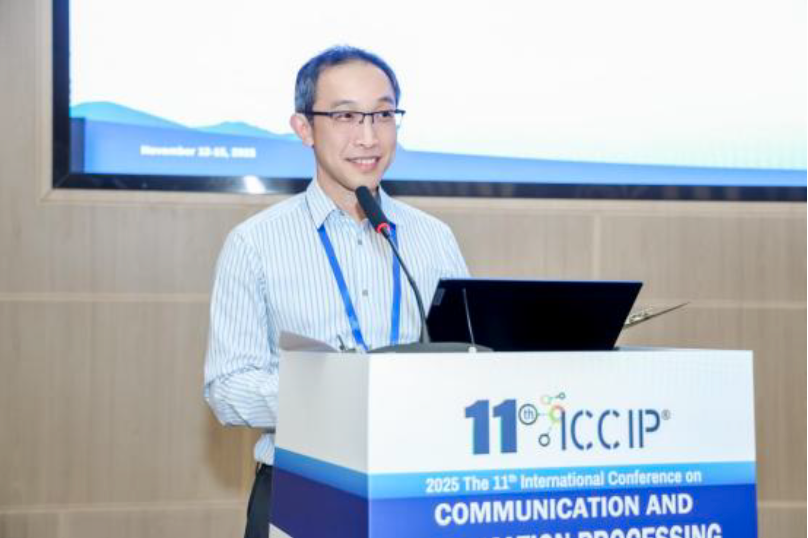 More than 200 experts and scholars worldwide attended the conference in a hybrid mode to discuss emerging directions and innovations in communication and information processing. The opening ceremony was chaired by Professor Michael Chai from Queen Mary University of London.
The panel discussion on “AI in Engineering Education – Challenges and Opportunities” brought together academics and practitioners from leading institutions to examine how artificial intelligence is reshaping the teaching and learning of communication and information engineering.
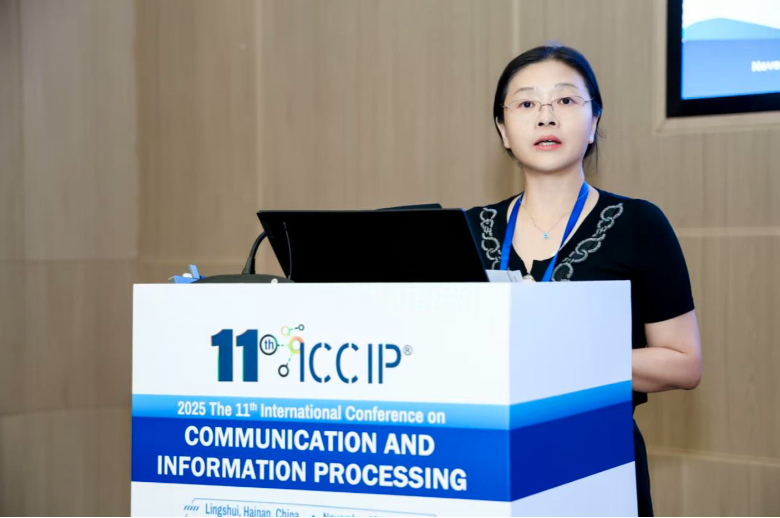 Chaired by Professor Li Guo from Beijing University of Posts and Telecommunications, the panel brought together educators from China and the UK. Panellists included Dr Yangyang from Beijing University of Posts and Telecommunications, Dr Yusuf Sambo from the University of Glasgow, Professor Yue Chen, Professor Michael Chai, and Dr Nikesh Bajaj from Queen Mary University of London.
The panel explored how AI technologies, including generative AI, intelligent signal processing, and network automation, are transforming engineering education. Discussions focused on opportunities to enrich teaching, enhance practical learning, support laboratory work, and strengthen project-based learning, while also addressing challenges related to curriculum design, assessment integrity, academic rigour, and student competence development.
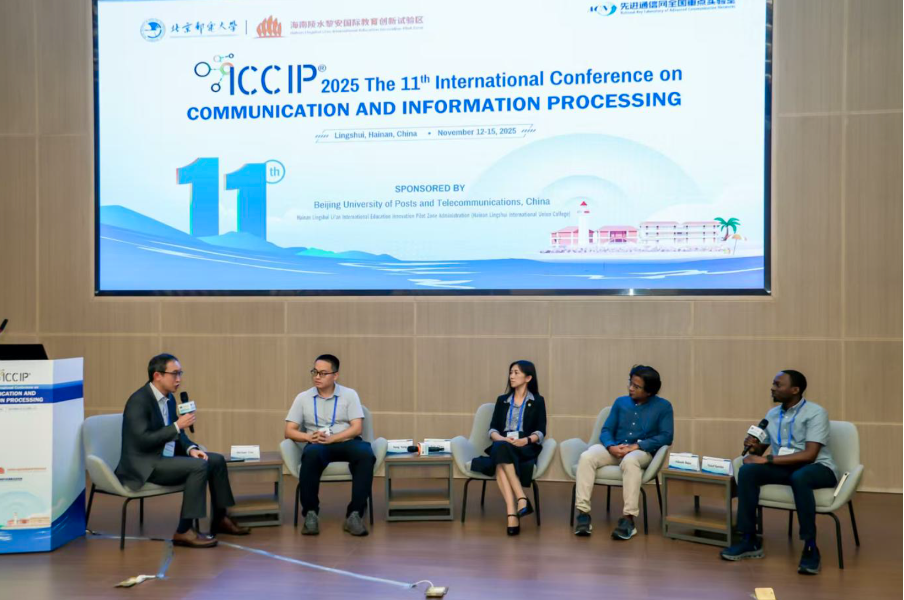 A key theme of the discussion was how higher education can prepare future engineers for an increasingly AI-enabled communication and information industry. Panellists shared case studies, pedagogical strategies, and reflections from technical education practice, offering timely insights into how universities can integrate AI into engineering curricula while continuing to foster creativity, critical thinking, and academic excellence.
The session contributed to wider conversations at ICCIP 2025 on innovation in communication and information processing, as well as the evolving role of AI in shaping the future of engineering education.