
/filters:format(webp)/prod01/channel_148/school-of-society-and-environment---department-of-history/media/history/widening-histories-programme2.jpg)
Are you from a background under-represented among History professors? Are you interested in pursuing further education after your undergraduate degree?
Our Widening Histories Programme might be the perfect opportunity for you to experience what postgraduate study is like.
Queen Mary's Department of History has one of the most diverse undergraduate populations in the UK. We want our postgraduate students and lecturers to reflect that too.
Through this programme, students who are interested in exploring a career in academia will be equipped with knowledge and skills to map their own path to an academic future. They will be ready to become serious researchers, amazing postgraduate students, or, someday, inspirational professors and mentors.
About the programme
Tuesday 5 - Friday 8 May, 2026
This programme is designed to nurture and support undergraduate students who are under-represented in postgraduate study and in the profession of History. It works with those who are part of the first generation in their family to attend university. It seeks to encourage them to continue their studies at the postgraduate level.
Research shows that the transition from undergraduate to postgraduate study is particularly difficult for students from underrepresented groups. Students might face socio-economic challenges like the inability to fund study or the need to support family members. They also face the challenge of a culture that has not typically represented them, leading to unfamiliarity with terms, rules, or expectations in the academic world.
Together, we will build a cohort of students who support and challenge one another in their final year. The programme begins at the end of the second year and continues through the final year. Students receive a bursary to participate in a week of full-time activities at the end of the second year. This prepares them to realise their intellectual potential in their final year fully. Next, they will continue to gather for specialised training sessions, talks and activities. Talks will include, for example, work in progress from researchers that demonstrate how people build their research projects.
Activities include: 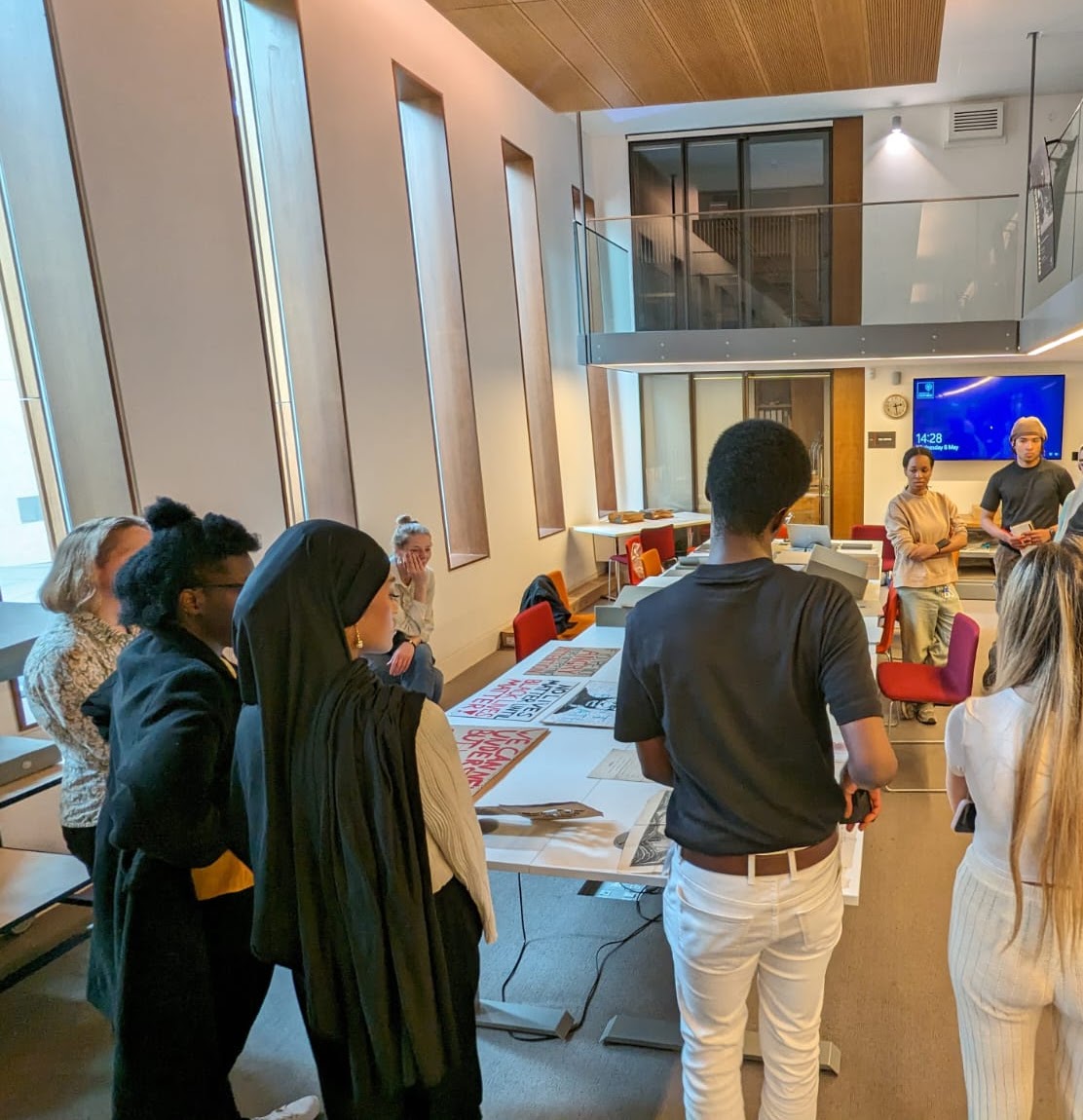
- A one-day archival visit
- A visit to another major university - in previous years, this has been Oxford
- Writing sessions with tutors
- Research sessions: moving from idea to project, using primary sources
- Talks with UK and international professors of underrepresented and/or BAME background
- Practical sessions on postgraduate study in the UK and internationally: how programmes work, what the expectations are, and how they can be funded.
Overall, the programme is based on shared mentoring and community building. While it does not remove all the barriers to academic study, it will openly discuss these barriers and share ideas for challenging them.
Eligibility criteria
To be eligible for the programme, students must:
- Be preparing to enter their final year of study at Queen Mary in 2026-27
- Be fully enrolled for the 2026/27 academic year
Participation in the Summer School in May 2026 covers:
- A daily bursary of £80/day
- Lunch and coffee each day
- Travel to/from any relevant other university town for a field visit
- Closing reception for family.
Submitting an application
Applications are due by Thursday, 2 April 2026.
To apply, please email the following to the programme co-directors, leslie.james@qmul.ac.uk and ria.kapoor@qmul.ac.uk
- Contact information for one of your teachers or academic advisors
- Two statements of 500 words per statement
- Statement One: Discuss your own research interests and how you came to develop these interests. Was there a particular course or project that developed these interests? Or something from the community, or your own reading?
- Statement Two: Discuss a diversity issue and why it is significant to you.
Student testimonials
- Listen to Aleisha's highlights of the Widening Histories programme.
- Hear why Arista thought the Widening Histories programme was a valuable experience.
- Check out Hudhayfa's thoughts about the Widening Histories programme.
"This was a really once-in-a-lifetime experience. From the coordination to the overall theme. I truly felt that I was given more than what I looked for and could not recommend this programme more."
"This has been an incredible experience and really validating. I don’t think the possibility of doing a masters/PhD felt realistic for me until this week!"
"Being able to go to Oxford and see the archives first hand, along with meeting esteemed historians [from outside QMUL] were such great honours and very valuable experiences. I also really appreciated how it felt like a practice run for postgrad life and gave a practical insight into what to expect. Honestly, all that only scratches the surface of how beneficial the whole week was, and what a privilege it was to be able to participate."
"This was a unique experience of support and guidance, which will undoubtedly prove invaluable for next year’s dissertation and future postgraduate studies."
"This was a lovely experience, I can’t find the words to describe how much it meant to me."
Frequently asked questions
Question:
Am I obliged to apply for postgraduate study afterwards?
Answer:
No. This programme will nurture your intellectual interests, academic skills, and practical knowledge. At the end of the day, you will then be equipped to navigate the right path for you.
Current student Matheus shares his experience
Matheus found value in the Widening Histories Programme, as he could showcase the value of higher education to his mum and feel empowered in his decision.