
Unmaking Citizens: The Architecture of Rights Violations and Exclusion in India’s Citizenship Trials
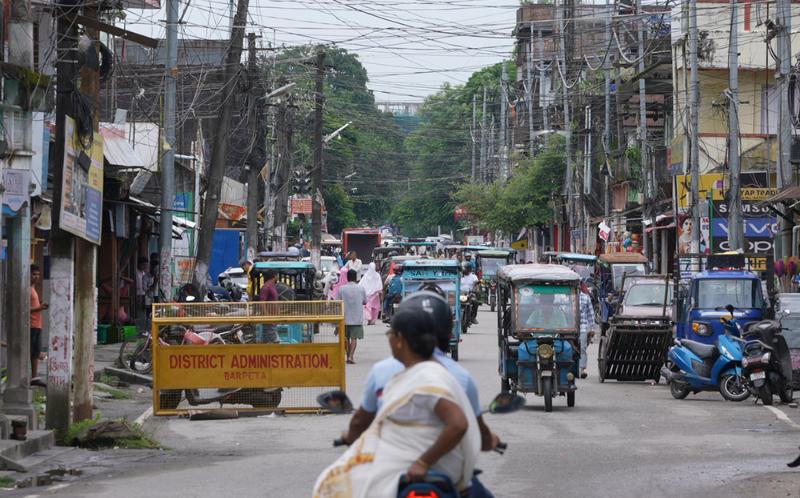

Mohsin Alam Bhat’s recent research examines the socio-legal dimensions of denationalisation policies in India, with a particular focus on the eastern state of Assam.
Cumulatively, these policies have placed more than two million people—especially those from religious and ethnic minorities—at risk of statelessness. Using legally questionable mechanisms, individuals are labelled as “illegal migrants” and stripped of their citizenship.
He has argued that these policies are rendering Indian citizens “irregular” and creating precarious citizenship at the expense of human rights. His research also shows how seemingly ordinary legal tools, such as identity documents, are instrumentalised to denationalise vulnerable minorities, cloaked in the language of the rule of law.
In July 2025, Mohsin co-authored a comprehensive report, Unmaking Citizens: The Architecture of Rights Violations and Exclusion in India’s Citizenship Trials, analysing Assam’s “Foreigners Tribunals.” These quasi-judicial bodies have already declared more than 165,000 people to be “foreigners.” The report critiques their legal foundation, demonstrating how they violate both international human rights law and India’s own constitutional norms. The report was developed in collaboration with academics and researchers at the National Law School of India University, Bangalore.
About the academic
Mohsin Alam Bhat is a Senior Lecturer in Law at Queen Mary University of London. His research explores the intersections of law, majoritarianism, and democracy from critical and socio-legal perspectives. He has written on religious freedom, hate crime, majoritarianism and democratic backsliding, and the legal regulation of the democratic process. His current research examines how ethnic, religious, and racial politics enable authoritarian tendencies within democratic systems—undermining constitutionalism and accelerating democratic decline.