
Creating a hands-on science activity: Superhero Cells

- Faculty: Faculty of Medicine and Dentistry
- School: Centre of the Cell, Blizard Institute
- Formats: Hands-on craft activity for children
- Key themes: family engagement; hands-on activities; festivals; science engagement; science communication; public engagement
Please could you give us an overview of your Superhero Cells activity?
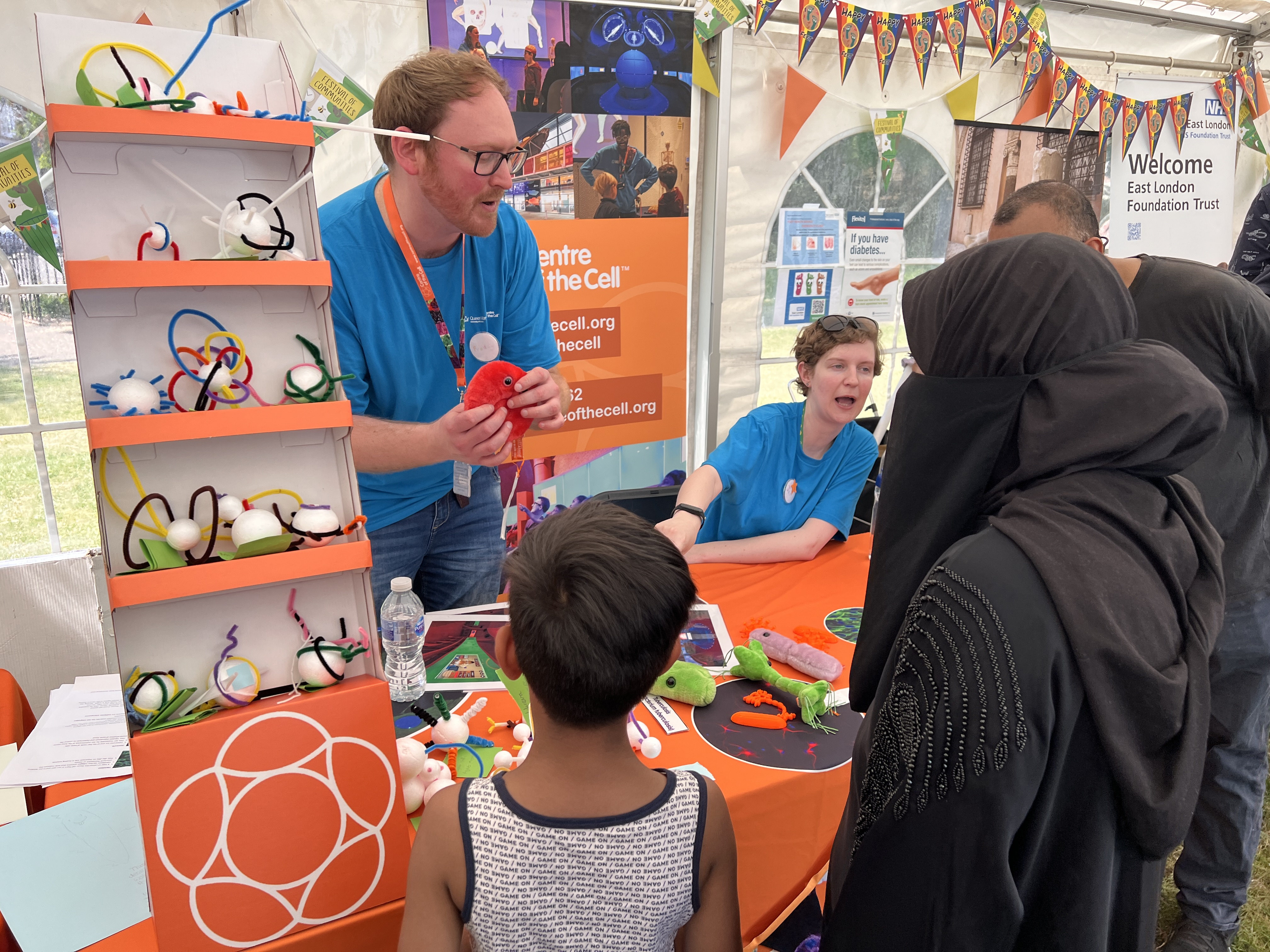
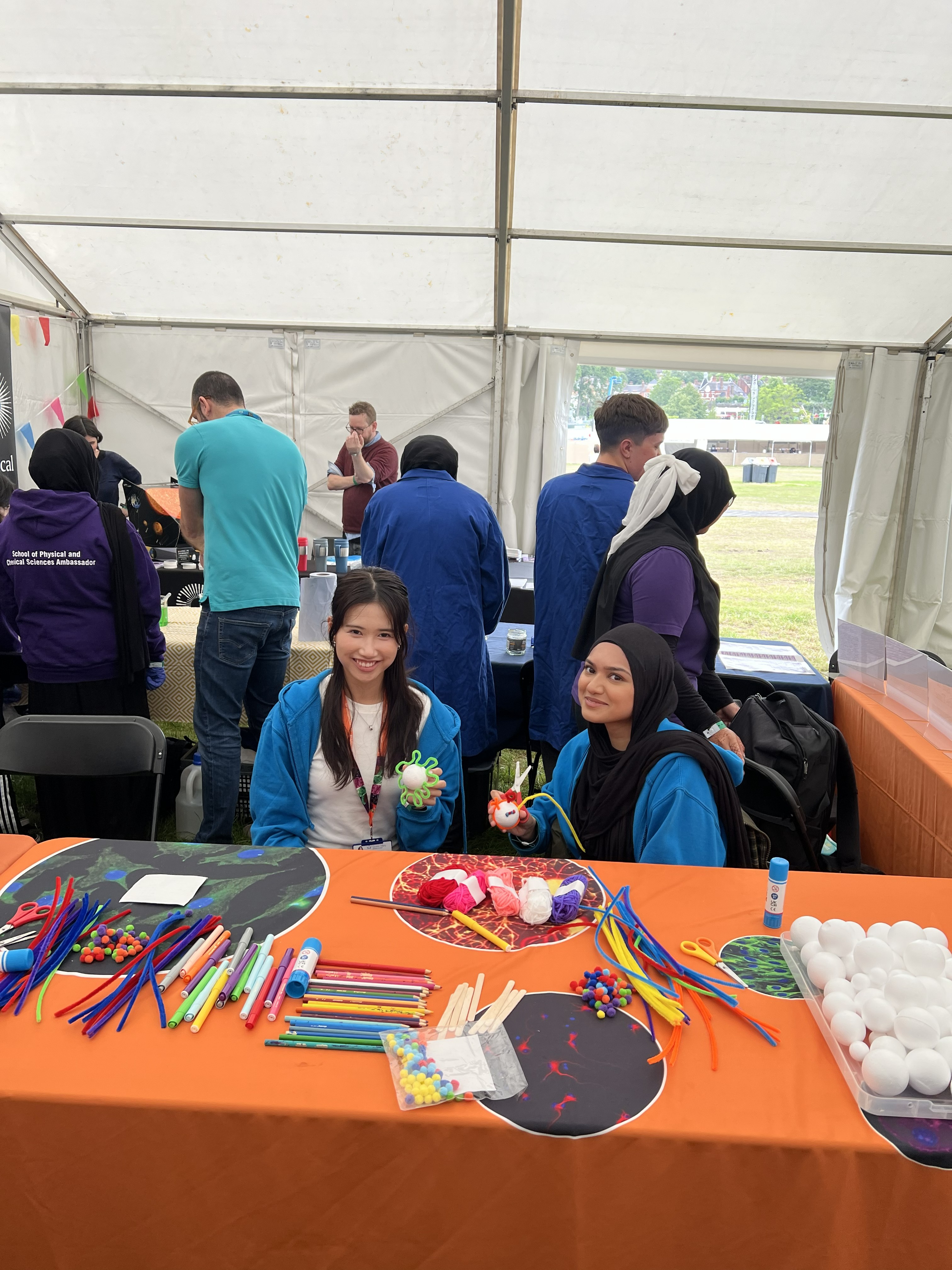
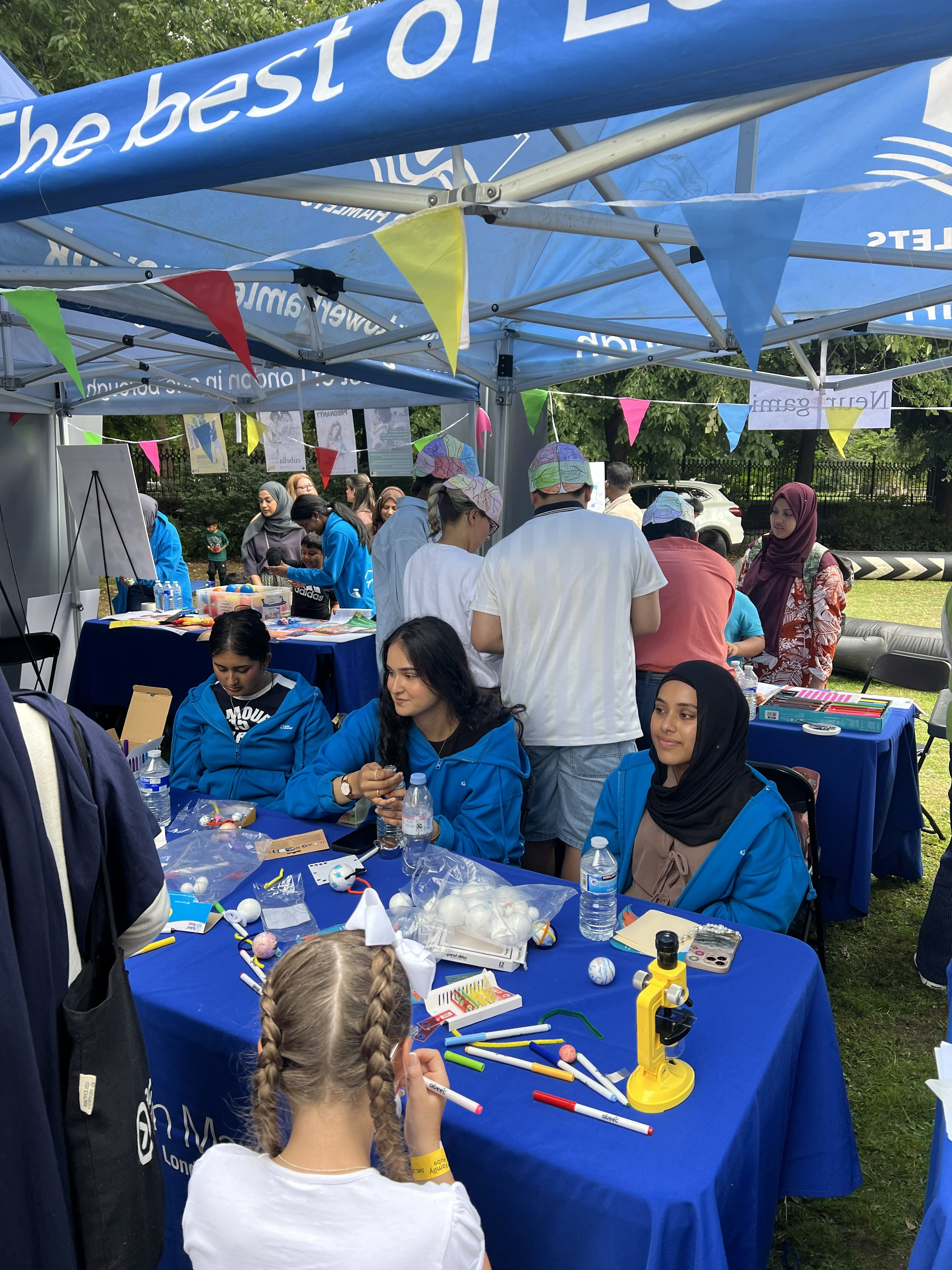
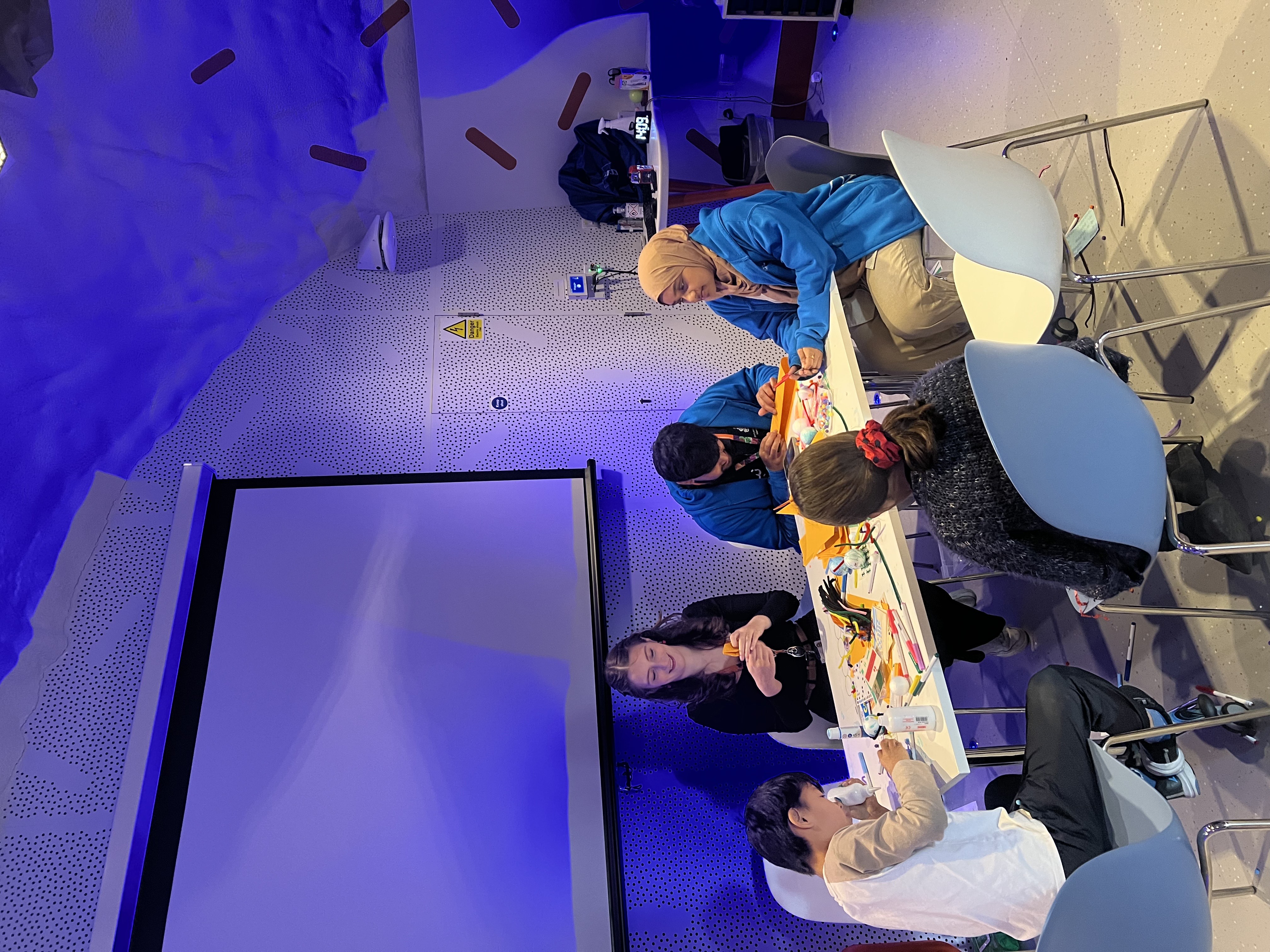
Here at Centre of the Cell, cells are our favourite topic (as you may have guessed!). Because of this, we designed an activity to help young people understand that we have many different types of cells and how cell structures relate to function. Aimed at ages 7 – 11, but deliberately adaptable for all, participants use various craft materials such as polystyrene balls, pipe cleaners, pens, pom poms, etc… to design new types of cells and give them jobs. These functions ranged from helping humans breathe underwater or regrowing limbs to more fantastical abilities such as teleportation. These new functions creating so called 'Superhero' cells further create a sense of excitement and engagement with the audience around cells. This activity is a hands-on approach to simplifying how cells work and has been run at many different events such as Festival of Communities, Science Fun Day, and Lambeth Country Show to name a few.
The activity was designed to be taken to community and science festivals. These are events where there is a wide range of ages and science engagement and so adaptability was key. They are also spaces where different people will engage with the activities for different amounts of time and so flexibility with this was also important.
While the participants are making their cells, staff from Centre of the Cell are chatting to them about what they’re up to and cells in general, including real life examples of superhero cells, such as shapeshifting STEM cells. This includes what cells are, how they work, and the different kinds of cells we have in our bodies. This helps participants to learn more about cells whilst they complete the activity and helps to give them ideas about what kind of cell they would like to make. This kind of informal interaction between the participants and Centre of the Cell staff keeps participants engaged and makes the activity endlessly adaptable for different ages and previous science knowledge. It also gives participants a chance to share what they’ve created and what they’ve learnt.
Please could you tell us more about how you translated scientific information/research through the activity?
This activity was first developed for Festival of Communities, a community festival, and so we started by working out who our likely audience would be. From previous experience we knew that it’s often the 7-11 age group attending these kinds of events, alongside their families, and that participants would likely be attending with a vast range of science engagement. It is also a space where people will be continuously dropping in and out of activities, which meant the activity needed to be highly adaptable.
We came up with a few simple learning objectives for the activity and then thought about how it could be hands-on while still stimulating creativity and helping to convey the learning objectives. Participants were encouraged to learn the basics of cell science:
- Cells are the building blocks of life
- There are different types of cells
- Different types of cells have different functions/jobs
Having simple learning objectives like the above meant we were able to adapt explanations accordingly depending on interest and engagement levels of participants.
We then worked out the kind of activity we wanted to take with us. For this age group and family audiences, a hands on activity is best. We also know from previous experience that children of all ages enjoy craft activities, and these are things that families can enjoy together. Combined together this meant a craft activity about the basics of cell science, with creating your own cells seeming like an excellent fit.
/filters:format(webp)/prod01/channel_262/queen-mary-university-of-london/media/qmul/publicengagement/case-studies/IMG_7032.JPG)
'Superhero Cells' at Festival of Communities 2023
Could you tell us more about how you facilitate the activity?
At Centre of the Cell, we hire part-time students, particularly medical and dental students. This brings in their expertise on our activities, meaning that participants get more out of their interactions with us. It also means our students get the chance to improve their communication skills, resulting in better doctors and scientists of the future. The activity generally has 2 or 3 staff members running it at any one time, including a core Centre of the Cell staff member (a public engagement professional) or a student with a proven public engagement track record with us. All facilitators speak with any interested participant, gauging their level of understanding through questions and answers, and building on this knowledge while also encouraging them to engage with the craft materials. Where there are lulls in visitors, staff come up with and craft their own cells to use as examples.
Please could you tell us about how audiences have engaged with the activity?
Audiences engaged with this activity by designing and building some excellent cells. We’ve seen participants come up with the fantastical (including an ice cream producing cell), to the marvelous (including cells that will cure specific diseases). Along the way participants have many varied and interesting conversations about cells with Centre of the Cell staff. We’ve also seen families get excited about cell science together and watching them collectively engage in science has been lovely to see.
Overall, the activity is enjoyed, and this can be seen from the length of time people spend speaking with our staff, and the range and quality of these conversations. The phrase ‘oooh can I make another one?!’ is heard often when running this activity. Some visitors will only spend 30 seconds at the table, quickly deciding they are not interested in it, while others will linger for much longer. The ones who stay longer tend to comment on the activity throughout, describing it as ‘fun’ or ‘cool’.
We have run this activity many times at different events, and it has been adapted along the way. We’ve changed the craft materials used and have used different props to explain cells and what they do.
/filters:format(webp)/prod01/channel_262/queen-mary-university-of-london/media/qmul/publicengagement/case-studies/DSC_0411.JPG)
'Superhero Cells' at Festival of Communities 2023
Do you have any top tips for those that might be planning similar activities in the future?
- Combining creativity with science really pulls people in – they love to take something away!
- Test out your craft materials prior to the actual session, even try doing it as a young child, sometimes the materials don’t work/aren’t used in the way you would expect.
- Think about your audience before you come up with your activity. For instance families love to be able to participate together, and children enjoy hands on activities that they can do themselves.
- Wherever possible make the activities adaptable. Engaging with a wide range of audiences means there will be a wide range of previous science engagement and being able to adapt to the person in front of you means they’ll get the most out of it.
SDGs supported:
- SDG 3: Good health and well-being
- SDG 4: Quality education
Queen Mary University of London is committed to driving action for the Sustainable Development Goals through our research, education, and engagement. Find out more about the SDGs at Queen Mary University of London.