
Creating a patient day: AIRA Science Day 2025
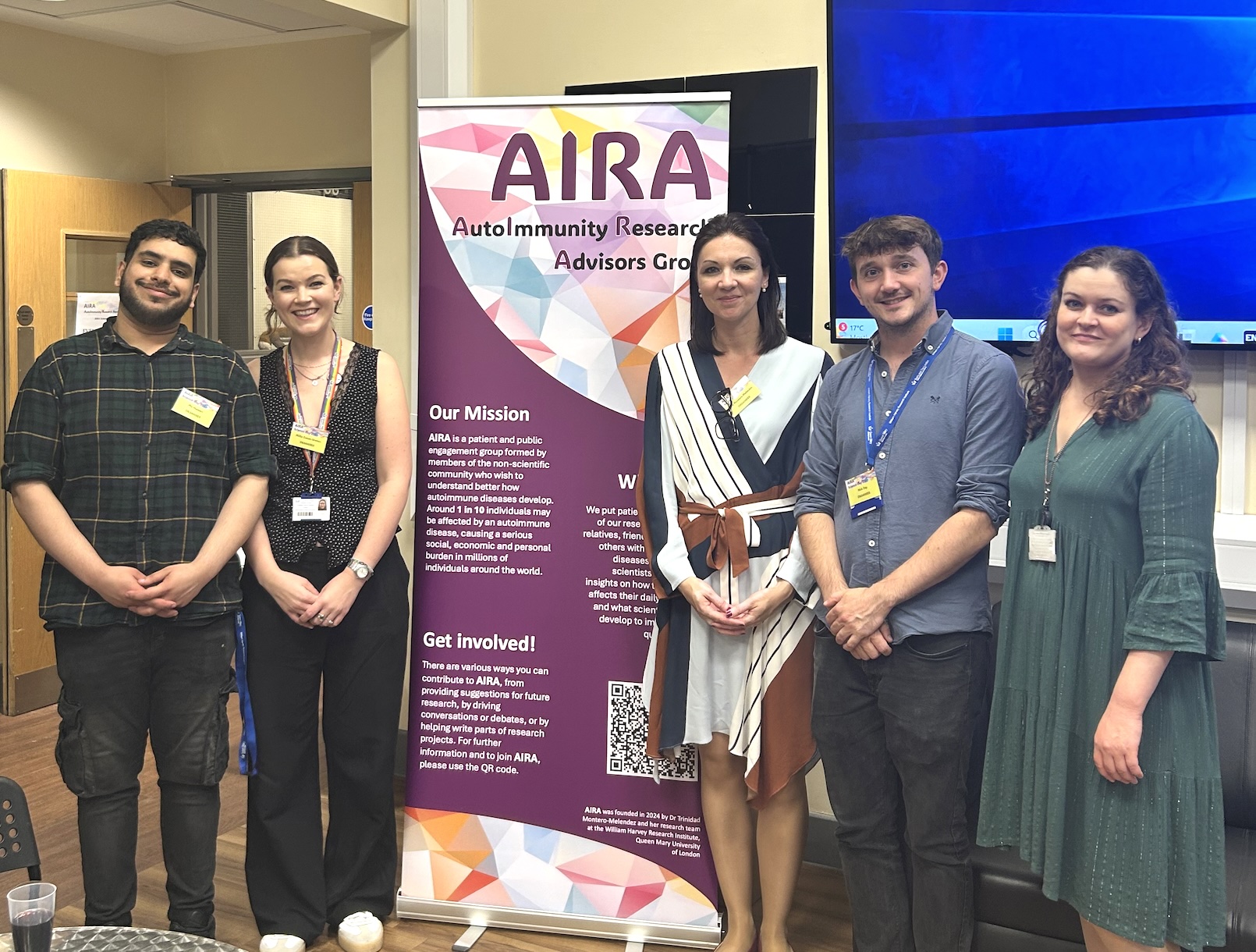
In collaboration with
- Mohammed Hussain
- Camilla Davan-Wetton
- Nicholas Day
- Natalya Khodeneva
Find out how a team in the William Harvey Research Institute brought the Auto Immunity Research Advisors Group together for the AIRA Science Day 2025
- Faculty: Faculty of Medicine and Dentistry
- School: William Harvey Research Institute
- Format: Science day; Patient day; Interviews; Talks; Laboratory visit; Quiz
- Key themes: public and patient involvement; autoimmune diseases; lay communication; public engagement
Please could you give us an overview of your activity?
Understanding autoimmune diseases and developing new medicines to treat them is at the core of the work at my research group. In line with this, in 2024 I founded the PPIE group AutoImmunity Research Advisors Group (AIRA) to bring together members of the public with interest in autoimmune diseases, including patients, friends or relatives, or simply people that like science. Since then, we have been interacting with the group through an outreach activity consisting of delivering our monthly AIRA Magazine, distributed via email.
However, in order to maintain the engagement of the group it was important to organise an in-person activity in which we could showcase the work we conduct at our research labs and importantly, gain insights from patients’ and members of the public experiences and perspectives. Thus, we decided to organise our first ‘AIRA Science Day’ which took place on 4 September 2025 in the late afternoon and early evening.
How did you go about planning for and delivering the event?
Being our first in-person activity, we aimed for a pilot-size event, which was easy to accommodate in a regular seminar room without requiring a large lecture theatre. This indeed favored a more relaxed and interactive environment. Then, having a pre-existing PPIE group also facilitated the advertising and recruitment of lay participants, as well as the generous funding from The Lorna & Yuti Chernajovsky Biomedical Research Foundation.
My research Team, formed by four highly motivated postdoctoral scientists (Millie, Natalya, Nick and Mo), was an invaluable resource to make this event happen. We spent long hours in the planning, starting by listing all items related to the organisation of the event, and each of us taking responsibility for specific tasks: venue, catering, laboratory visit, printed materials and merchandise, abstracts submission, prizes, and many more. Thanks to this, and despite our unfounded worries on the day, the event went like clockwork!
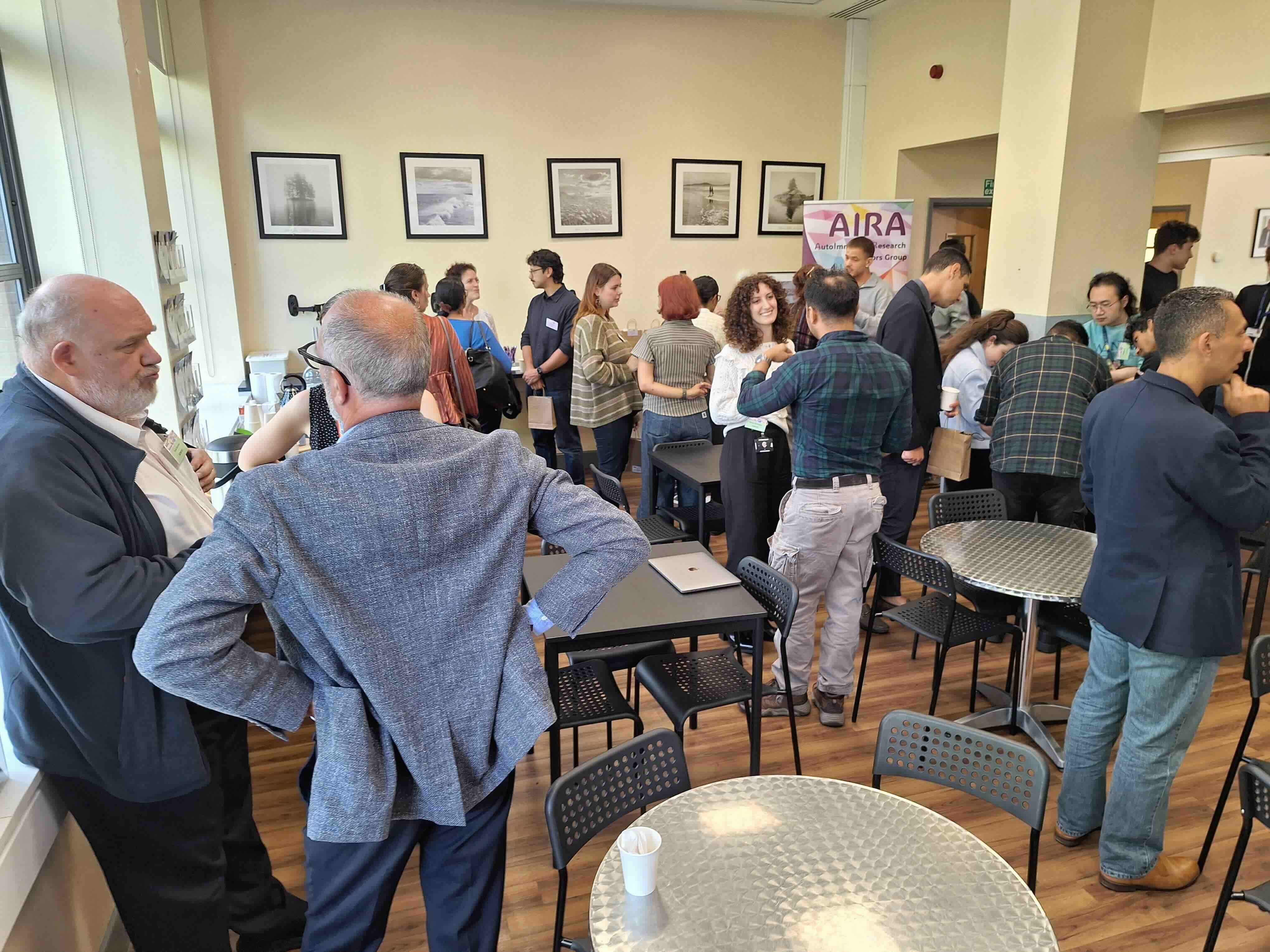
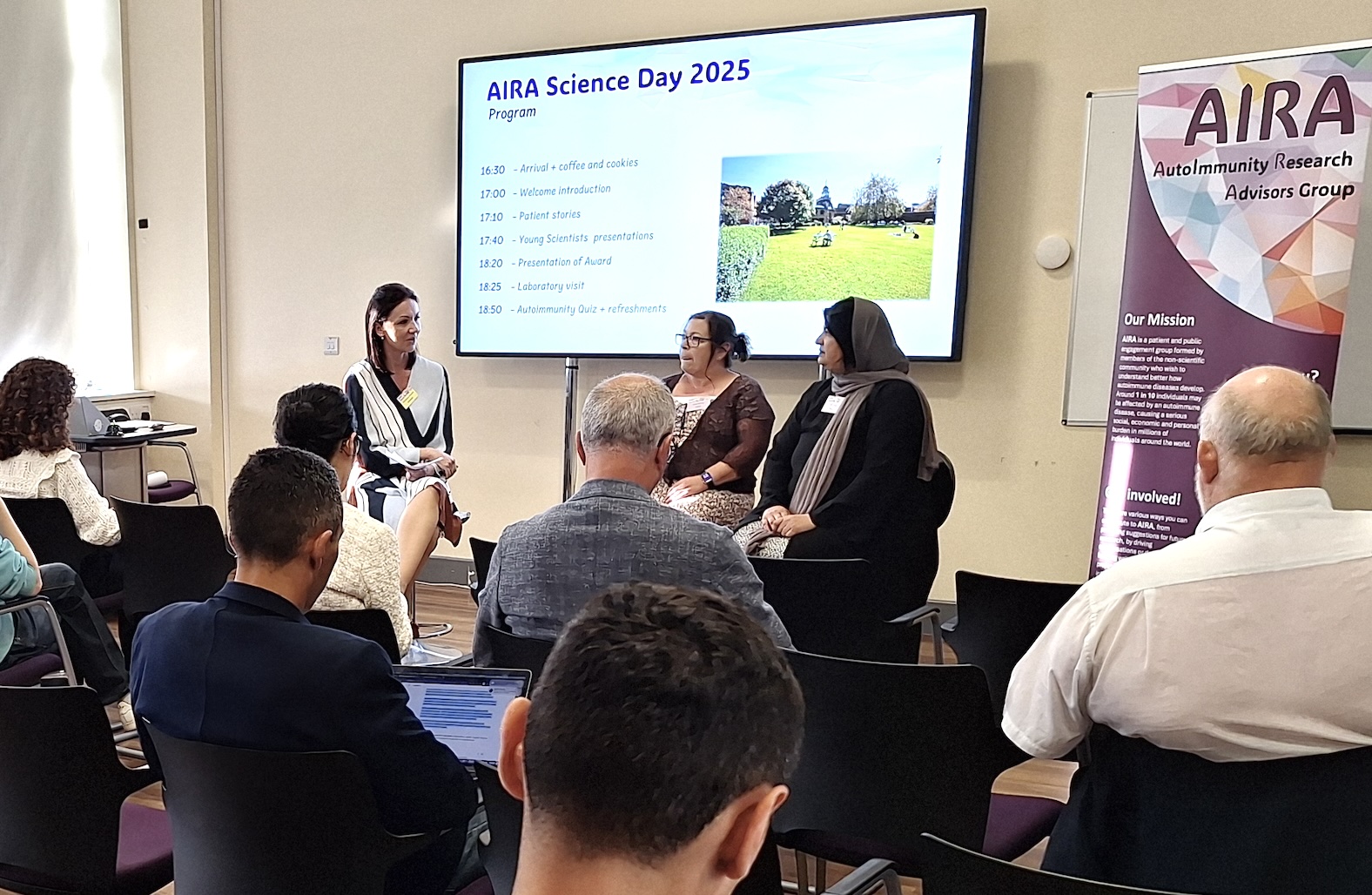
/filters:format(webp)/prod01/channel_262/queen-mary-university-of-london/media/qmul/publicengagement/case-studies/20250904_165101.jpeg)
What types of activities took place as part of the event? How did you approach communicating the research?
The aim of AIRA Science Day 2025 was to provide a two-way communication ground in which patients and members of the public could speak to scientists directly, and vice versa.
We started the event with a quick networking session over coffee and cookies which allowed us to finally meet our AIRA members in person, some of them joining AIRA more than a year before. This was followed by the first structured activity, ‘Patient Stories’, designed to give the opportunity for patients to speak to an audience of scientists. This was a very inspiring session, formatted as an interview, in which a patient and the mother of a child with an autoimmune disease shared with scientists their struggles with their conditions. Then, we swapped places, to allow young scientists (PhD students and postdocs) to showcase their research projects in a lay language during the ‘Scientific Talks’. This was an excellent training opportunity for them to gain experience in lay science communication, while allowing active involvement of our lay participants by evaluating and awarding the Best Talk Prize.
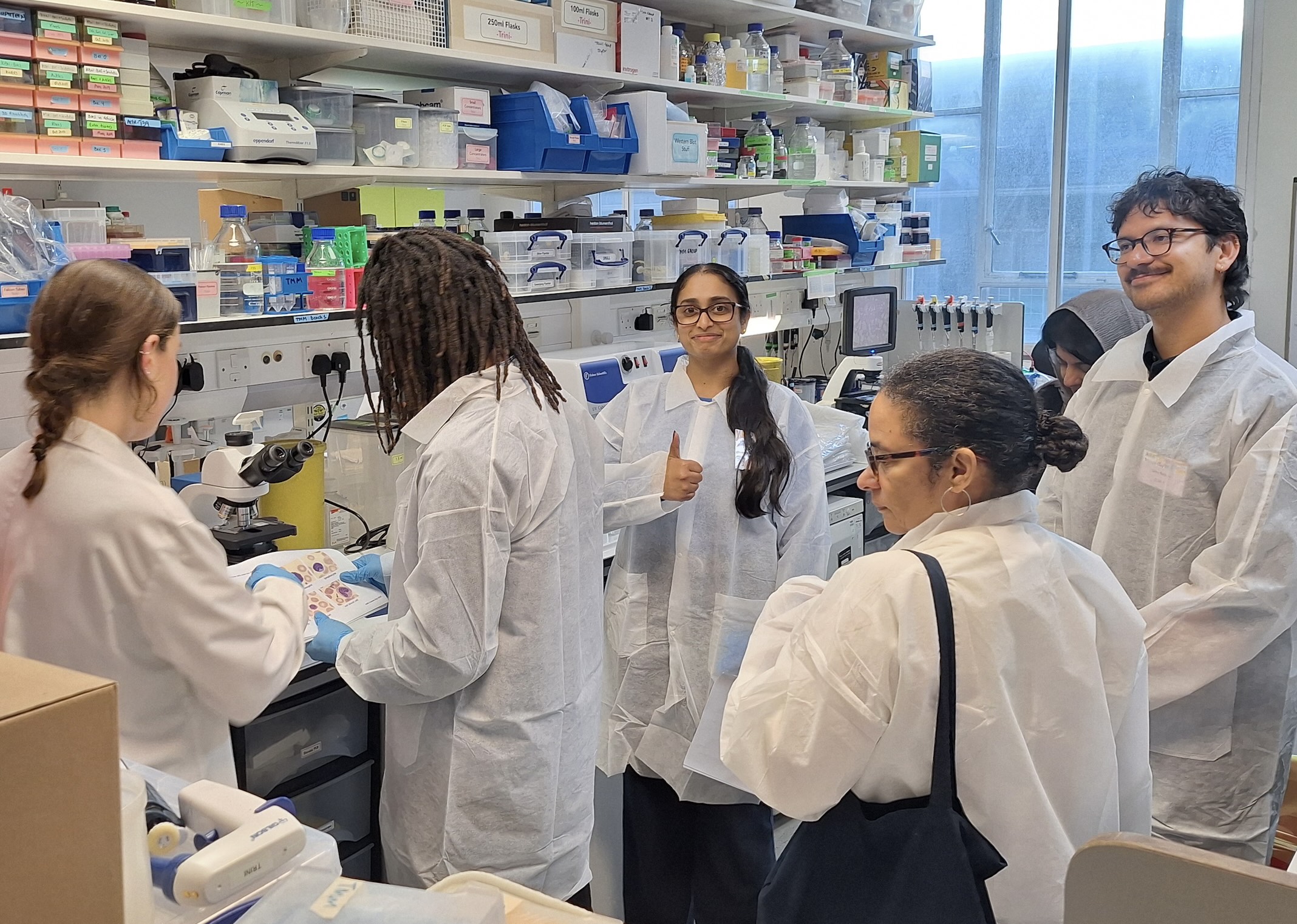
We then took our lay participants to our research facilities at the William Harvey Research Institute for a ‘Laboratory Visit’, where they had the chance to see, for the first time, a real research laboratory, use a microscope to learn how to identify immune cells, and even learn the basics of running a PCR test.
Finally, we couldn’t finish the day without a bit of fun, with a challenging but very entertaining ‘Autoimmunity Quiz’. Besides the fun, this activity had another purpose: to serve as an informal test of the new learning acquired by our participants, as the questions were based on the talks, lab visit and printed material we provided them on the day.
What did you learn from the people you engaged with?
As scientists we spend our days designing research, obtaining funding, conducting experiments and communicating our results to scientific audiences, but surprisingly, very rarely we have the opportunity to listen to those patients for which we are developing new therapies for. Thanks to this event, we gained a better understanding of patients’ journeys through their conditions, from experiencing initial symptoms they do not understand, the complexity of navigating healthcare systems to find help, how these diseases impact their day-to-day lives, and what expectations they have for their future. These insights can now help us, as scientists, guide and direct our efforts towards aspects of diseases that matters to patients.
Something that surprised us was the number of questions that the audience had during the Scientific Talks. This tells us two things: first, that patients and members of the public are thirsty for learning about science, and second, and judging by the insightful questions they asked, that if science is communicated properly to a lay audience, it can stimulate a very fruitful crosstalk. The feedback items we received after the event tells everything, as an example:
“For someone like me, who has zero science background, the opportunity to observe the young scientist talks, and to actually understand what was being explained to me, was life-changing.”— Attendee at the AIRA Science Day
What impact has the activity had?
Creating AIRA has been fundamental, not only to my research but also to other PIs within FMD. AIRA group has contributed to several grant applications, including MRC, BBSRC, Marie Curie Fellowships or Horizon European grants among others, evidencing our broad commitment to integrate patients and members of the public into our research ambitions. Then, celebrating the AIRA Science Day 2025 was fundamental to strengthen our links with the members of the group and to maintain their engagement and excitement to keep contributing to our grants and projects in the future.
Furthermore, in line with our academic mission to provide education and training, this activity represented a valuable opportunity for Postdocs and PhD students to improve their science communication skills, interact with the public and to contribute to multiple aspects of the organisation of the event.
Do you have any top tips for those that might be planning similar activities in the future?
- Venue - securing a venue might be more challenging than anticipated. Factors to consider include whether you want to hold the event on or off campus, capacity and availability of rooms on campus, estimation of number of attendants and choosing appropriate days and times which varies depending on the target audience (weekdays or weekends, after-work times, observance days, school days, etc.).
- Timing - do not pack every minute with activities, allow for ‘buffer’ time to account for unexpected events or sessions taking longer than planned. Our Scientific Talks took longer due to the unanticipated (but very welcome) interaction of our participants during the Q&As.
- Give something they can take home - besides the learnings ‘on the spot’ during the event, we wanted to ensure our participants retain specific knowledge relevant to autoimmune diseases. We provided ‘info cards’ with information, for example, describing the different types of immune cells, or with basic aspects of various common autoimmune diseases.
- Feedback - obtaining feedback is fundamental for planning future events. We obtained these by circulating a feedback form which participants filled in during the final drinks reception.
SDGs supported:
- SDG 3: Good health and well-being
Queen Mary University of London is committed to driving action for the Sustainable Development Goals through our research, education, and engagement. Find out more about the SDGs at Queen Mary University of London.