
Crocheting the air: Engaging the community in air pollution research
In collaboration with
Find out how staff from the CHILL study found new ways to engage with the public about air pollution data and the impact of poor air quality on health.
- Faculty: Faculty of Medicine and Dentistry
- School: Wolfson Institute of Population Health
- Format: Pop-up display; Hands-on activity
- Key themes: traffic-related air pollution; public health; children’s health
Please could you give us an overview of your public engagement activity?
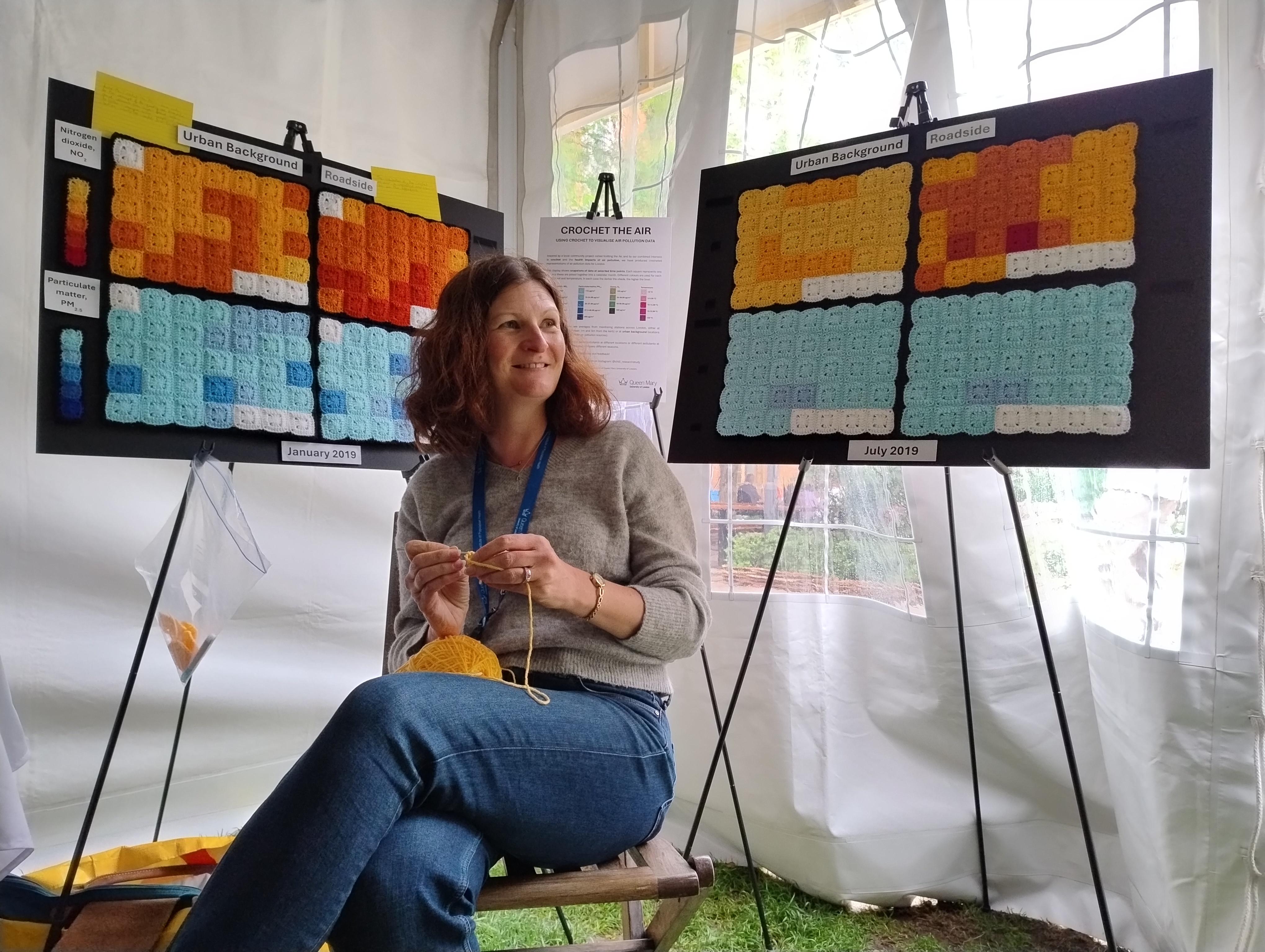
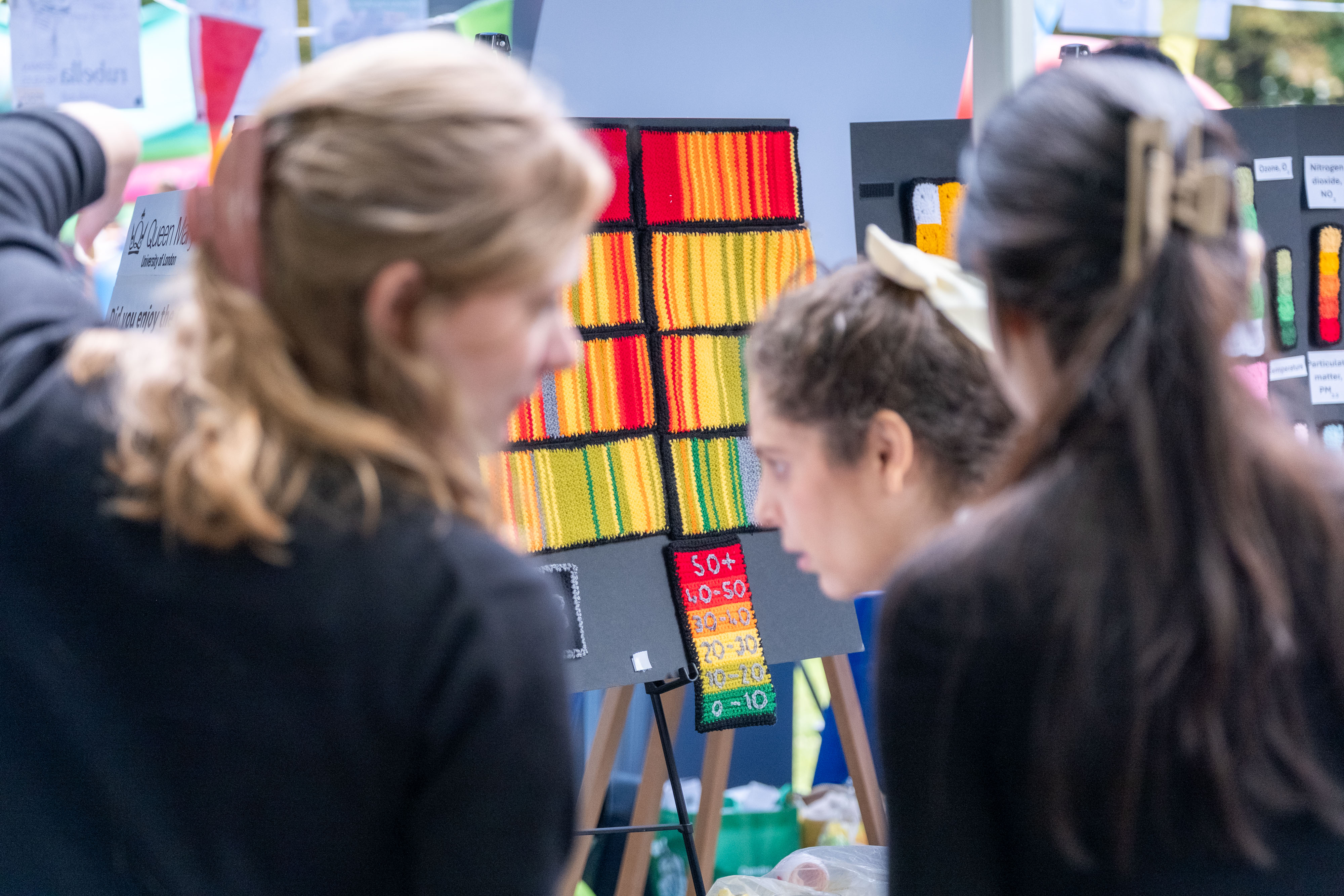
This project was about finding new ways to engage with the public about air pollution data and the impact of poor air quality on health, from the CHILL study (Children's Health in London and Luton). We used crochet as a means of presenting publicly available air quality data to audiences that may be unfamiliar with more traditional methods of data presentation (graphs, charts, etc.) We aimed to use these crochet pieces to start conversations about our research and to discover what people already knew about this topic and what they wanted to know more about.
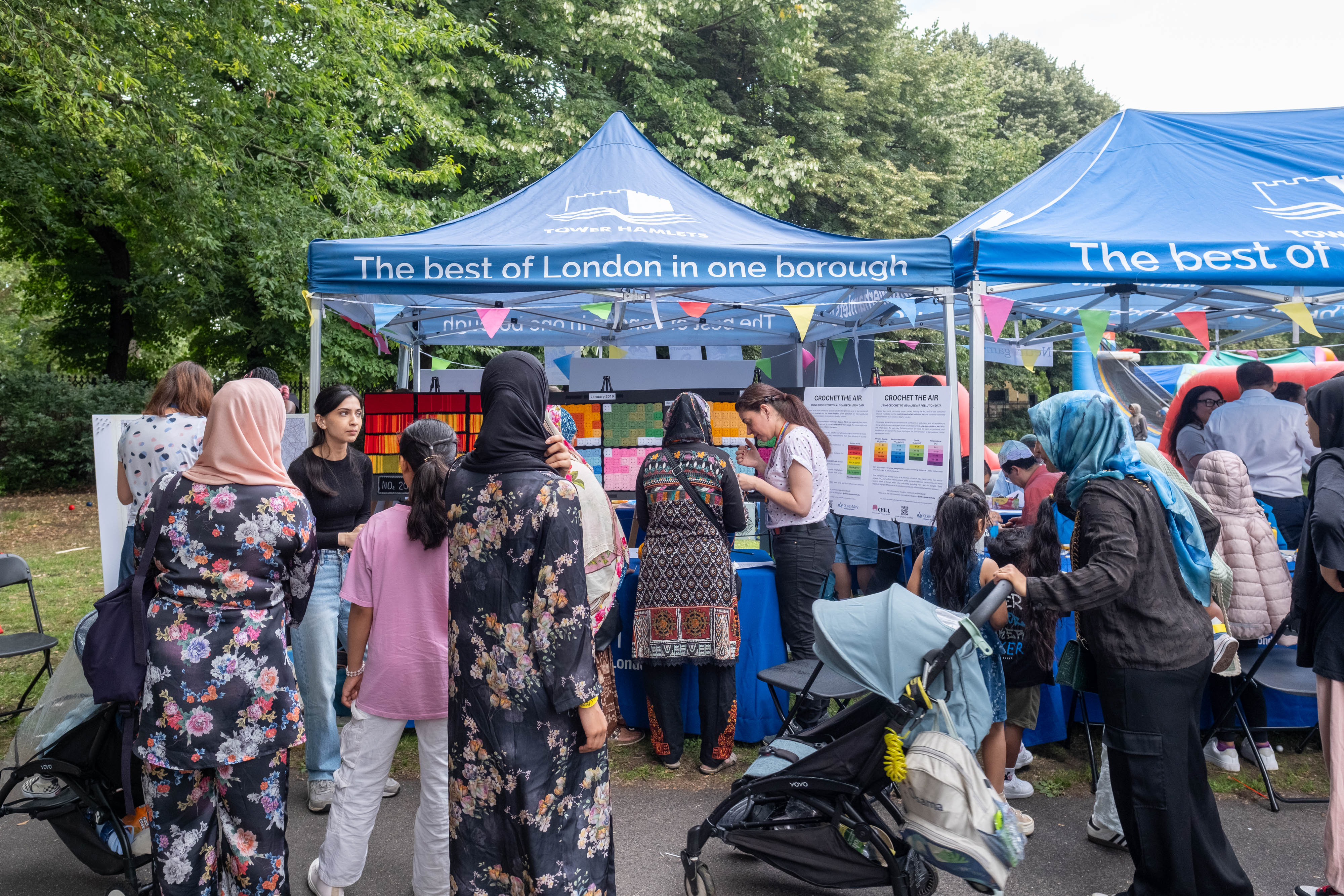
We were able to attend two official events for this project – the Great Exhibition Road Festival organised by Imperial College London and the Tower Hamlets Family Hubs Fun Day in Whitehorse Road park near Mile End.
The Great Exhibition Road Festival event took place in South Kensington and focused on both science and the arts. Our crochet work was displayed as part of a stall called “Cleaning the air: do clean air zones work?”. Approximately 200 people visited the stall over the two days of the event. The stall was in an adults-only area of the festival, and we interacted with people from a wide geographical area – from London, elsewhere in the UK and from overseas. Conversations focused on topics such as the impact of the London Ultra Low Emission Zone (ULEZ), different types of air pollutants and sources and how these are affected by location, season, weather etc.
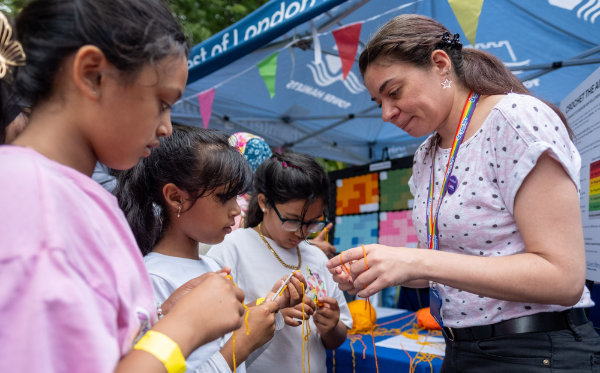
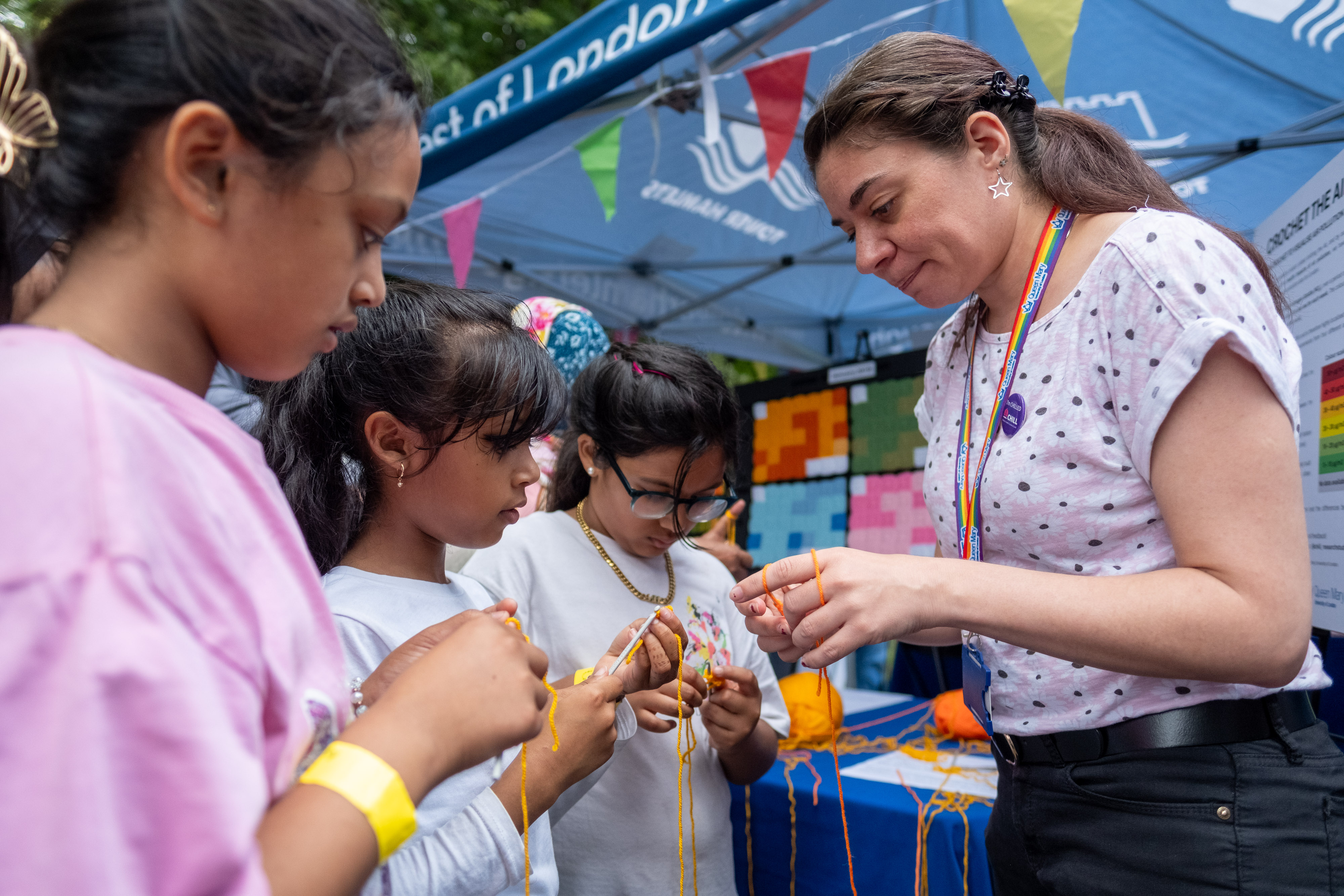
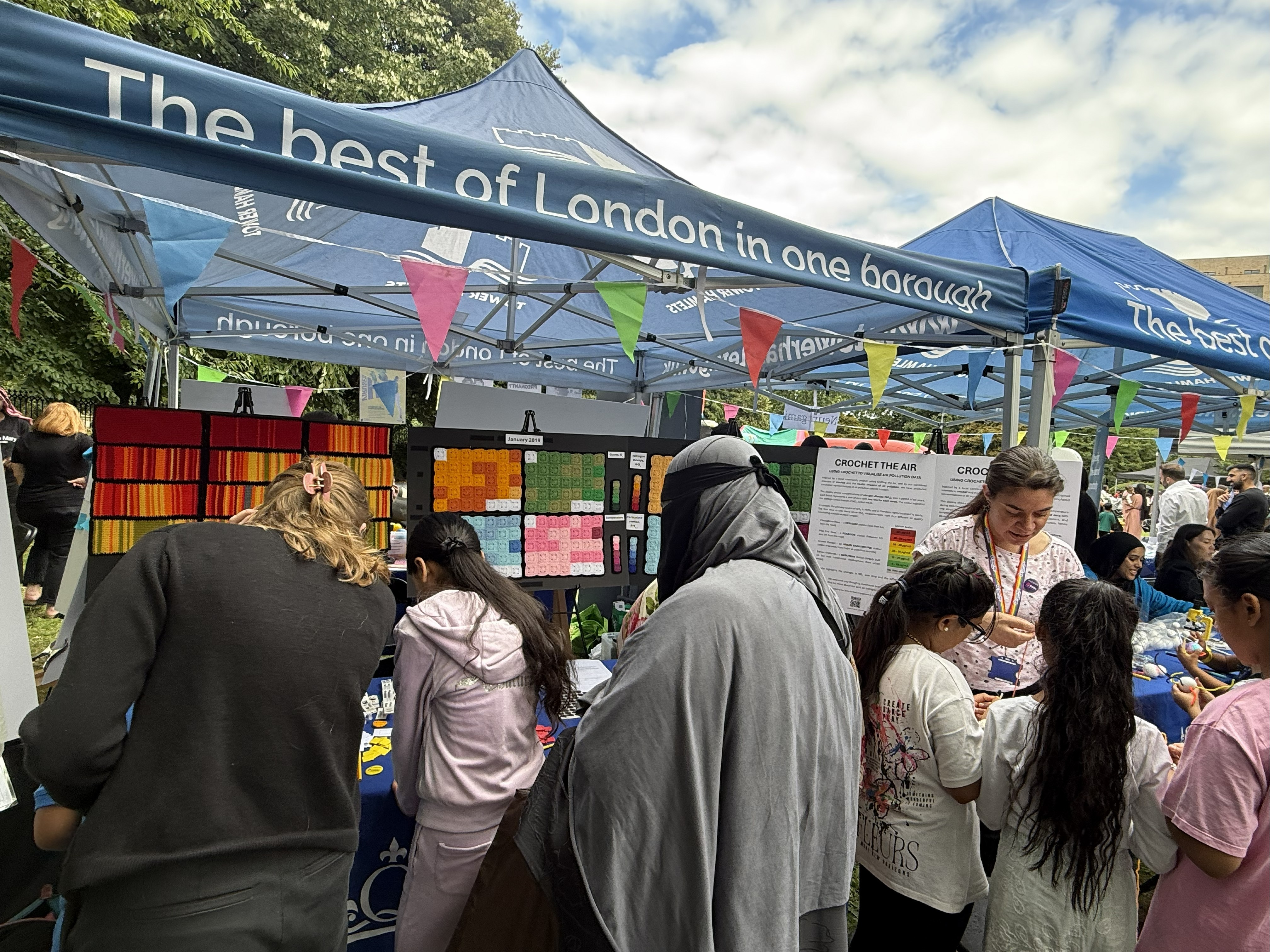
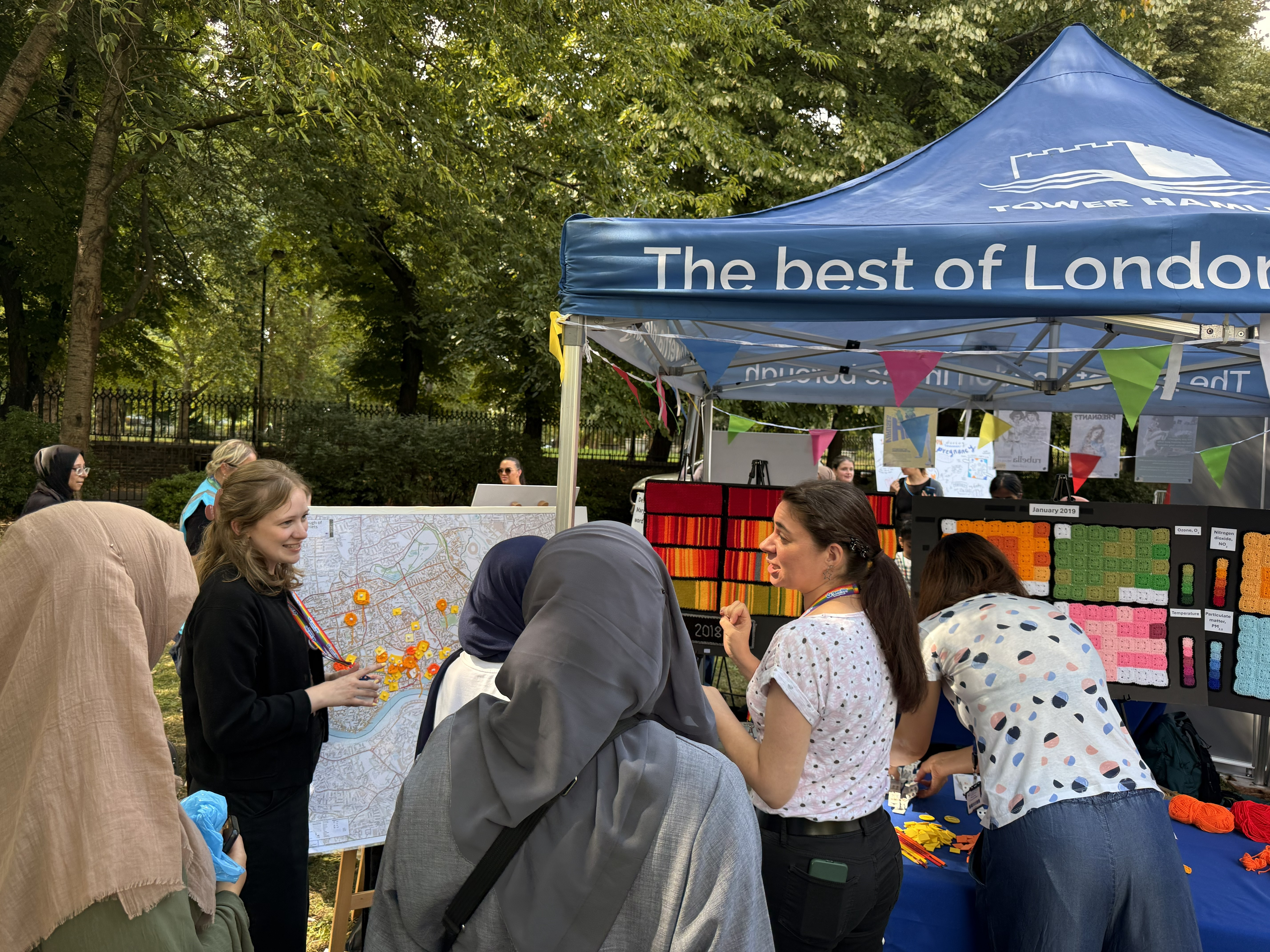
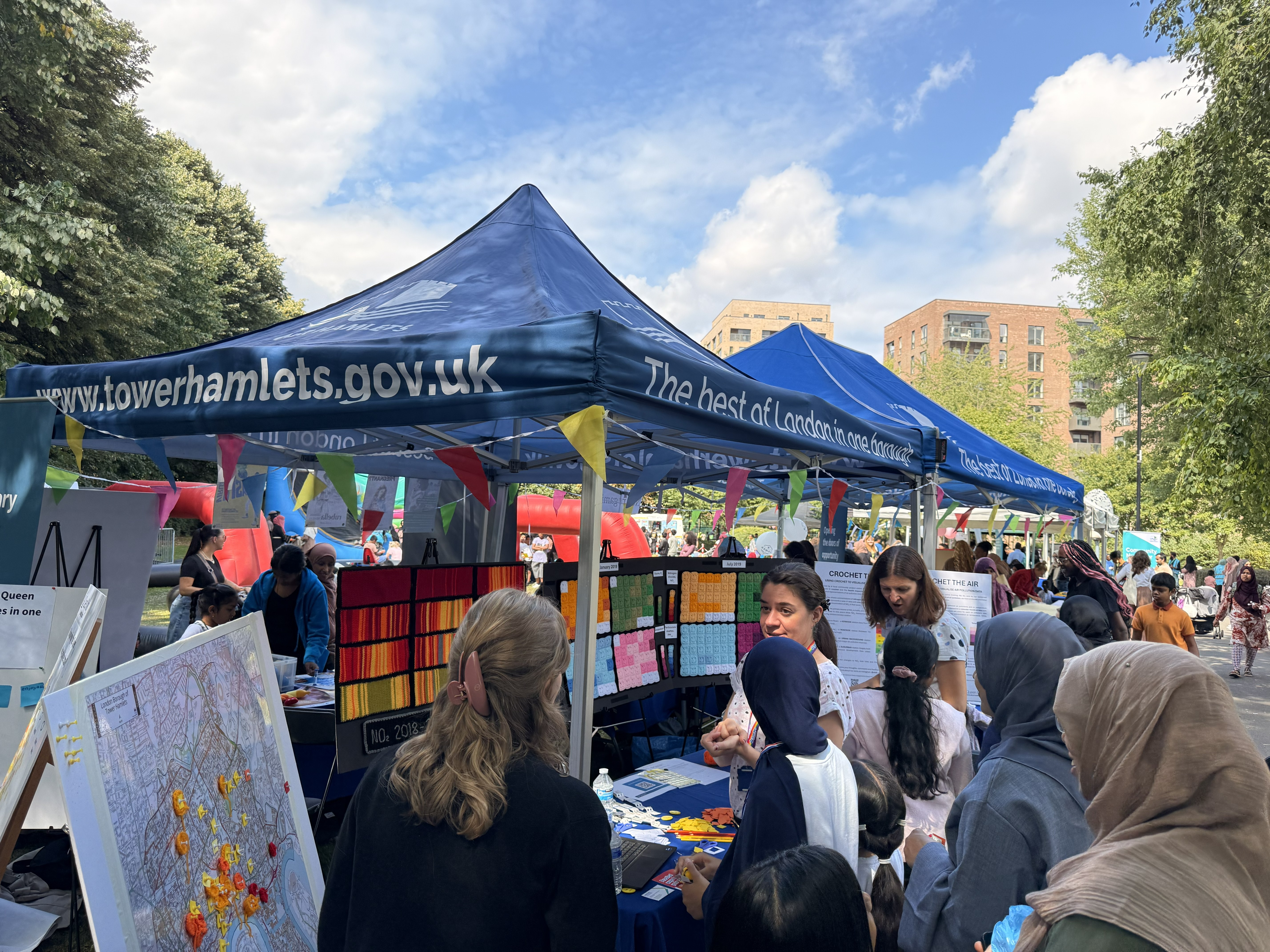
For the Tower Hamlets Family Hub Fun Day, we tailored our stand to the local area by including an interactive activity. We brought a large, laminated map of Tower Hamlets and invited people to use an online resource to look up the air quality at their residential postcode and pin a crocheted or paper square on the map to build up a picture of air quality in their local area. We talked with both children and adults at this event and discussed things like where pollution comes from, how they choose to travel, car use, public transport options, and choosing walking routes to avoid pollution. This event attracts around 1000 visitors, who were mostly local to Tower Hamlets.
How did you approach communicating the research behind the project?
The idea to display air pollution data through crochet was inspired by another project called ‘Knitting the Air’. This project used air pollution measurements from two monitoring stations in Poplar, Tower Hamlets, to create knitted pieces that can be displayed to local communities to raise awareness of the health issues around air pollution. We felt inspired to do something similar with data relevant to our research (the CHILL study) which is investigating the impact of the ULEZ on children’s health. We have used colour-coded crochet pieces to demonstrate how air quality can change between locations and seasons, and a larger scale piece to show how air quality has changed since the introduction of the ULEZ. We found that the bright colours and tactile quality of the work excited curiosity and created an effective way to initiate a conversation about the wider topic of air pollution that could then be directed to discuss our research or to discover what people know about air pollution and how they feel about it.
/filters:format(webp)/prod01/channel_262/queen-mary-university-of-london/media/qmul/publicengagement/DSCF4317_family-hub.jpg)
What did you learn from the people you engaged with?
We learned that, generally, people are interested in talking about air pollution and want to engage with researchers. People we spoke to usually knew about traffic-related air pollution being bad for health, but not specifically how it is bad for you, how it affects all different aspects of the body and about the different air pollutants. People were interested in how the crochet displays visualized the patterns in how different air pollutants show up in different environments, how they relate to each other and temperature, and how they change over time. People were often not aware of simple things that they could do to reduce their exposure, such as walking as far as possible from the edge of the kerb and were pleased to learn about that. Not surprisingly, given the nature of the displays, they prompted conversations about crochet and knitting. Lots of people told us they would love to learn, and at the Family Hubs Fun Day in Tower Hamlets we interacted with lots of children who were very keen to try crocheting.
You used notecards to capture people’s reactions, thoughts and feelings about the project – did this work well?
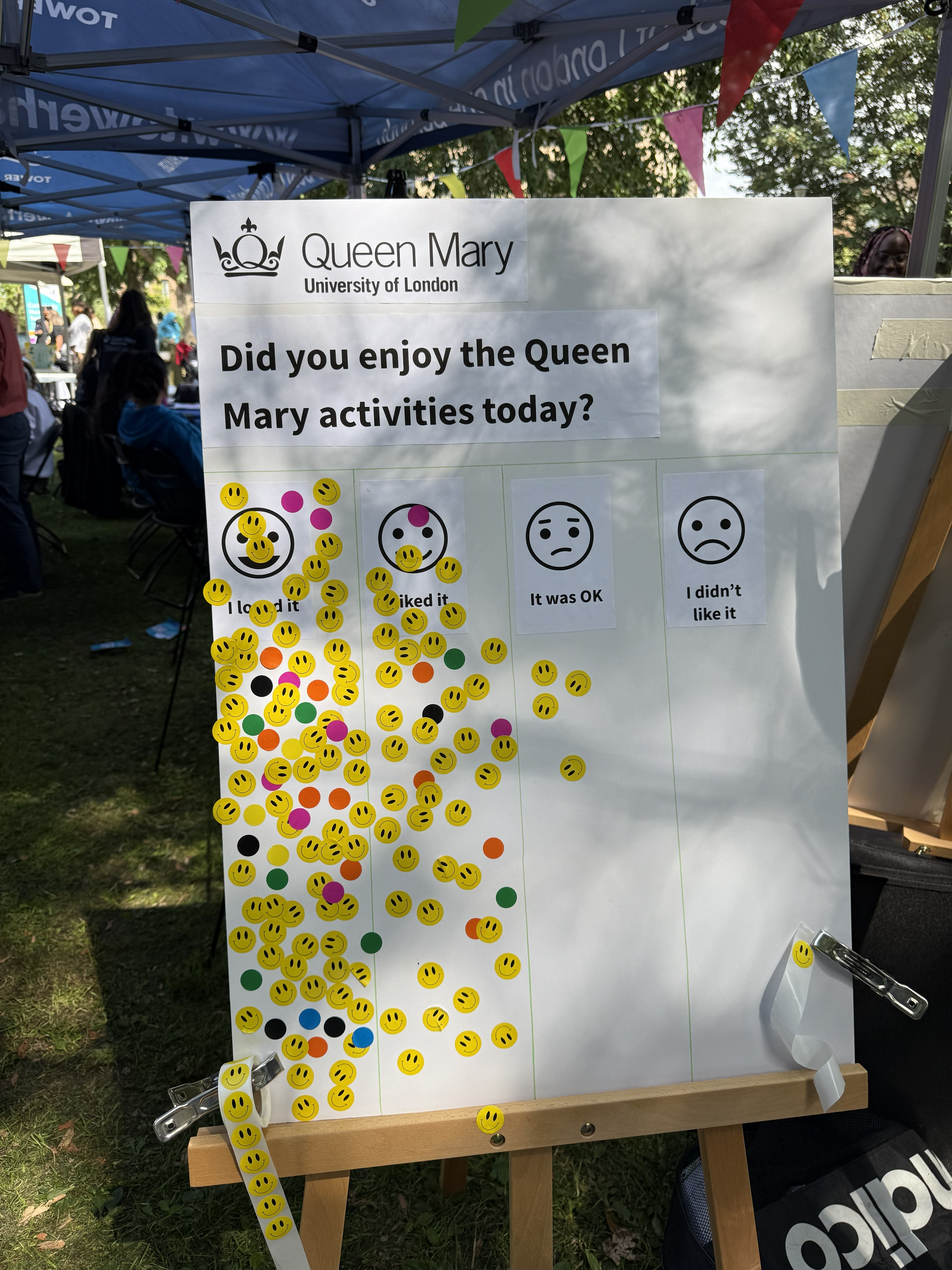
This was not a hugely successful aspect of the project, as not many people gave feedback in this way. We had some positive comments back from the Great Exhibition Road Festival, which was in the adults-only zone, and found that sticky notes were good for this as we could stick them up on a board on the stall. But at the Family Hub Fun Day it was far too busy and hectic to engage people in this way. As part of the QMUL stand, the CPE team had asked people to rate the stand using stickers, which was a nice simple way to express their opinion. It might have been nice to ask people to record a quick ‘vox pop’ feedback on video (if they were happy to be filmed). We might try this in the future as it’s very useful for social media.
What would you like to do next with the project?
As part of our activity at the Tower Hamlets Family Hub Fun Day we introduced the activity where people could look up the air pollution exposure at their home postcode and add this information to a map of Tower Hamlets. This worked well and created an opportunity for people to get hands-on with building a personalized image to inspire reflection on the air quality in their local area. We would like to develop this activity for future events and have more interactive activities alongside the crocheted pieces.
We have also stayed in touch with the organizer of the 'Knitting the Air' project and are looking for opportunities to work together on future projects.
The findings of the CHILL research study are due to be published in the next few months, and we intend to display the crochet pieces at dissemination events being held to promote the findings of the study.
Do you have any top tips for those that might be planning similar activities in the future?
- Interactive activities are always good as people tend to feel more comfortable talking to you if they have something to do at the same time, rather than speaking face-to-face.
- Personalising an activity, for example, looking up the air pollution level where they live, makes the issue directly relevant to them and therefore increases their interest and engagement.
- Hands-on activities, where people get to do or make something, even if it’s as simple as colouring in a paper square, are well received. Make sure, is possible, to have different levels of the activity to make it accessible to all ages, e.g. young children could colour a square, older children and adults could cut a square out of coloured foam or crochet a square.
- Bring something novel, that they haven’t seen before and make it bright coloured and visually attractive.
SDGs supported:
- SDG 3: Good health and well-being
- SDG 11: Sustainable cities and communities
Queen Mary University of London is committed to driving action for the Sustainable Development Goals through our research, education, and engagement. Find out more about the SDGs at Queen Mary University of London.