
The Big Mouth Project: Shaping Oral Health Priorities through Community Conversations
- Faculty: Faculty of Medicine and Dentistry
- School: Institute of Dentistry
- Format: Community Conversation events; Online survey; project mural; booklet
- External Partners: Social Action for Health
- Key themes: community health; oral health; community-led research
Please could you give us an overview of The Big Mouth project?
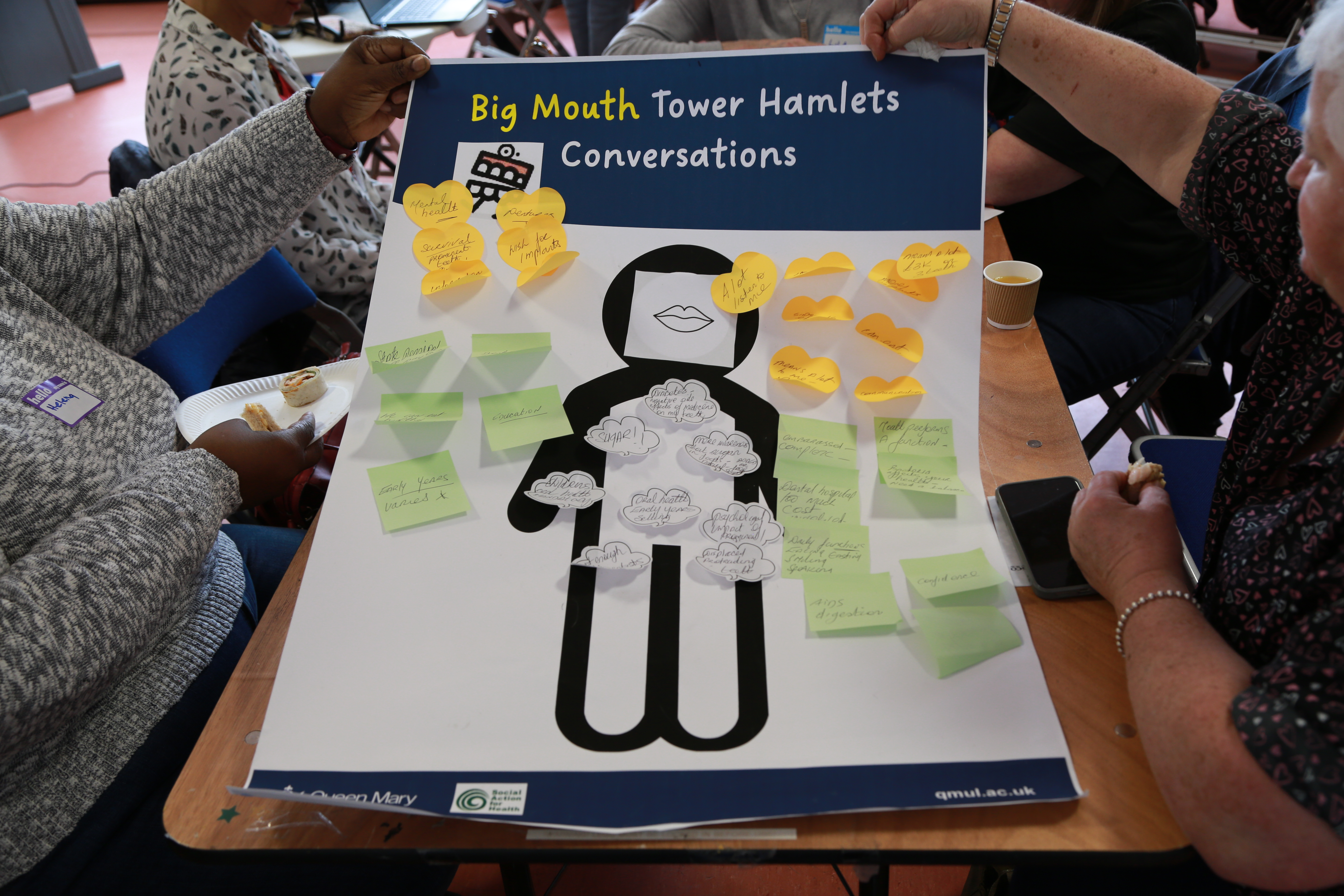
The Big Mouth Tower Hamlets project aimed to capture the questions, ideas, and topics that local people wanted the future oral health research and teaching at the QMUL dental school to focus on to improve their oral health. It was led by Vanessa Muirhead in the Institute of Dentistry (IoD) , Stephen Taylor in the School of Society and Environment and working with Social Action for Health (SAfH), a local health charity. It emerged from our initial conversations with SAfH that revealed a stark disconnection between community needs and interests and our current research and research priorities. Most oral health research takes a deficit approach, focusing on disease and illness and highlighting Tower Hamlets as the borough with the worse oral health outcomes and lowest number of service users. However, Tower Hamlets hosts more than 1,300 community and voluntary sector groups who are actively involved in promoting health. We wanted to use an alternative asset-based approach that recognised these community strengths to empower communities and stimulate discussions about “what makes people well”? The name Big Mouth encapsulates this idea of giving people a voice in shaping the research that to improve their health and wellbeing.
Please could you tell us about the external partners you worked with on this project?
We formed a close working relationship with Grainne Colligan and Ceri Durham at SAfH who were instrumental in shaping the project. We draw on the SAfH teams’ reputation as trusted gatekeepers with vast expertise and experience of working and supporting diverse communities.
We were selected to host two Youth Insight peer researchers, who were part of a QMUL Centre for Creative Collaboration project that developed a toolkit to help young people get involved in research. Their observations and critical insights helped us to think critically about how to engage young people in future work.
We also worked with Isolde Godfrey, a creative artist from Woven Ink who created the Big Mouth Conversation project mural. This not only aligned with the QMUL civic engagement principles supporting local employment opportunities but also used creative methodologies to produce a long-lasting visual project legacy.
/filters:format(webp)/prod01/channel_262/queen-mary-university-of-london/media/qmul/publicengagement/case-studies/1770818255463-eb33ed4c-467c-46be-a30e-0e9a887f7ec5_1.jpg)
Please could you tell us more about any specific events you delivered as part of your project?
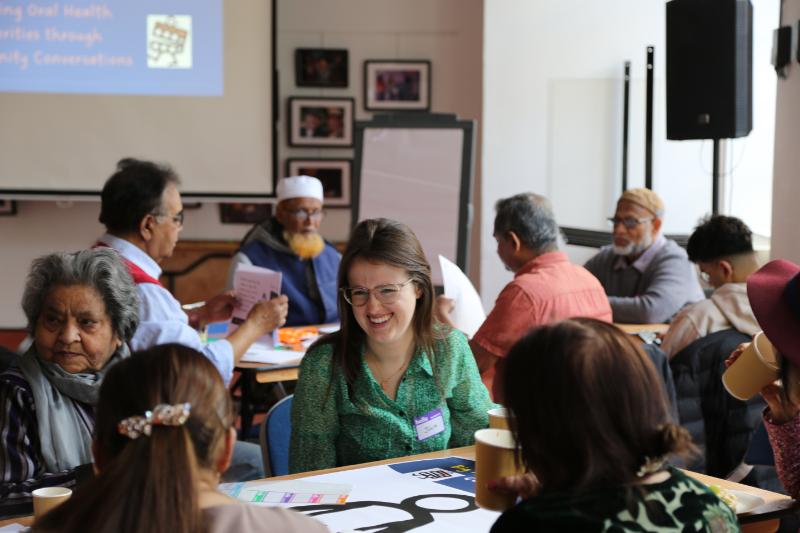
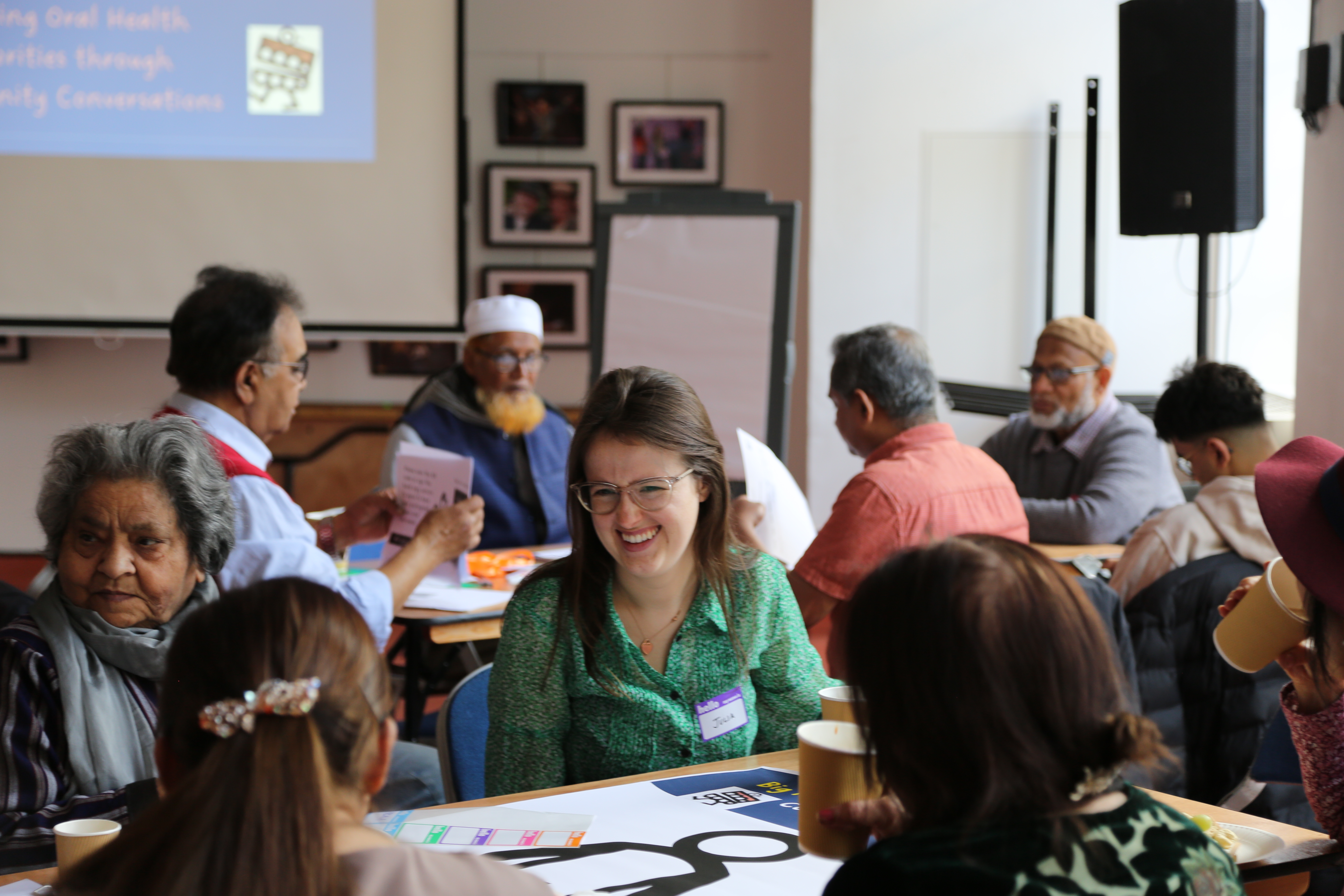
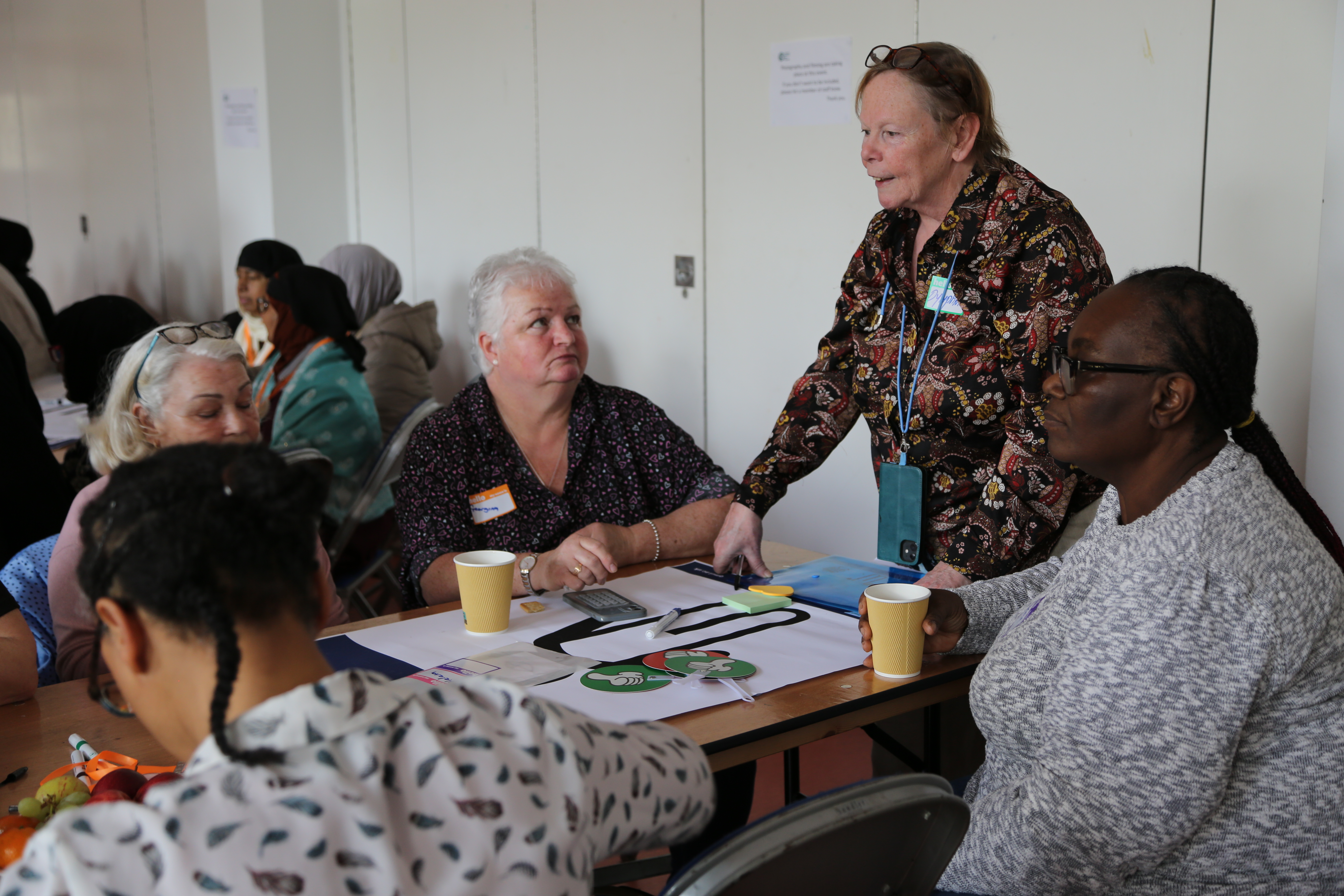
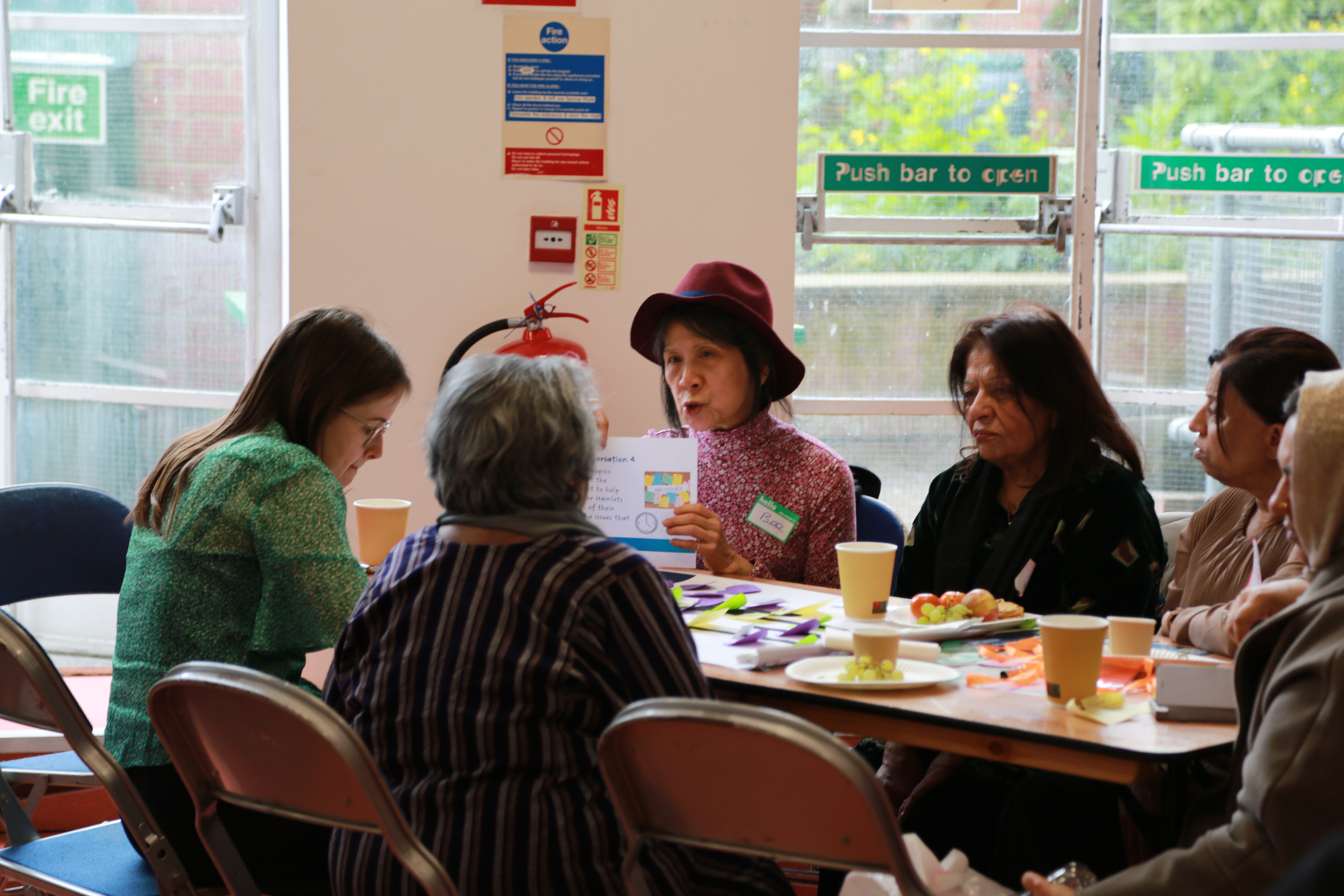
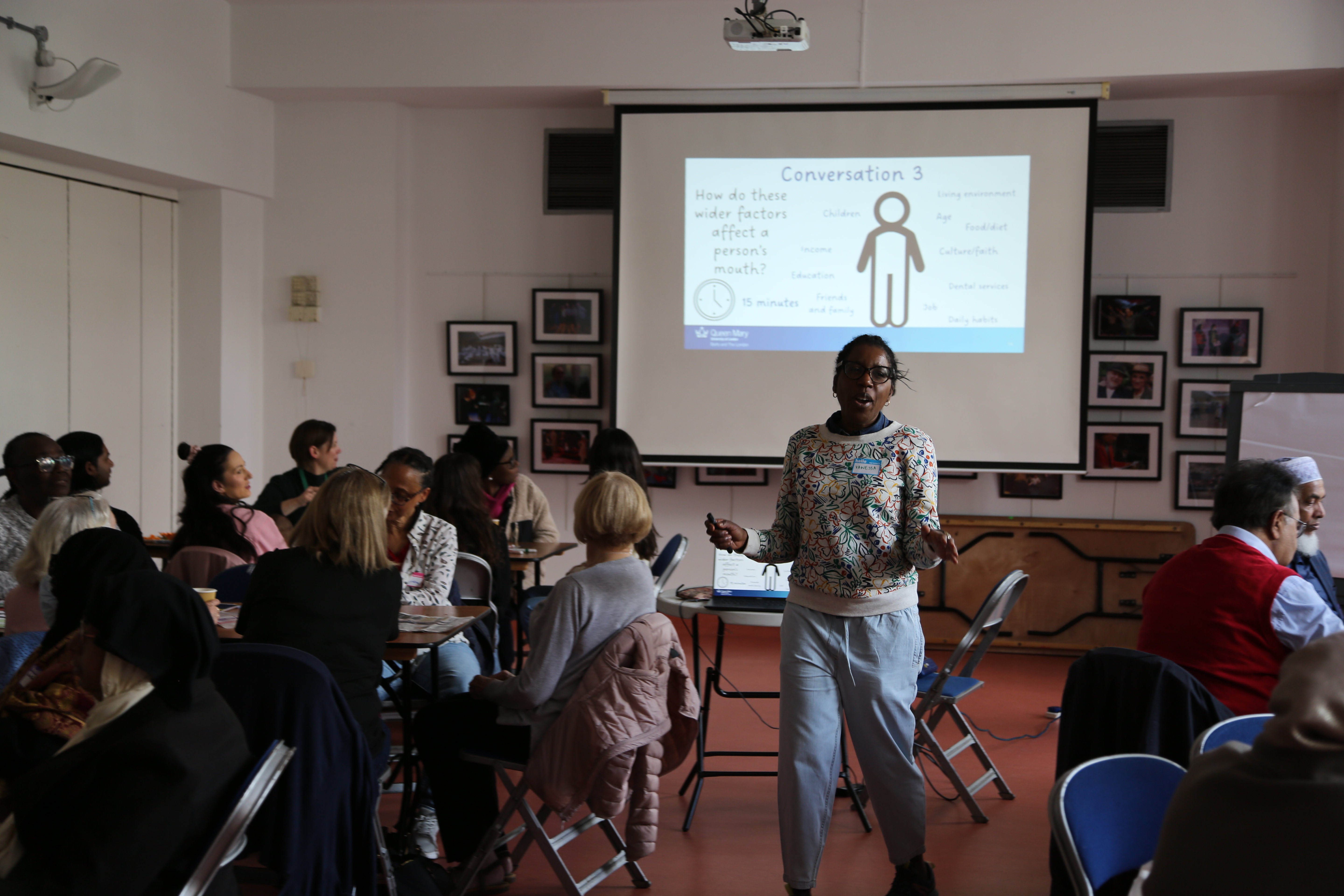
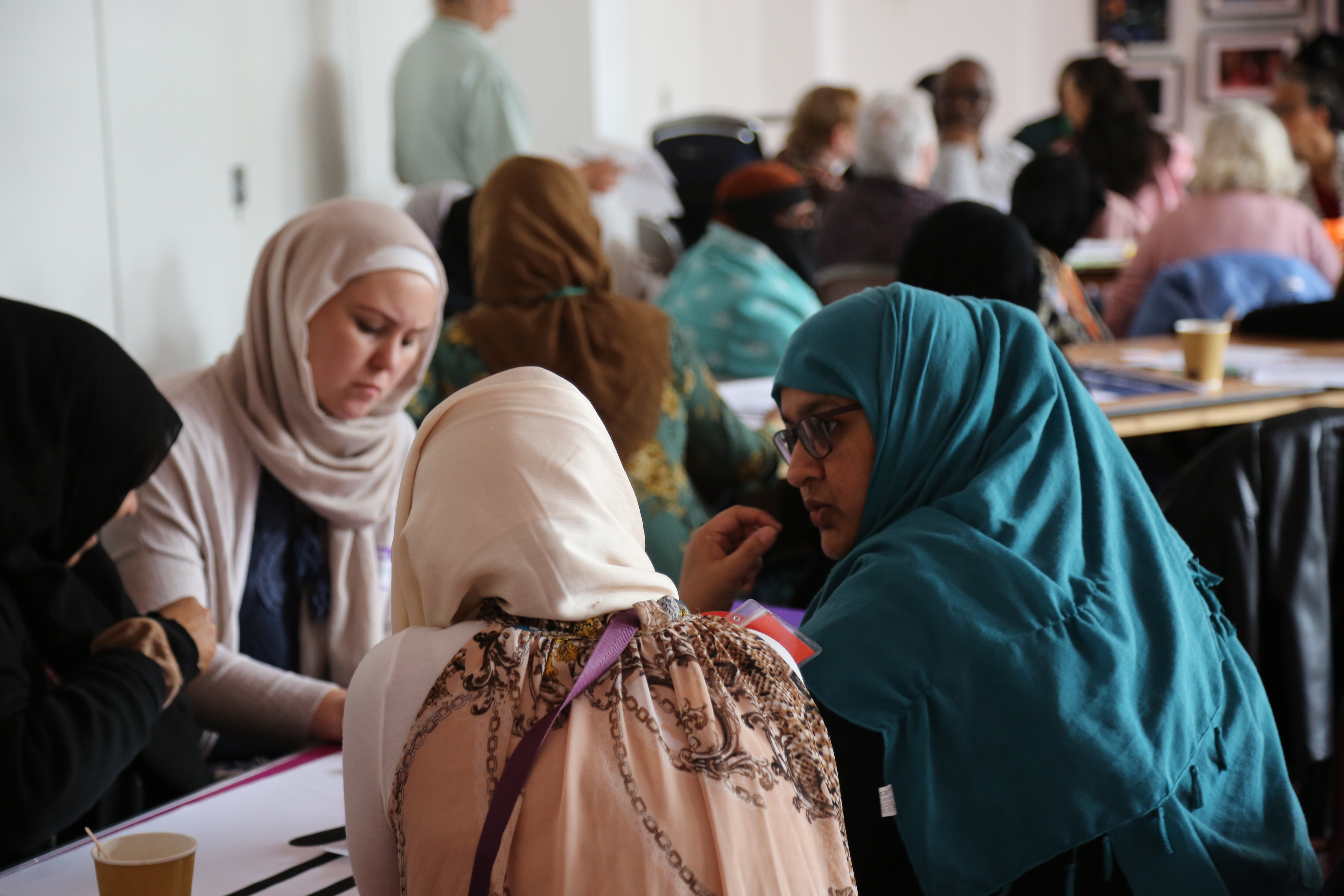
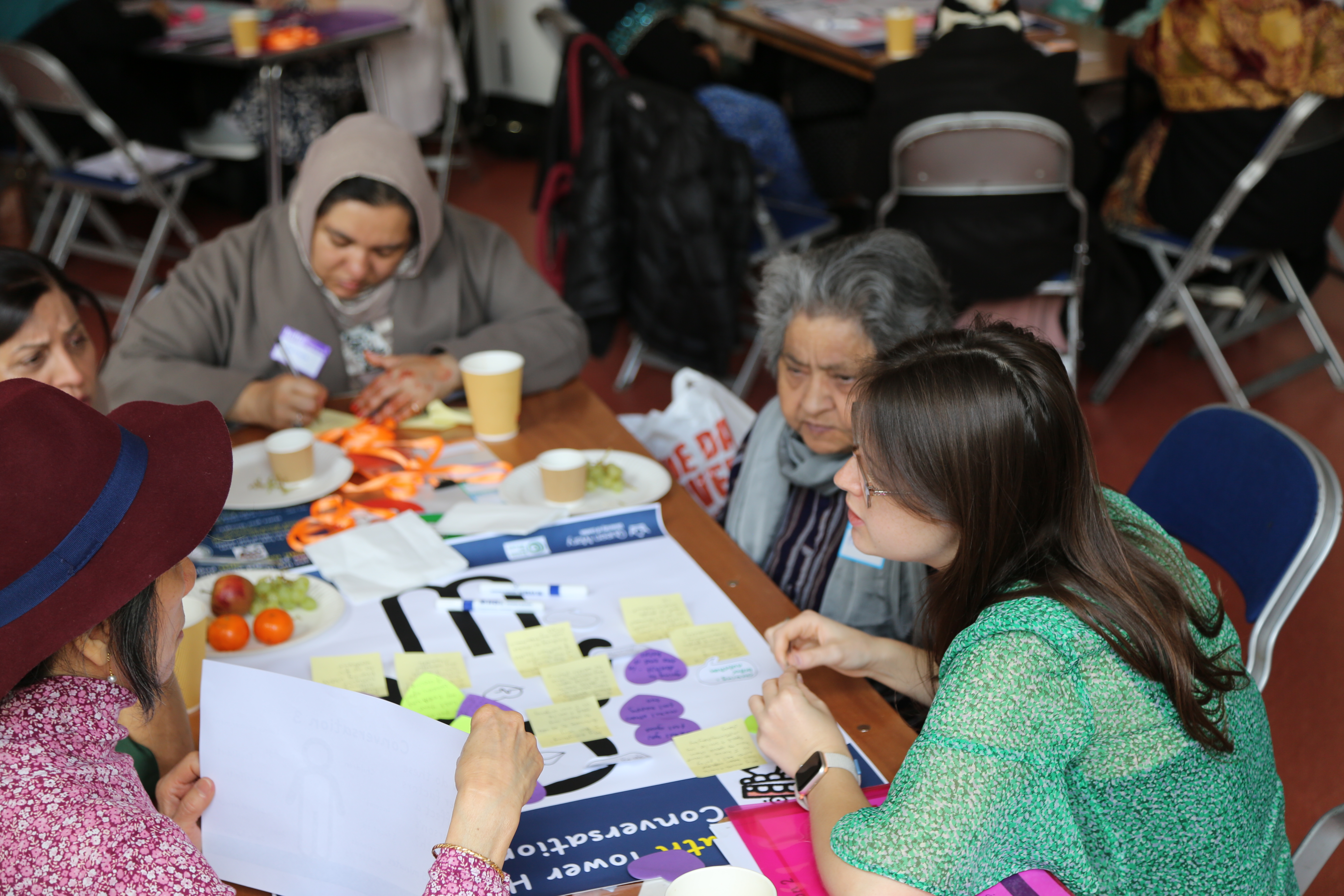
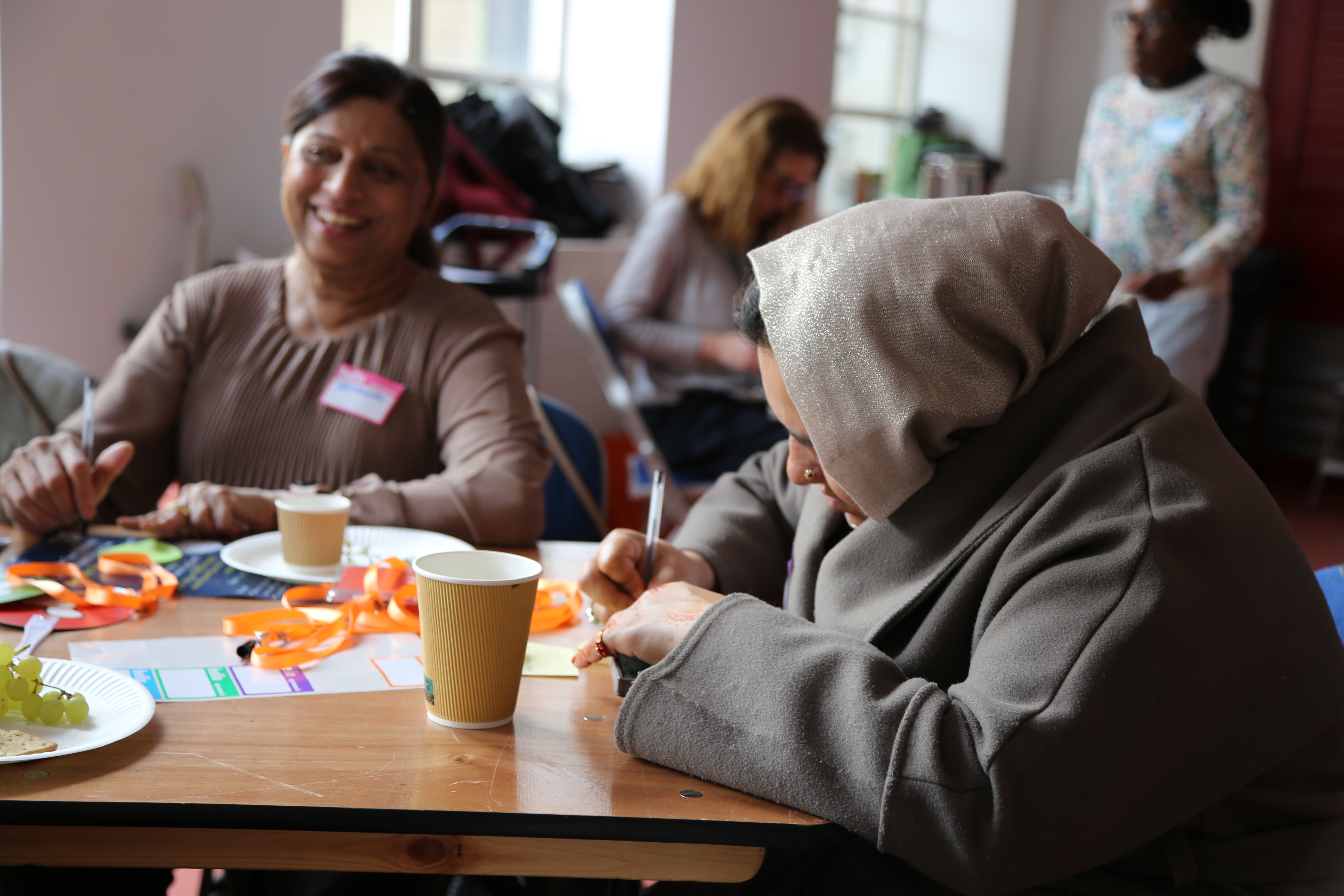
We used a wide range of approaches to capture different viewpoints holding in-person and online Big Mouth Conversations and a special Big Mouth Conversation with English for Action (EfA). It was fascinating capturing the lived experiences of seldom-heard English Speakers of Other Languages (ESOL). Our online survey also gathered responses from people who preferred written communication. We then collated and analysed the information to identify themes, which were then shared with participants, QMUL academics and stakeholders in the Big Mouth Crosstalk. Finally, we summarised the process and findings in the Big Mouth book, which we shared in a feedback event in November 2025.
Please could you tell us more about the different audiences your project reached?
Because of time constraints, we chose a cascade approach connecting with existing voluntary and community organisations to help engage with local people. This also meant liaising with Healthwatch Tower Hamlets, with the Tower Hamlets Community Volunteer Services and 70 different community groups who circulated our recruitment material through their networks. We also used social media to raise awareness.
Working with existing community groups helped us to engage with a diverse range of people from different ages and backgrounds including men from the Bengali men’s group, participants from the older people group in the Isle of Dogs and new arrivals and English Speakers of Other Languages (ESOL) from English for Action. Our announcements where also reshared on social media posts by groups such as Healthwatch Tower Hamlets and Tower Hamlets Council with 932 views from X posts and more than 1,000 LinkedIn impressions. We were also featured in Healthwatch Tower Hamlets newsletters reaching a wider target audience.
We engaged with over 50 people through the community conversation events, and received over 370 responses to the online survey.
What kinds of feedback did you receive from audiences you engaged with?
Feedback from one of the Big Mouth participants captures the positive impact of the project:
I wanted to congratulate you and your amazing team on the Big Mouth Tower Hamlets Highlights. The presentation was truly fantastic. It clearly reflects how deeply you all care about listening to and working with the community to improve local oral health, and the dedication behind it really shone through... I really appreciate being included in such a meaningful work.— Big Mouth participant
Where do you think this project will go next?
Having shared our key findings in our feedback event and published in the Big Mouth book, the next steps are to use the community-informed insights to shape future participatory research and actions working with SAfH, new collaborators, and the North East London Integrated Care Board to create sustained impact.
Please could you share any top tips or lessons learned?
- Do not work alone – be active in building multidisciplinary and interdisciplinary partnerships
- Take time to build sustainable and equitable partnerships
- Take advantage of the resources and training available at QMUL
- Be brave, open, and receptive to new ideas and ways of working with new and diverse audiences
.jpg)
SDGs supported:
- SDG 3: Good health and well-being
- SDG 10: Reduced Inequalities
Queen Mary University of London is committed to driving action for the Sustainable Development Goals through our research, education, and engagement. Find out more about the SDGs at Queen Mary University of London.
This project was supported by a Centre for Public Engagement Large Grant. Find out more about the Large Grants.