
Reframing Participation
Reflections on the Haringey Black Men’s Health Action Research Group
/filters:format(webp)/prod01/channel_262/queen-mary-university-of-london/media/qmul/publicengagement/blog/A-Dialogue-of-Equals-96.jpg)
Hosts Michael Morgan & Stafford Scott record the Dialogue of Equals podcast
The language of health equity has become increasingly prominent in public health conversations. Yet, Black African and Black Caribbean communities—particularly men—continue to face disproportionately poor health outcomes. Prostate cancer is a stark example. Black men are at a significantly higher risk (four times their White counterparts), but systemic barriers such as inconsistent offers of Prostate-specific antigen (PSA) testing and limited targeted information, limited awareness and a lack of culturally meaningful engagement have kept screening rates low. Such inequalities are not isolated incidents and are not limited to prostate cancer. They are often symptoms of deeper structural failures rooted in exclusion, mistrust, and a history of marginalisation.
In 2024, the Haringey Black Men’s Health Action Research Group was created in response to these realities, and as part of a wider public engagement project, The Partnership for Black People’s Health (PBPH). It was funded by a Centre for Public Engagement Large Grant with Stafford Scott of Tottenham Rights CIC leading the Group and Dr Sara Paparini working alongside him. The Group’s aim was to address the historic and persistent marginalisation of Black men’s voices within health systems, research, and public policy. The Group has provided an opportunity that many Black community members have historically been denied: the chance to be heard by those in positions of healthcare power. It has done this by uplifting and empowering community members to speak on their healthcare experiences and to define their needs from the healthcare system and public health policy.
This collaboration has extended from its original aims of co-creating a participatory action research study as part of the PBPH to collaborations and engagements on multiple studies about Black men’s mental and physical health at Queen Mary. The project actively challenges the outdated narrative that Black African and Black Caribbean communities are “hard to reach” or “non-participatory.” Instead, it asks the more critical questions of “how have our systems failed to centre Black men’s realities and needs?” and “how can we do better moving forward?”.
At the heart of the Haringey Black Men’s Health Action Research Group’s work is a rejection of extractive models of engagement. Models in which Black men’s time, stories and data are drawn on to inform research and services without real influence, shared ownership or lasting benefit for them. Instead, men are not only interviewed or consulted—they are co-producers of their own research, analysis and recommendations. This intentionally non-hierarchical approach aims to share power in the making of knowledge, allowing Black men to shape research priorities, outreach strategies, and outcomes that are relevant for their health. Lived experience is not only heard but embedded into real, actionable change.
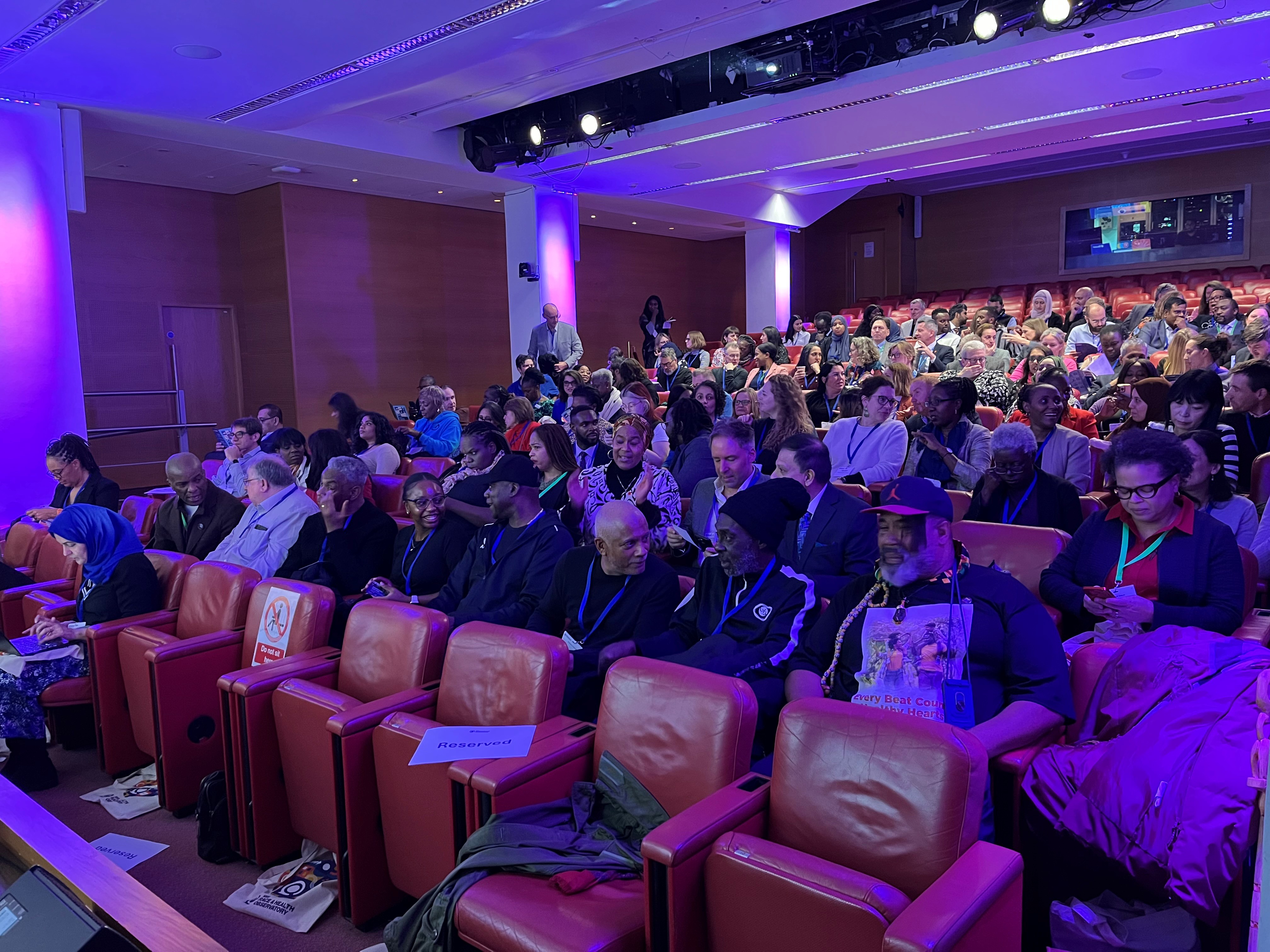
This model of partnership has guided the Groups’ collaborations not only with academic institutions, but also with organisations such as the NHS Race and Health Observatory and the Care Quality Commission (CQC). Members of the Group have shaped conversations on health topics and broader health system reform. One powerful outcome of this work has been the development of the “A Dialogue of Equals” podcast, which launched in July 2025. Presented by Stafford Scott and Michael Morgan, with research led by Dr Sara Paparini (WIPH), the podcast brings Black men with lived experience* of illness, and situated experience** shaped by racism, place, class and community, into dialogue with NHS clinicians and advocates. Together they discuss their top priorities for and concerns about Black men’s health and wellbeing.
Through this partnership, the Group also challenges the way evidence is constructed and valued. Too often, data on Black health in the UK is focused on disparities without context, failing to inform policy or improve outcomes. As part of the wider Partnership for Black People’s Health, the Group is committed to building a more representative and grounded body of knowledge, one that honours lived and situated experience and critically examines the power dynamics that determine whose knowledge counts in public health and academia.
Crucially, the approach exemplified by the Group moves beyond the limitations of traditional frameworks that often fail to account for the intersecting effects of structural racism, intergenerational trauma, and chronic exclusion—forces that uniquely shape health outcomes for Black communities, and Black men in particular – with structural racism now recognised widely as a social determinant of health.
Looking Forward: The Power of Shared Leadership
The experience of the Group demonstrates that reframing power dynamics and putting the community at the forefront creates the conditions for genuine partnership and lasting change. Collaborative participation is not just a process, it’s a principle that must be embedded in every stage of research, policy, and practice.
By centring Black men’s voices, expertise, and leadership, we not only improve the relevance and impact of health interventions, but also begin to dismantle the structural barriers that have long undermined health equity. As more institutions embrace this model of shared leadership, we move closer to a future where health systems are truly inclusive, responsive, and just.
For academics, policymakers, and practitioners, the lesson is clear: effective partnership working requires humility, openness, and a willingness to share control. Only then can we hope to overcome entrenched health inequalities, and build a healthier future, together.
Written by Vimbai Mandaza, Stafford Scott and Sara Paparini
* Lived experience is used to describe first-hand, personal experiences of illness and health services, and the experiential knowledge that comes from having directly gone through these situations, as distinct from professional or purely observational knowledge.
** Situated experience is used to emphasise that lived experience is always shaped by context and social position, for example. By race, gender, class, place and racism, drawing on work that locates lived experience within specified social, cultural and historical contexts and on theories of situated/standpoint knowledge.