
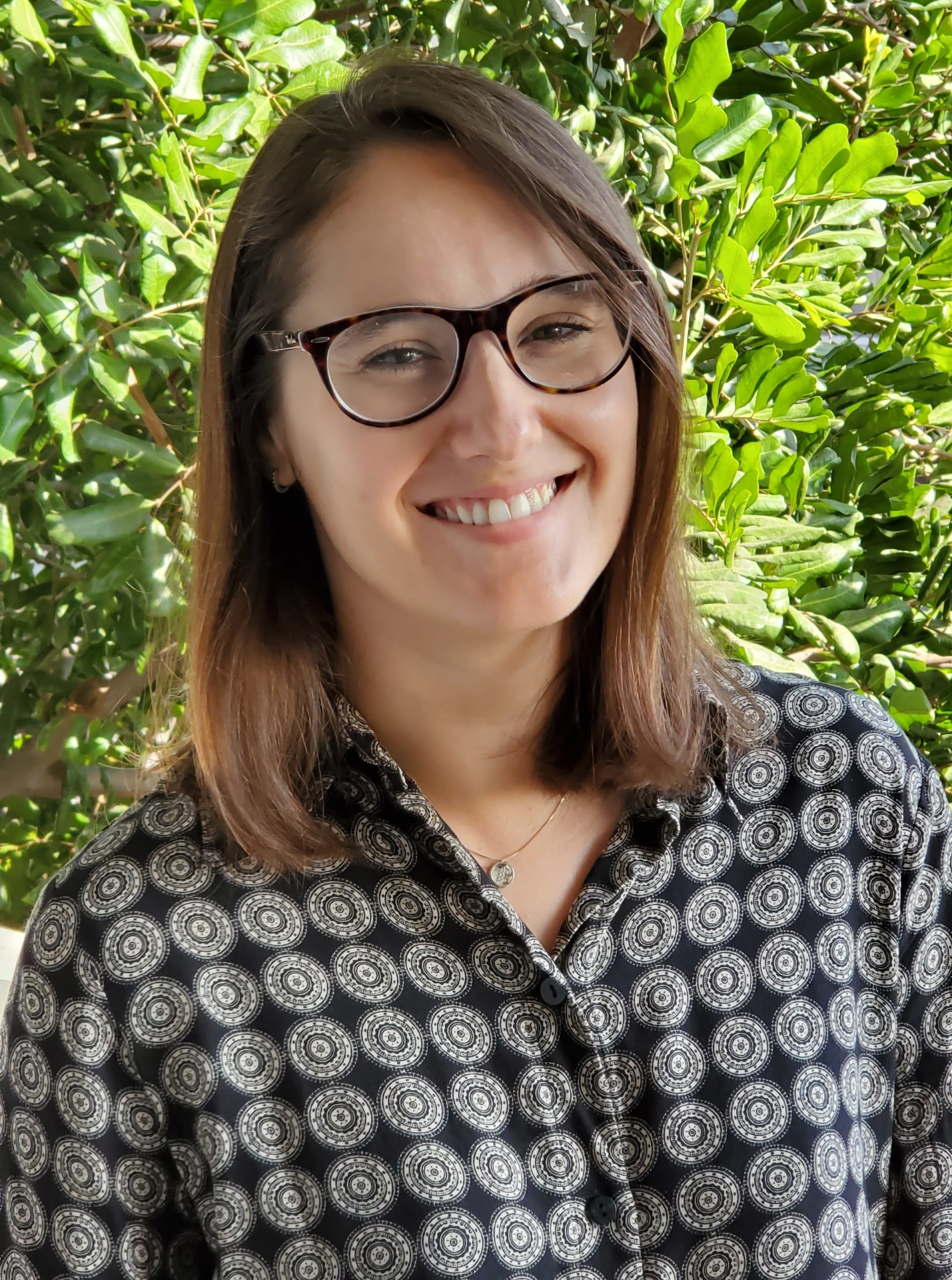
Dr Giorgia Michelini and her team focus on neurodiversity and mental health in young people. A profound commitment to public engagement can be seen throughout her work, taking the form of extensive Patient and Public Involvement and Engagement (PPIE) efforts; leadership and participation in cross-sector groups and events; and support of early career researchers.
Since 2023, Giorgia has run two new projects with funding from the Centre for Public Engagement’s Participatory Research Fund: Breaking down the barriers to accessing mental health care experienced by neurodivergent young people: a participatory approach and Bridging the gap: Enhancing mental health support for neurodivergent young people by centring lived experience. Both worked with young people, their parents and carers, clinicians and educators to co-develop new studies which would centre the mental health priorities of these diverse stakeholder groups. As part of this work, she actively engaged neurodivergent individuals and families from minority ethnic backgrounds, who are often excluded from this kind of research. She was able to do this by collaborating with community organisations in East London and the QMUL Disability and Dyslexia Service.
We can see Giorgia’s commitment to centring the voices of people with lived experience through her work with co-production panels, both in her own research and across partnerships. In four participatory research projects on mental health, she has formed co-production groups featuring young people and families. The panels have been involved with the entire research process from idea generation to dissemination. She has also set up and maintained co-production panels for industry partners, local schools and student support services, as well as charities.
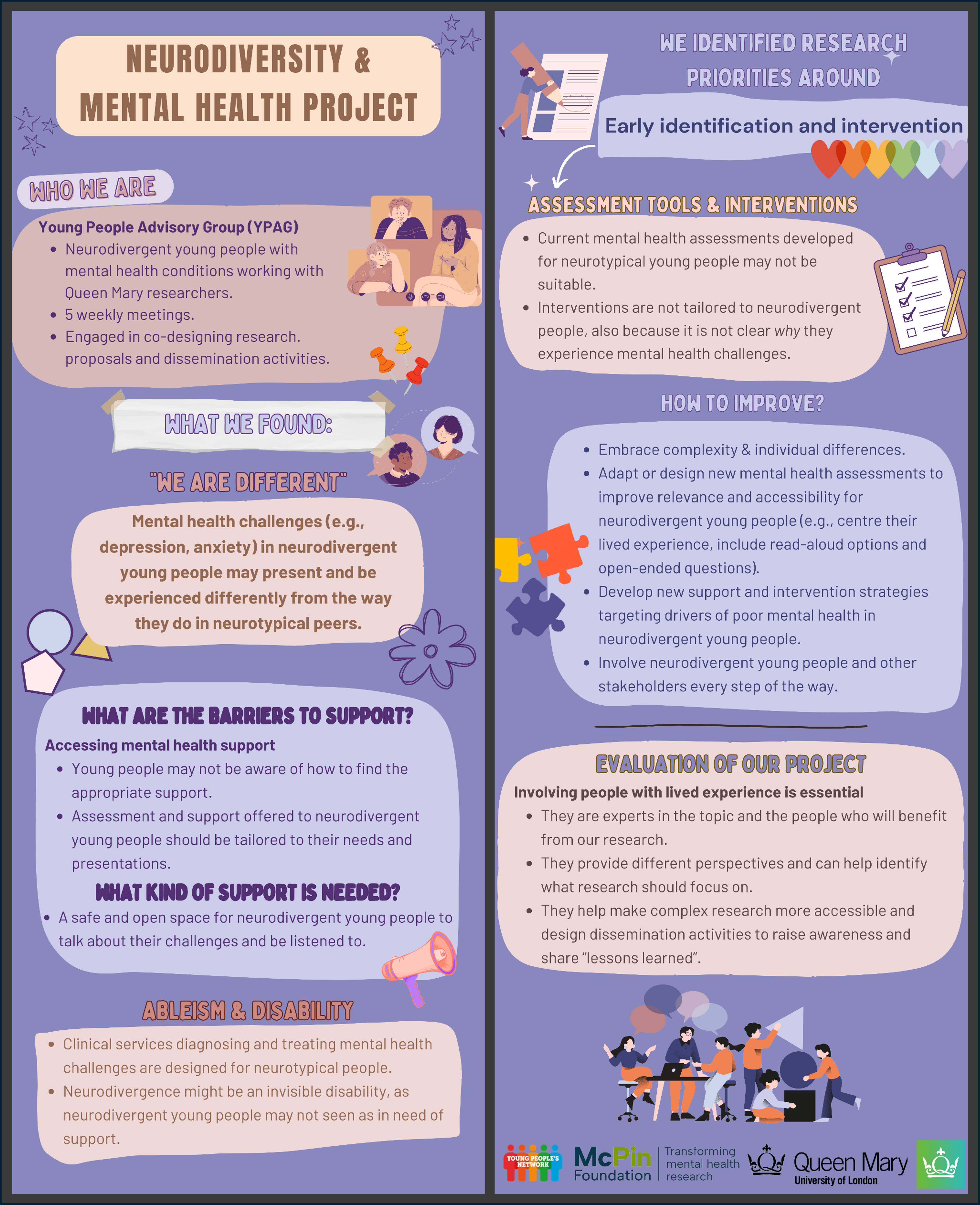
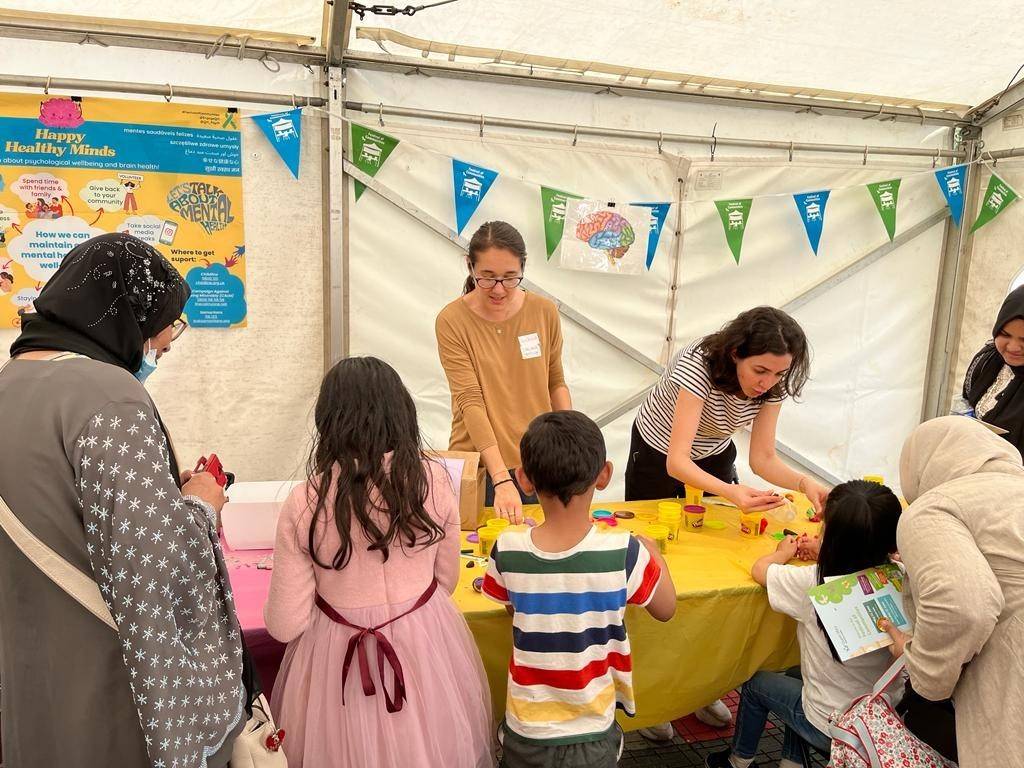
Giorgia’s work exemplifies the fact that good engagement creates real mutual benefit. As Giorgia has shared her expertise with charities, local schools and support services, and industry partners, this work, in turn, has directly shaped her research. It has highlighted stakeholders’ priorities and resulted in joint grant collaborations and collaborative studentships. It has also supported her work through collaboration in developing study materials, recruiting participants from diverse backgrounds, and sharing research findings through webinars, blog posts, festival activities, and infographics co-produced with people with lived experience.
As well as a personal commitment to engagement, Giorgia is also instilling its value into the next generation of researchers. She has encouraged all her PhD students to develop experience in this area through research co-production and outreach activities and is supporting one of her PhD students in setting up a new London network for ECRs engaging community partners through participatory research.
Giorgia’s dedication to public engagement throughout her work has been recognised by the CPE in her nomination as a QMUL Engagement Champion.