
A celebration of the career of Chris Faulkes
For almost 30 years, Chris Faulkes has been a familiar and much-valued presence in SBBS, inspiring students in the classroom, leading innovative research, and sharing his enthusiasm for biology far beyond the University. As he becomes Professor Emeritus, colleagues and students reflect on a career defined by curiosity, collaboration, and a lasting contribution to the School’s community.
/filters:format(webp)/prod01/channel_120/school-of-biological-and-behavioural-sciences/media/sbbs/chris-faulkes-david-attenbourgh.jpg)
Chris Faulkes with Sir David Attenborough (Sir David Attenborough visited Queen Mary to record an episode in his series, Natural Curiosities)
This January saw the retirement of (now) Professor Emeritus Chris Faulkes from the School of Biological and Behavioural sciences. Chris first joined Queen Mary University of London back in January of 1998 and has been a mainstay of the teaching, research and outreach done in the school for nearly 30 years. In this time, he’s taught thousands of students (and most critically spending a decade running the foundation course for the Faculty of Science and Engineering) and worked with hundreds of academic colleagues.
Born in Cambridge, Chris started off in biology in an industrial role, working for a local major pet food company to look at how odours affected the feeding behaviour of domestic cats. From here, he moved to the Zoological Society of London and as part of his PhD work on the reproductive biology of naked mole-rats he began to study physiology and genetics.
Chris writes: My research takes a multidisciplinary approach encompassing genomics, epigenetics, physiology and behaviour to understand mammalian social evolution, ageing and adaptations to living underground. Naked mole-rats are a unique and long-lived “social-insect like” mammal with extreme adaptations to living underground in the arid regions of East Africa. A multitude of unique biological features in naked mole-rats enable the telling of a fascinating scientific story in a holistic way: how ecological and environmental factors have driven their subterranean lifestyle and the evolution of their social behaviour - they are found in colonies that may contain up to 300 individuals, yet only a single female, the queen, breeds. With this lifestyle comes a host of unusual physiological and biochemical adaptations which are now impacting on studies of human health and healthy ageing, and much of my current research encompasses this area. Alongside this, molecular phylogenetic studies of African mole-rats have increased our knowledge of their biodiversity across Sub-Saharan African and helping to add support to wider conservation projects.
Chris’ profoundly successful career has now spanned four decades, and has taken him across Africa where he as wrestled with problems like an escaped golden mole burrowing into his sleeping bag (while Chis was sleeping in it), digging holes in the perimeter fencing of a prison, and excavating mole-rats on a roundabout in South Africa. He has written well over 100 peer-reviewed papers well as writing a foundational book on the biology of mole-rats, supervised a dozen PhD students, and named two new species of mole rats.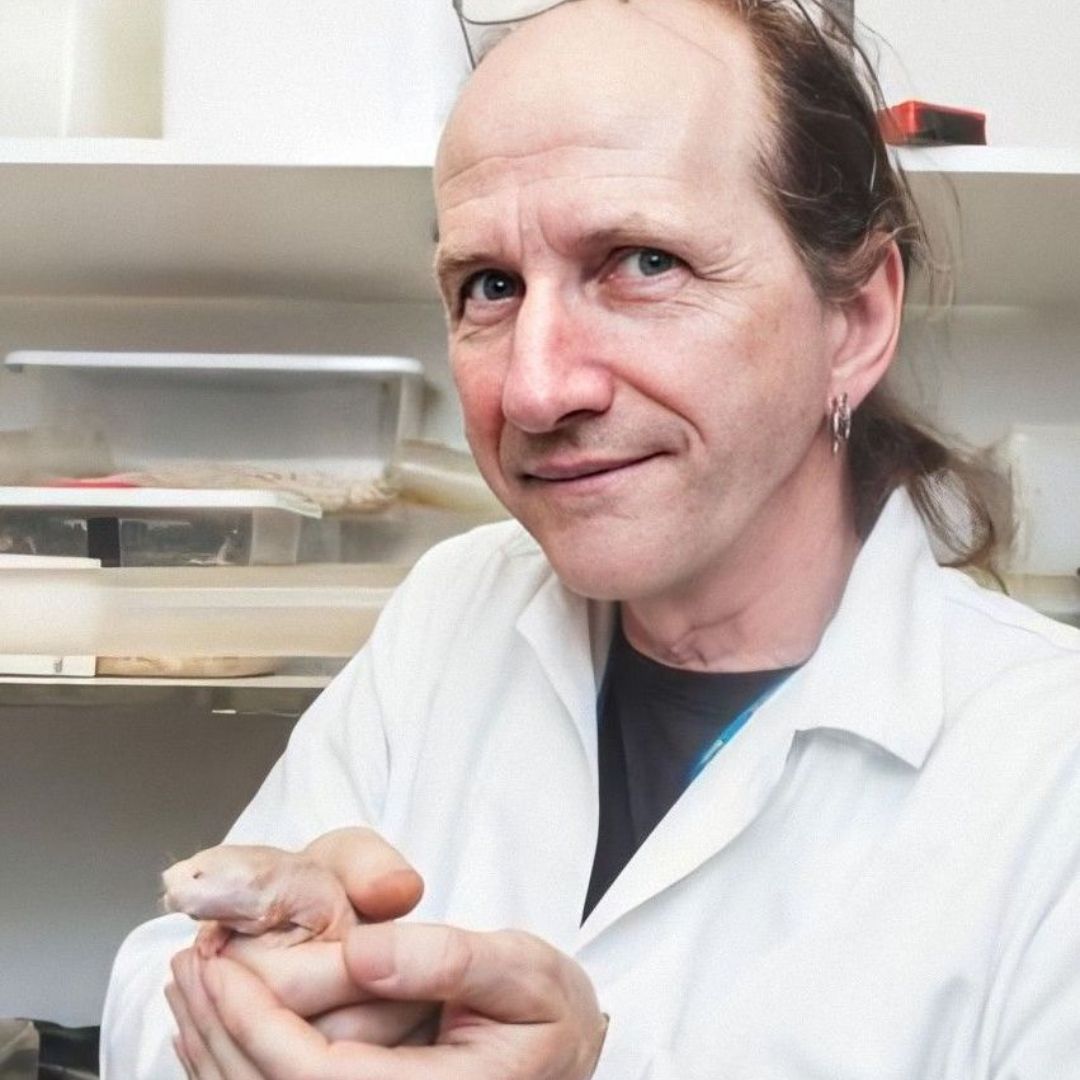
In his own words, he is planning on spending his retirement “drinking beer, going to gigs, and volunteering in his local ancient woodlands ecology group, with some art classes thrown in [a retirement gift from his colleagues]”. But he is still working with colleagues at QM investigating the biology of mole rats, and is still a regular visitor to the department, so happily we will still have his company and expertise with us, and we don’t have to say ‘goodbye’ to him just yet.