
Invisible Giants: How Queen Mary Biology Student Karmannye Brought the Hidden World of Insects to Light
Biology student Karmannye Om Chaudhary has transformed his research, fieldwork and creative vision into Invisible Giants, an exhibition that reveals the extraordinary beauty and importance of insects.
/filters:format(webp)/prod01/channel_120/school-of-biological-and-behavioural-sciences/media/sbbs/news/newsitems/Karmannye-Invisible-Giants-Solo.png)
When most people imagine the wildlife that shapes our planet, they picture charismatic mammals or sweeping landscapes. For Karmannye Om Chaudhary, a BSc Biology student at Queen Mary University of London, the true giants of the natural world are much smaller. They are hidden in forest leaves, tucked beneath river surfaces and glinting under the beam of a field lamp. And thanks to his work, they are now much harder to overlook.
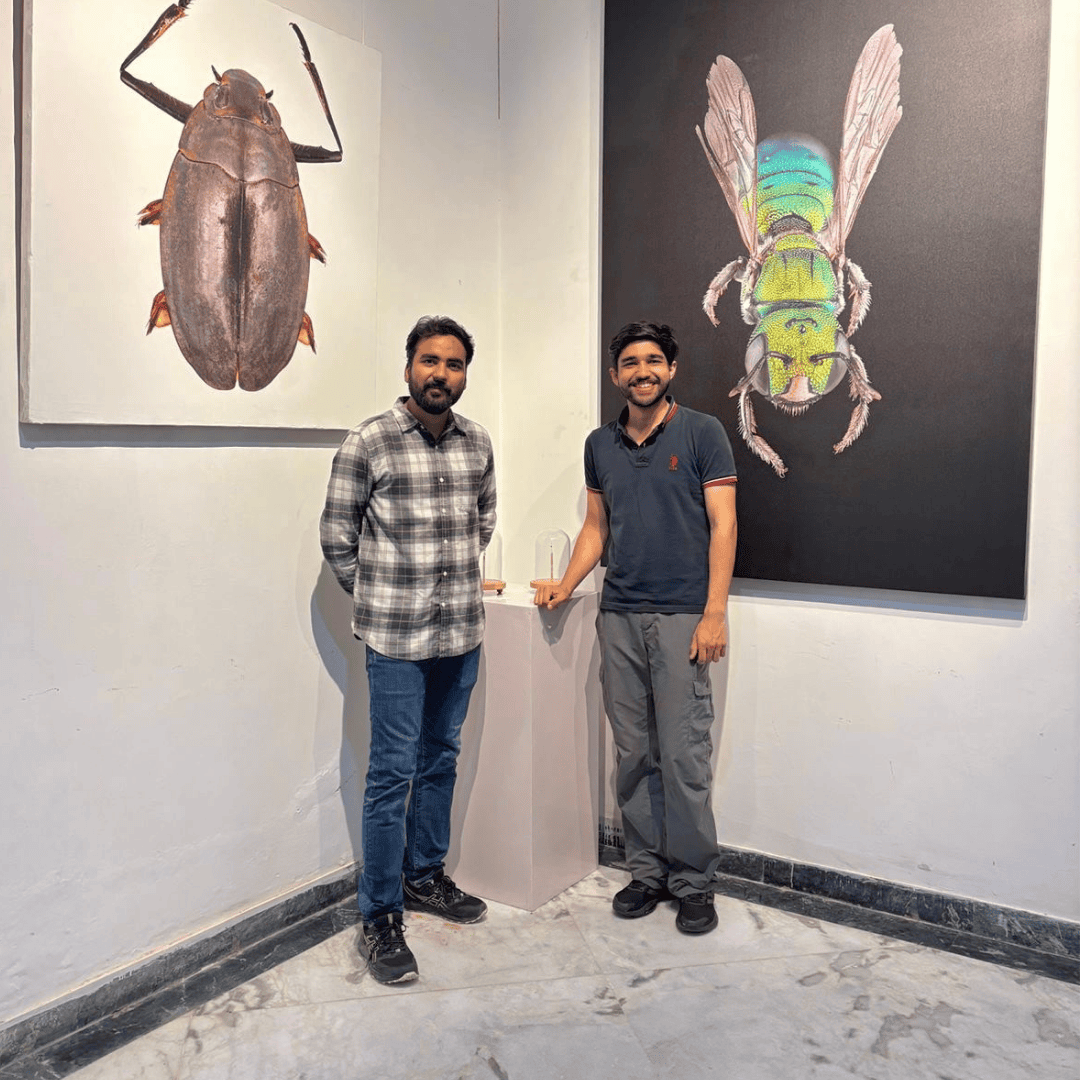
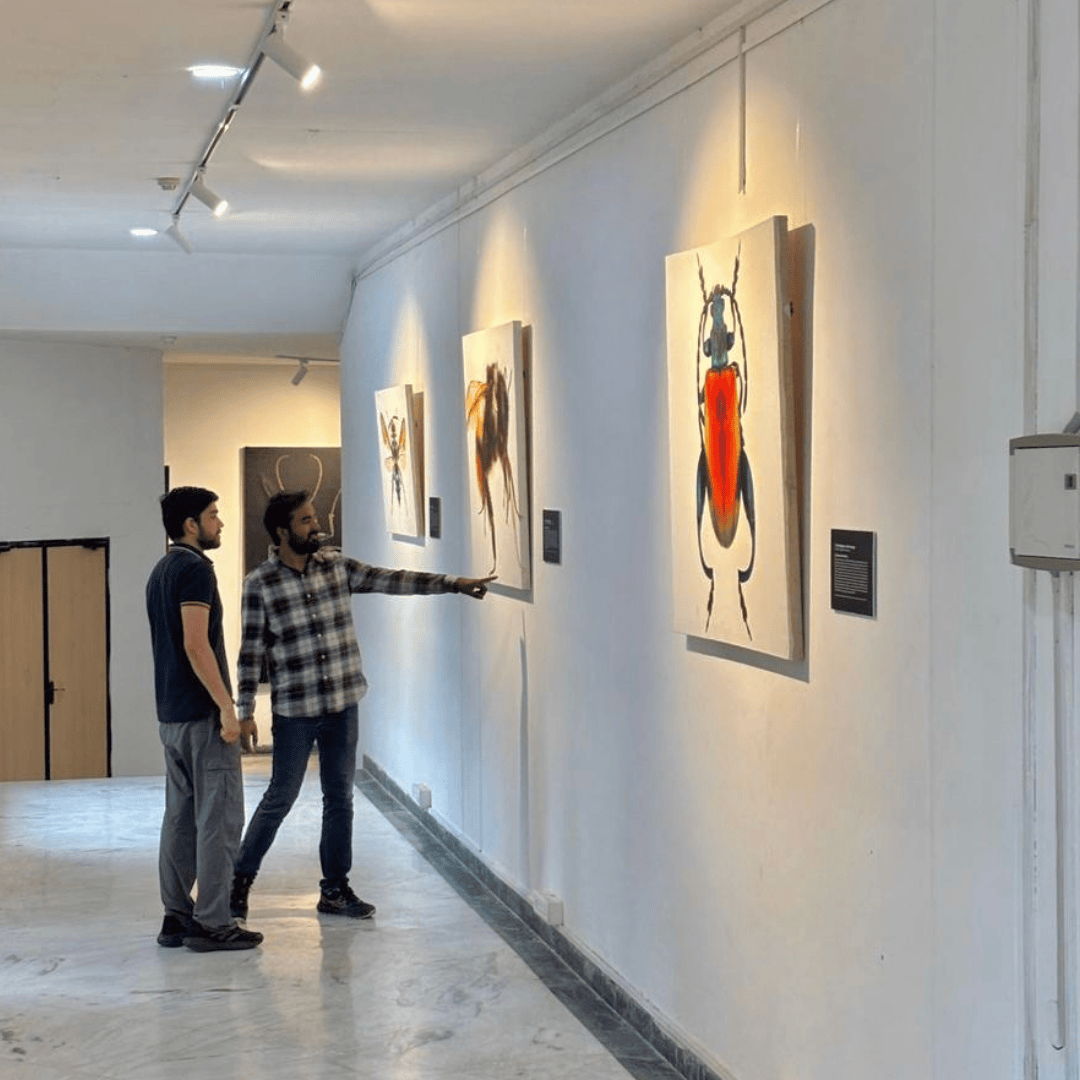
In May 2025, Karmannye opened Invisible Giants at the Wildlife Institute of India (WII) in Dehradun. The week long exhibition showcased ultra detailed portraits of bees and beetles, each created through painstaking photographic techniques that reveal the astonishing structures and colours of these tiny creatures. The gallery quickly became a talking point among researchers, students and visiting families, inviting audiences to see insects not as pests but as essential ecological engineers.
The exhibition is the culmination of a journey that began years earlier, rooted in fieldwork, collaboration and a deepening fascination with the insects that keep ecosystems functioning. And at its heart is a Queen Mary undergraduate determined to change the way we see the natural world.

A meeting that sparked a vision
The idea behind Invisible Giants took shape during the winter of 2023, when Karmannye first visited the Wildlife Institute of India. There he met bee specialist and WII scientist Ritesh Kumar Gautam. Their first conversation unfolded in a quiet corridor lined with specimen boxes, and it changed the trajectory of both their work.
As Karmannye recalls, “We had a fascinating exchange about our work, but soon afterwards, I returned to London, drawn back to my research on birds and aquatic insects at the Natural History Museum.”
That initial exchange grew into a partnership grounded in shared enthusiasm. Karmannye was captivated by aquatic beetles and water edge ecosystems; Ritesh by the diversity of bees across the Himalayas and Indian plains. What united them was a desire to bring public attention to the extraordinary world of insects.
By the time Karmannye returned to India in spring 2024, the collaboration had already begun to take shape. Their fieldwork together expanded rapidly, uncovering species both familiar and new. It also deepened their friendship and clarified their purpose: to help others experience the wonder they found in insects.
Fieldwork, discovery and a shared purpose
Throughout 2024, the pair carried out surveys in forests, lakes and streams across India. Along the way they encountered an unexpected breakthrough. As Karmannye describes it:
“Under the microscope, its subtle head sculpturing and distinctive male genitalia were indicative of its novelty, and by lunchtime, we realised we had uncovered a new species of water beetle of the genus Helochares.”
Moments like this fuelled their excitement and reinforced their belief that insects could inspire curiosity in others. Their fieldwork spanned both dramatic landscapes and quiet corners, from monsoon lit forest patches to a simple stream outside Ritesh’s house where the team collected dragonfly larvae, water striders and whirligig beetles.
These experiences strengthened the vision for a public exhibition that would showcase insects in a way the general public rarely sees. The goal was to make people stop, look closer and realise that entire ecosystems depend on these tiny species.

Crafting photographs that reveal hidden worlds
To share insects with the world at a scale and clarity that the naked eye cannot achieve, Karmannye and Ritesh built an elaborate imaging setup. Using focus stacking and photo stitching, they created detailed portraits from hundreds of individual images.
As Karmannye explains: “It was a labour of love; some images took hours for us to perfect, often late into the night.”
The results were breathtaking: gleaming elytra, velvety bee hairs, intricately patterned antennae and fine structural details that reveal the evolutionary brilliance of insects. These portraits formed the foundation of Invisible Giants.
A dive into historical collections at the Natural History Museum London
During autumn 2024, while continuing his Biology degree at Queen Mary, Karmannye returned to the Natural History Museum (NHM) where he had been conducting research. Guided by Senior Curator Max Barclay, he explored historical insect archives, comparing newly collected specimens with those gathered centuries earlier.
Among the museum’s wooden drawers, he found a connection between past and present:
“I ran gloved fingers along decayed labels from a long forgotten British India, feeling the tremor of history in each brittle sheet.”
This archival work helped him refine species identifications, select specimens for the exhibition and understand the long legacy of entomological research. It also linked directly to his studies at Queen Mary, where modules in ecology, evolution and biodiversity supported his growing expertise.
Invisible Giants comes to life
By spring 2025, everything was ready. Each photograph was paired with a carefully written story, and real specimens were mounted beneath crystal clear domes to allow visitors to compare the insect itself with its magnified portrait.
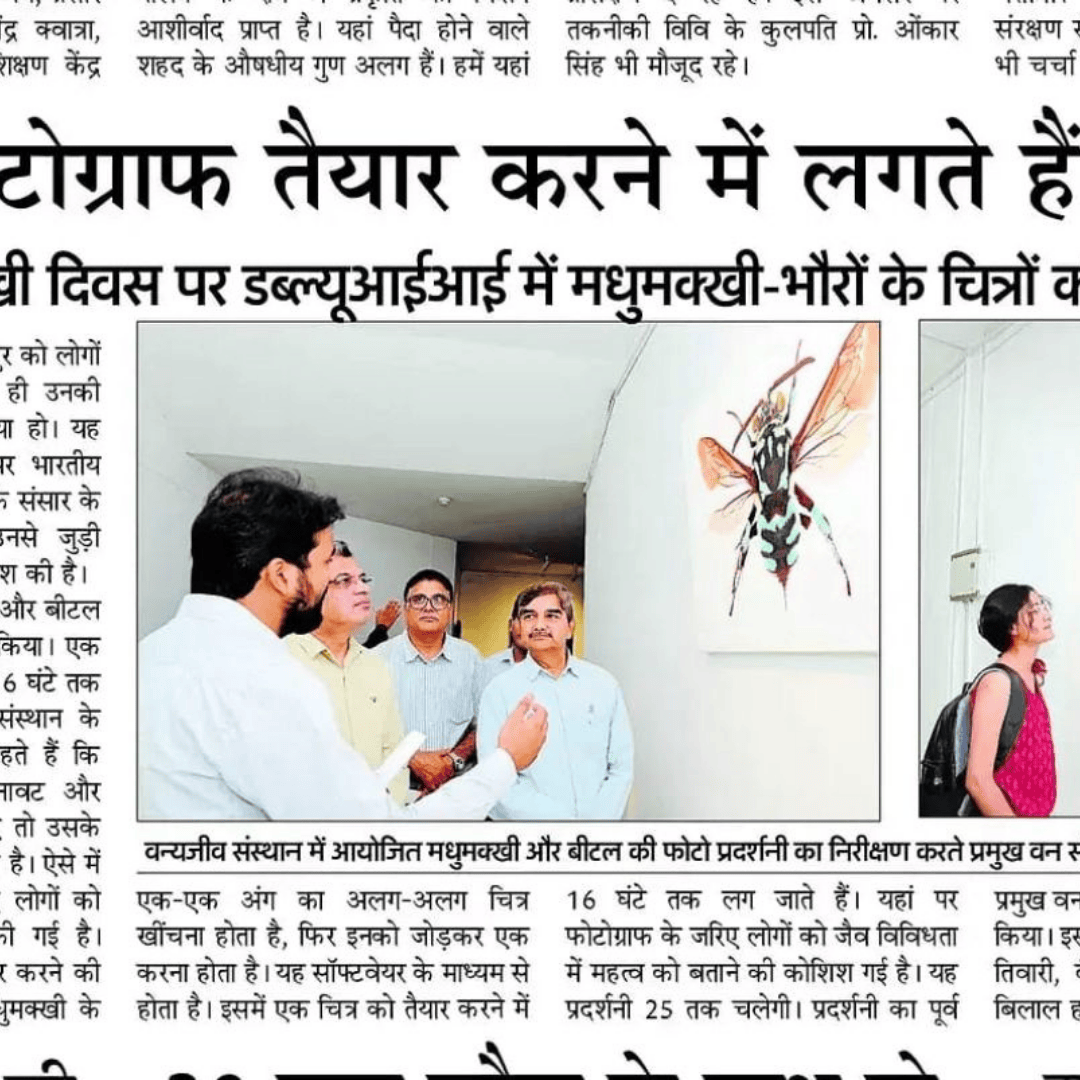
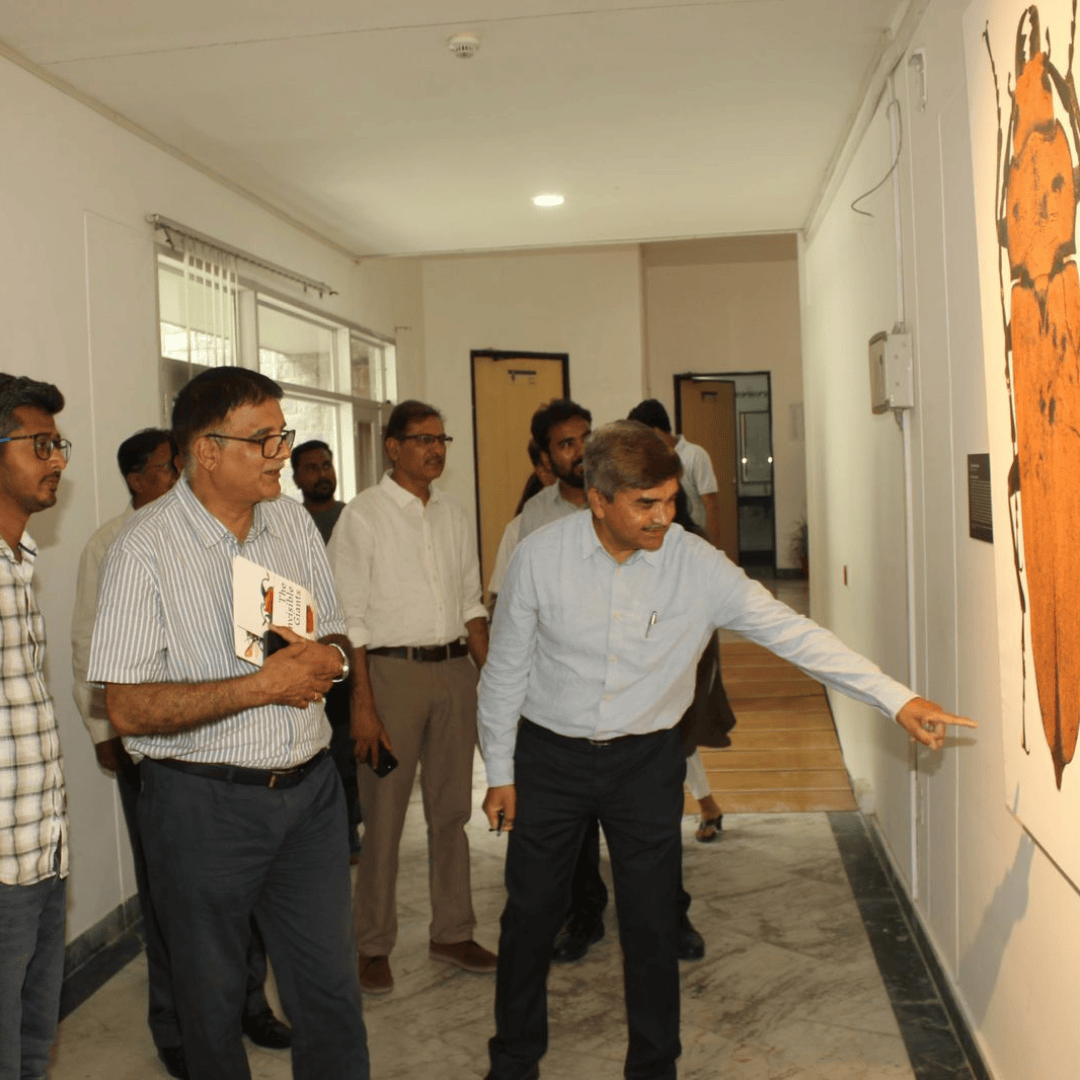
On 20 May 2025, World Pollinator Day, Invisible Giants opened to an enthusiastic crowd. Forest officers compared iridescent beetle shells, schoolchildren sketched their favourite insects and researchers debated subtle morphological features. Visitors lingered long after they expected to, drawn in by colours and details that challenged their assumptions about insects.
The reaction surpassed expectations. Many visitors admitted that they had never looked closely at insects before. Karmannye remarks:
“Visitors left the gallery not merely with images imprinted in their minds but with a newfound respect and urgency for insect conservation.”
By the final day, the exhibition had achieved something powerful: it sparked curiosity and helped people see insects not as pests but as pollinators, recyclers and vital architects of ecosystems.
A remarkable achievement from a Queen Mary student
For Queen Mary University of London, Invisible Giants showcases the ambition, creativity and scientific leadership of its students. As a 21 year old undergraduate, Karmannye not only contributed to the discovery of new species but also co curated a major public exhibition with real educational impact.
His work demonstrates how research experience, scientific training and an eye for storytelling can come together to create something meaningful and widely accessible. It also highlights how Queen Mary students apply their learning far beyond the classroom.
In his own words, describing the moment the gallery plans crystallised, he said:
“Why not show people that these tiny titans thread together the ecological tapestry of our planet and bring them into the light to dance upon museum walls and spark the same wonder in others that had ignited between us?”
That wonder now belongs to hundreds of visitors across India, and the exhibition is set to continue travelling, planting seeds of curiosity wherever it goes.
Watch Sanctuary Asia’s fantastic behind-the-scenes video about the exhibition and how it came together: