
Student Spotlight: Shivani Yadav on studying MSc Bioinformatics
Shivani, A MSc Bioinformatics student shares her experience of transitioning from biotechnology into computational biology, developing programming and data analysis skills, and discovering how bioinformatics and AI can be applied to real-world biological research.
/filters:format(webp)/prod01/channel_120/school-of-biological-and-behavioural-sciences/media/sbbs/Project_picture.jpeg)
What inspired you to study Bioinformatics at Queen Mary and what excites you most about this interdisciplinary field?
Coming from a Biotechnology background and having worked on several bioinformatics-related projects, I wanted to build stronger computational skills and work more deeply with biological data. The MSc Bioinformatics programme at Queen Mary matched perfectly with what I had already learned and what I wanted to explore further.
I was inspired by the strong research environment here, especially the chance to work with large datasets and apply modern analytical methods. What excites me most about this field is the use of AI and machine learning to solve real-world biological problems, which makes the work both impactful and innovative.
Can you share a highlight of your programme so far? It could be a module, project, lecture, lab session or anything that stands out.
One of the biggest highlights of my programme so far has been learning practical computational skills like UNIX, R, Python, and machine learning, and applying them to real biological datasets.
I particularly enjoyed the module where we analysed epigenetic ageing patterns using general linear models, it was the first time I could clearly connect biological concepts with computational data analysis. This experience really boosted my confidence and showed me how bioinformatics is used in real research. I’ve also loved working in structural bioinformatics, where we study protein structures and understand their functions through computational tools.
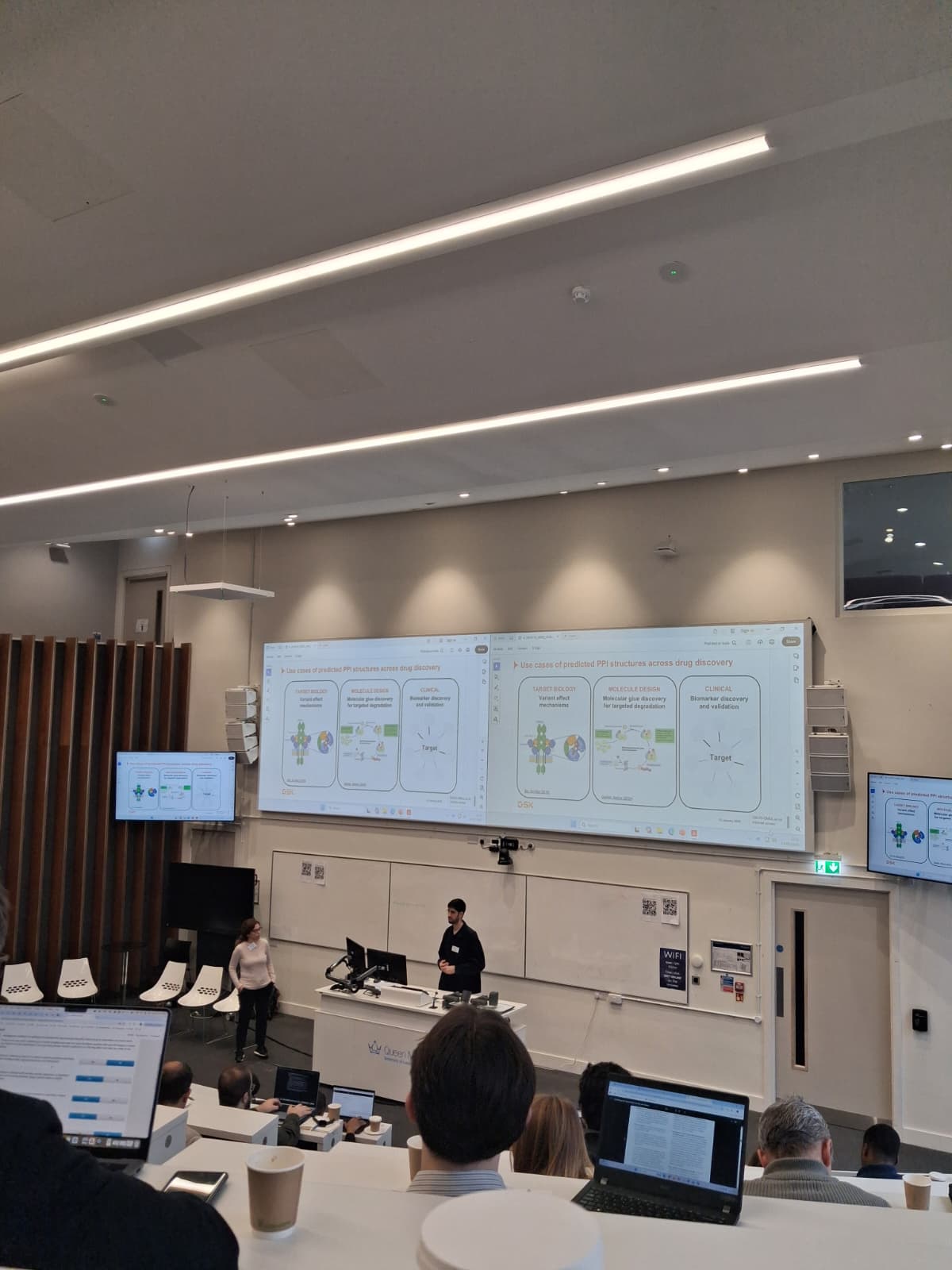 How have you found the facilities?
The facilities at Queen Mary have been excellent. The computer labs are well-equipped with high-performance systems and all the software we need, which makes running bioinformatics workflows smooth and efficient. The libraries, especially Mile End Library, provide comfortable study spaces, access to a wide range of online journals and textbooks, and quiet areas that are perfect for focused work. I’ve also found the demonstrators and teaching staff incredibly supportive. They are always available to guide us through practical sessions, help troubleshoot problems, and explain concepts in a clear and approachable way.
What have the highlights been so far from your time at Queen Mary in general? E.g. Library, societies, local area etc
Beyond academics, my experience at Queen Mary has been wonderful. The library is one of my favourite places to study because it’s quiet, spacious, and well organised. The campus itself is vibrant and diverse, with plenty of cafés and green areas that make it a comfortable place to spend time between classes. I’ve also enjoyed exploring the local surroundings, especially Victoria Park and the great food options around Mile End. The Indian societies and the Students’ Union have also been incredibly supportive and active, organising cultural events and creating a welcoming space for international students. Overall, the student community at Queen Mary is very friendly, and it has been easy to make friends and feel supported throughout my time here.
In what ways has the Bioinformatics programme prepared you for your future career or further academic pursuits?
The programme has prepared me for my future career by giving me strong hands-on experience in data analysis using R and Python, next-generation sequencing workflows, structural bioinformatics, working in Linux/Ubuntu environments, and applying machine learning techniques to biological datasets. These skills are essential for careers in biotechnology, research, pharmaceuticals, and academic labs.
Beyond academics, studying at Queen Mary has also helped me grow personally. The coursework encourages independent thinking and real-world problem solving, which has strengthened my confidence and my ability to apply my knowledge to practical scientific challenges. This combination of technical training and personal development has prepared me well for future research roles and potential PhD opportunities.
 What advice would you give to a student thinking about applying for the MSc Bioinformatics?
I would encourage students to be open to learning both programming and biological interpretation. The programme is designed so that no prior coding knowledge is required, anyone, even with a purely biology background, can confidently learn and perform computational analyses. Practical sessions, supportive lecturers, and demonstrators make it easier to apply concepts to real datasets. My advice is to practice coding consistently, ask questions, and stay curious about the interdisciplinary nature of the course. Bioinformatics is a globally in-demand field, and this programme equips you with highly relevant skills for tackling real-world scientific challenges.
Is there anything else you'd like to add?
I feel truly grateful to be studying at Queen Mary. The learning environment and support from staff have been excellent, and the programme has strengthened my passion for combining biology with computation. Life in Queen Mary residences has been especially wonderful for international students. The flatmates are friendly, and the residence staff organise regular events that help students connect and feel at home, making it easier to settle in and enjoy university life.
Find out more about the MSc Bioinformatics programme here.