Matthew Hulse’s journey into doctoral research began during his time on the MSc in Biodiversity and Conservation at Queen Mary. The programme not only deepened his understanding of ecology and conservation, but also gave him the practical skills and confidence to pursue independent research. Today, he is applying that foundation to a PhD exploring ecological interactions in Amazonian amphibians.
My path from QMUL MSc in Biodiversity and Conservation, to PhD candidate
Published:
/filters:format(webp)/prod01/channel_120/school-of-biological-and-behavioural-sciences/media/sbbs/matthew-forest.jpg)
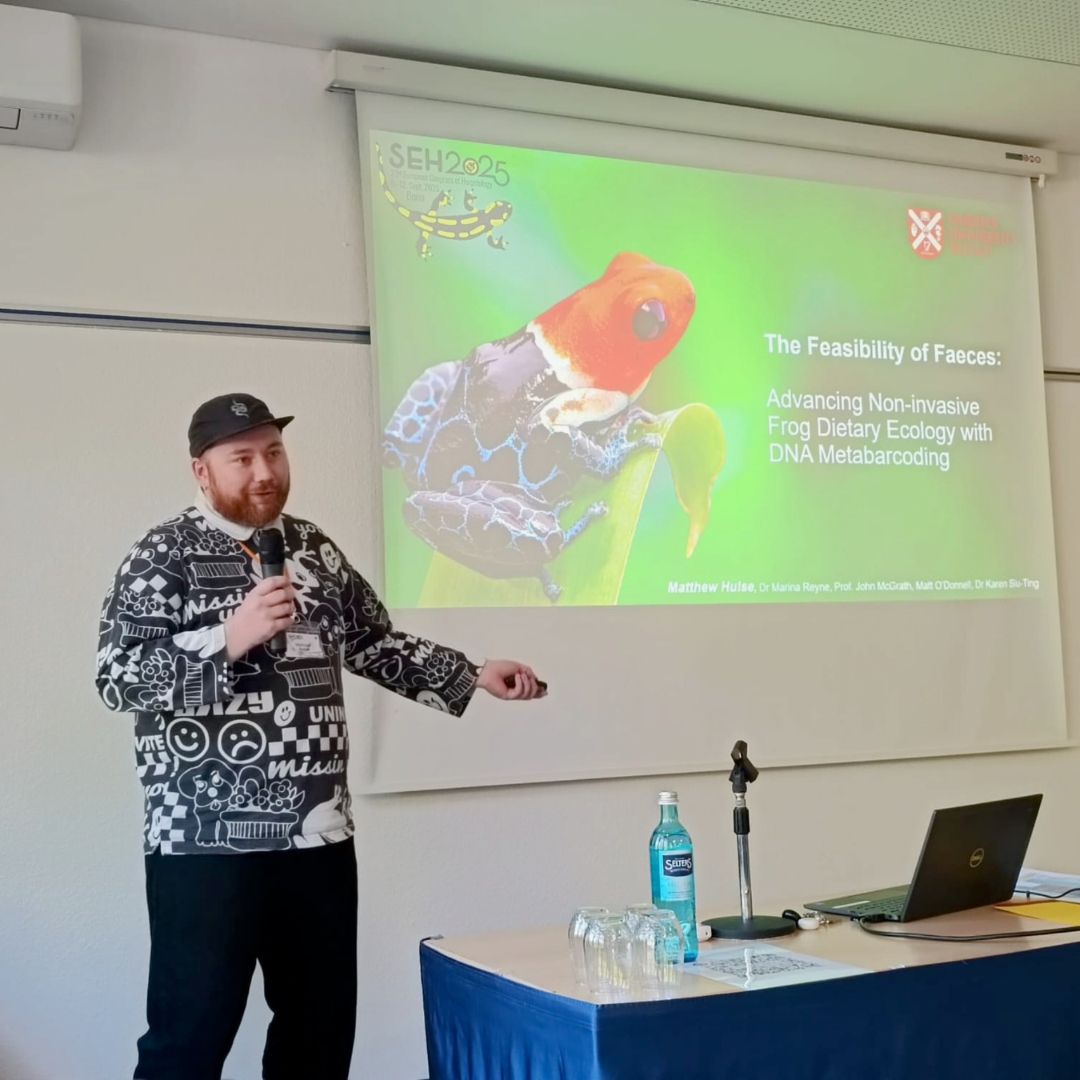
The MSc in Biodiversity and Conservation at Queen Mary University of London was a turning point in my decision to pursue a PhD, and in giving me confidence to do so. I am currently a second-year PhD student in the School of Biological Sciences at Queen’s University Belfast, working on my thesis: Food webs of Amazonian Amphibians in the Genomic Era: Metabarcoding and Ecological Interactions. The SBBS Master’s course provided the conceptual grounding, practical skills, and independence needed to take that next step.
One of the programme’s greatest strengths was how broadly it prepared me. It strengthened my understanding of ecological theory and conservation challenges while also offering hands-on experience across field, laboratory, and computational approaches. Training in statistics and data analysis expanded my skill set far beyond what I expected and gave me the confidence to move into heavily computational and bioinformatic work, something I had never previously considered, and which now forms a core part of my PhD research.
My MSc dissertation built on this foundation. I developed molecular methods to investigate plant–insect interaction networks in the Peruvian Amazon, working with supervisors at QMUL and research partners in Peru. From shaping research questions to troubleshooting methods and interpreting results, I was encouraged to take real ownership of the project. Being trusted to lead my own work, while knowing that guidance was always available, closely mirrored the realities of PhD research and made the transition feel natural rather than intimidating.

Field experiences also helped shape my direction. The terrestrial ecology field course in Borneo was challenging and immersive, bringing ecological concepts to life in one of the world’s most biodiverse regions. Alongside my dissertation work in the Amazon, this experience strengthened my interest in tropical ecosystems and in using emerging molecular tools to explore ecological interactions.
Above all, the MSc fostered independence and confidence. Staff were supportive, encouraging, and genuinely invested in helping students move forward in research. The programme created a clear pathway from MSc study into PhD-level research, and by the end I felt prepared not just academically, but personally, to take on a PhD. For anyone considering a future in ecology, conservation, or research more broadly, this MSc provides an exceptional foundation and a clear sense of what is possible.
Matthew Hulse
Find out more about our MSc Biodiversity and Conservation programme here