
Stateless: exploring the stories of Queen Mary students forced to flee the Nazi regime
Learn about Jewish students who attended Queen Mary in the 1940s while officially "stateless", i.e. not a citizen of any country. They were made stateless by antisemetic laws in the countries that they were born or lived that denied or revoked citizenship for being Jewish.
Please note this article contains content that could potentially be upsetting about antisemitism and treatment of refugees.
/filters:format(webp)/prod01/channel_301/library/media/library/archives/QMUL_UK_A_Cinades_B_001v_M.1--.jpg)
Bernhard Cinader's Queen Mary Student card
Background
1930s saw the rise of the Nazi party in Germany and in turn, a steady increase in the persecution of Jewish people and other minorities, firstly within Germany and later across German occupied territories.
Persecution of Jewish people escalated in the early 1930s with the boycotting of Jewish businesses, the exclusion of Jewish people from the Civil Service and restrictions on the number of Jewish students allowed to attend school. This treatment swiftly worsened with the introduction of the Nuremburg Laws in 1935. The Reich Citizenship Law was specifically used to create a new ‘Reich citizenship’ which Jewish people were banned from obtaining. Consequently, they were treated as second class citizens and their civil liberties such as the right to vote were removed. [1] As the Nazi Party took over Germany, many Jewish people decided to move abroad. Some people fled to neighbouring European countries, including the United Kingdom. [2]
Below, we look at the stories of three students who were forced to leave Nazi occupation. Although we cannot say for certain exactly when the students had their citizenship removed, from the information we have available we know that all three of those discussed were Jewish and at some point, according to their student cards and university records, were made stateless.
Bernhard Hardi Cinader (30 March 1919- 3 March 2001)-.jpg)
Bernhard Cinader was born in Vienna in 1919. He was the son of a merchant and grew up in the 7th district of the city. In early 1938, Cinader enrolled at the University of Vienna Medical School. [3] On the 12 March 1938, the Nazi Party annexed Austria. The Nazis proceeded to expel and, in some cases, murder Jewish students, staff and administrators. [4]
Cinader appears to have had the ability to escape the Nazi occupation, emigrating to Britain in 1938. Initially he was allowed to begin studying at Chelsea Polytechnic however the government then categorised him as an ‘enemy alien’. He was detained and sent on HMT Dunera to Australia. [5] Conditions on the ship were poor, unsanitary and detainees faced abuse and assault. Treatment was so bad that the British government would later pay the victims compensation. [6] Upon reaching Australia, Cinader was placed in an internment camp. By October 1940, the British government began to acknowledge that it had made a mistake and many of those sent to the internment camps should have never been deported. By 1941, the majority of those interred were freed. Some, including Cinader returned to England. [7]
Upon return to the United Kingdom, Cinader registered at Queen Mary College in October 1942, studying chemistry and physiology. We know from his student record that whilst studying, he supported himself by working in a canteen, helping with the ‘washing up’ amongst other jobs.
Cinader was recruited as the Head of Immunochemistry for the Ontario Cancer Institute, moving to Toronto in 1958. He is credited with being one of the founders of immunology research in Canada, being a founding member and first president of the Canadian Society for Immunology. Today the Bernhard Cinader Award is presented annually to an immunologist in Canada who has produced exceptional research in the field.
Shulamith Rachel Steinberg-Charney (21 Nov 1923- 31 Jan 2000)
Charney was born in Russia on 21 November 1923. Her father, Isaac Nachman Steinberg was a lawyer, socialist revolutionary and a leader of the Jewish Territorialist Movement. After joining the Socialist Revolutionary Party in Russia, her father was exiled in 1908 and moved to Germany. The family later returned to Russia where her father became the People’s Commissioner of Justice in Vladimir Lenin’s government.
After receiving a warning that he may be assassinated, he moved with his family to Berlin. In 1933, fearing the rise of the Nazi party, Steinberg and his family moved again, this time to London. Here, he supported Jews from Europe fleeing the Holocaust. [9] Rachel went to Parliament Hill School, London, before London School of Economics to study for a BA in Sociology. In 1945, she moved to Vermont, USA.
Ernst Ludwig Rewald (19 October 1919-August 1980)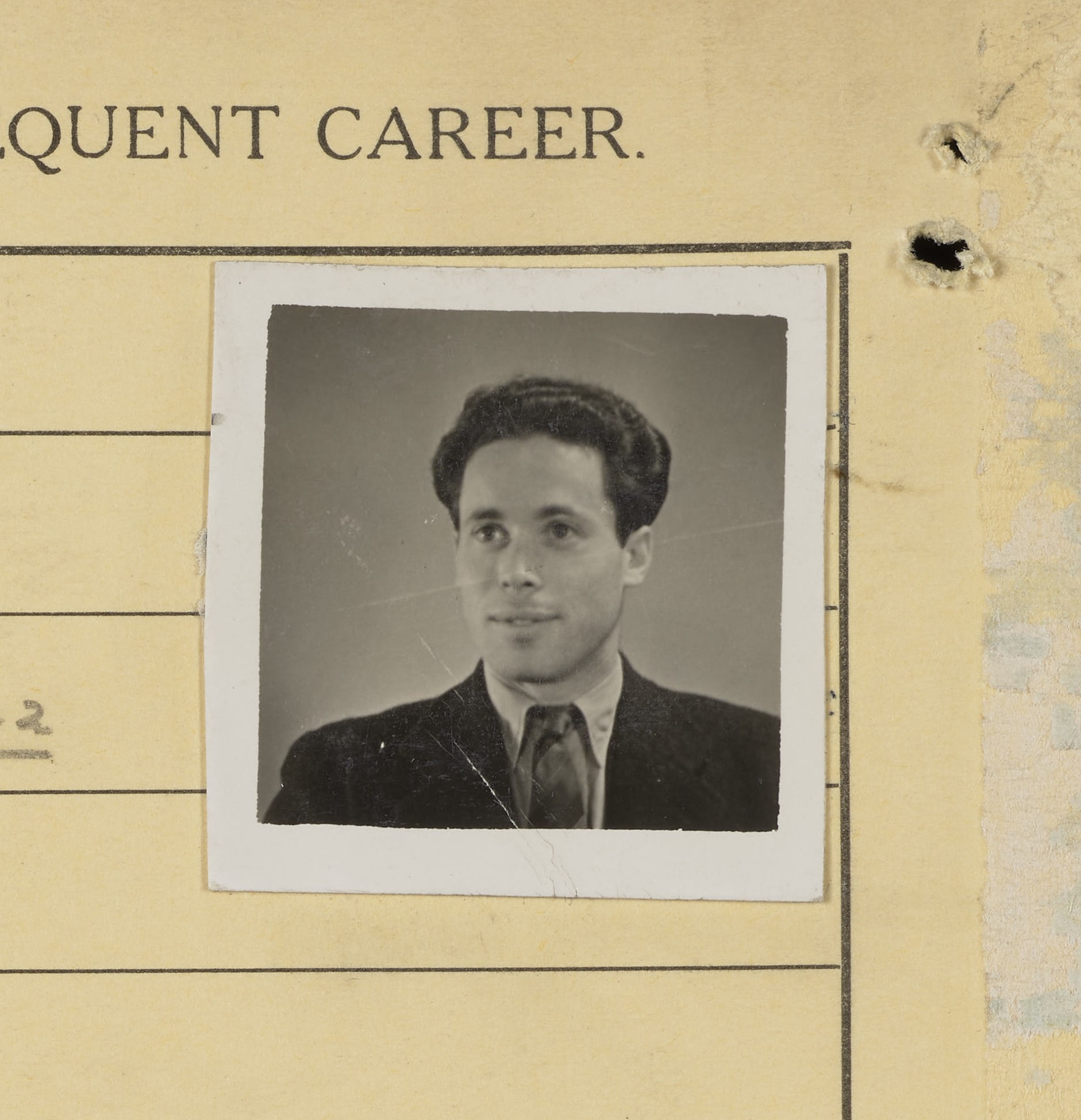
Ernest Rewald was born in Hamburg to Paula Feinstein and Dr Bruno Albert Rewald. Paula was a dentist whilst Bruno was a well-known chemist. He had two brothers, art historian John Rewald and journalist Walter Rewald. [12] Ernest Rewald appears to have spent his early years in Germany. Aware of the rise of the Nazi Party and the persecution they would face, Bruno decided to move the family to England in 1933. [13]
Ernest studied at Chelsea Polytechnic and Reading University before registering as a student at Queen Mary College in 1942. He studied Chemistry under Dr V.A. Petrow who was a prominent research chemist during this period, working as the Chief Research Chemist for British Drug Houses. Ernest was awarded an MSc in 1946 for his thesis titled ‘Contributions to the Chemistry of the Azaphenoxazines and Azaphenthiazines (Pyridobenzoxazines and Pyridobenzthiazines).’
It appears that Ernest had a positive experience studying under Dr Petrow and in the acknowledgments section of his thesis, he thanks ‘Prof J.R Partington, M.B.E, DSc and Dr V.A. Petrow, PhD, F.R.I.C, for their interest and encouragement'. We can see that after completing his MSc, he started a PhD, again under Dr Petrow however he appears to have withdrawn from this at the end of his second term but continued to work as a chemist.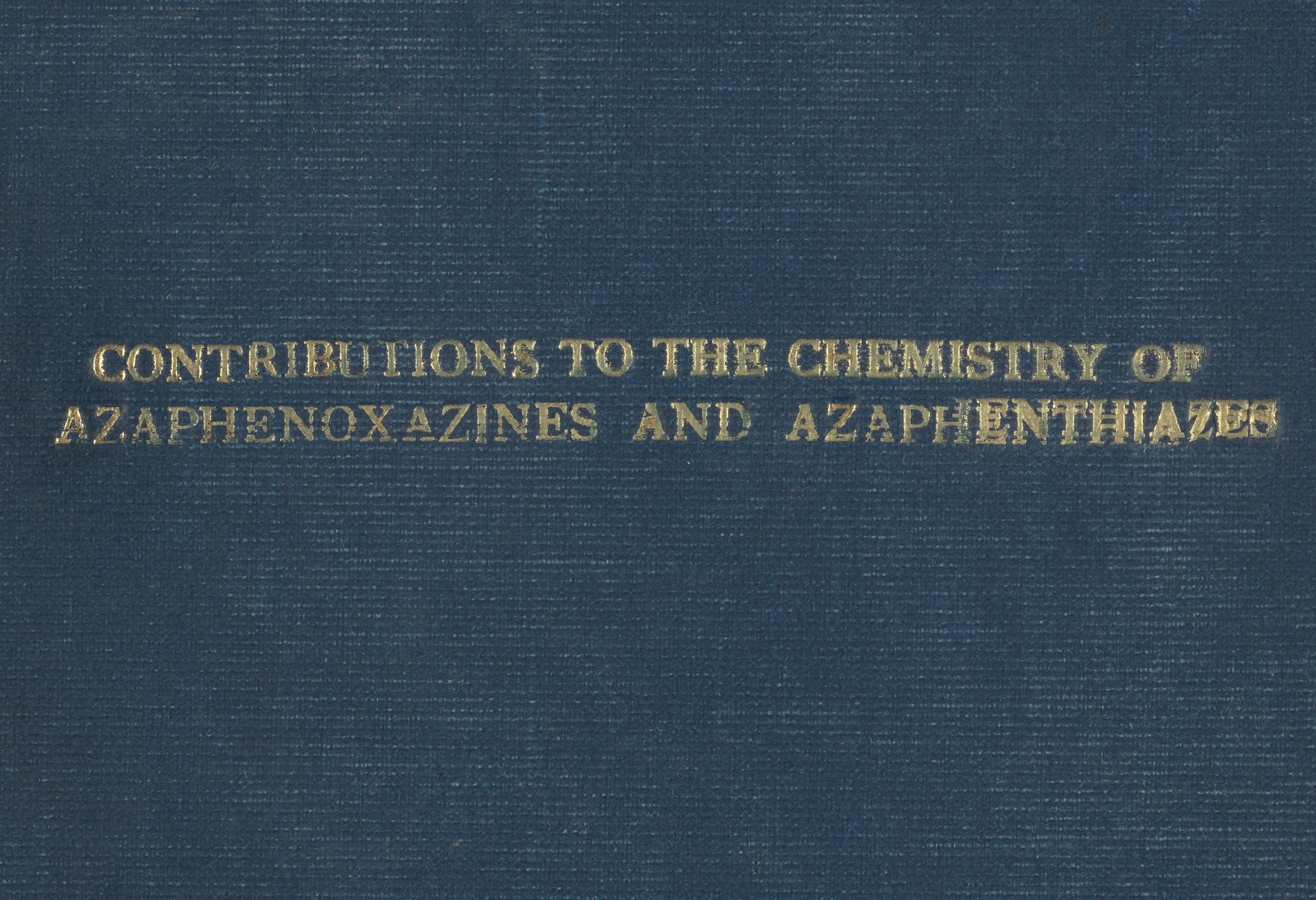
Sources
[1] The Law Library of Congress, The Citizenship of Jews in Nazi Germany, 1993 https://tile.loc.gov/storage-services/service/ll/llglrd/2019670401/2019670401.pdf
[2] United States Holocaust Memorial Museum, Holocaust Encyclopaedia- German Jewish Refugees 1933-39, n.d https://encyclopedia.ushmm.org/content/en/article/german-jewish-refugees-1933-1939
[3] University of Vienna, Memorial Book for the Victims of National Socialism at the University of Vienna 1938, 2015 https://gedenkbuch.univie.ac.at/en/page/21/person/bernhard-cinader
[4] Ibid.
[5] Ibid.
[6] The National Museum of Australia, Dunera Boys, 28 September 2022 https://www.nma.gov.au/defining-moments/resources/dunera-boys
[7] Ibid.
[8] QMC/studentcard/Cinader
[9] YIVO Institute for Jewish Research, Guide to the Papers of Papers of Isaac Nachman Steinberg (1888-1957) 1893-1968 (bulk 1919-1956) RG 366, 2012 https://yivoarchives.yivo.org/index.php?p=collections/findingaid&id=34403
[10] QMC/TEMP/7
[11] QMC/studentcard/Steinberg-Charney
[12] Dictionary of Art Historians, Rewald, John, n.d https://arthistorians.info/rewaldj/
[13] Shurtleff, William and Akiko Aoyagi, History of Soybean Crushing: Soy Oil and Soybean Meal (980-2016): Extensively Annotated Bibliography and Sourcebook, 2016 p.3322 https://www.google.co.uk/books/edition/History_of_Soybean_Crushing_Soy_Oil_and/12dnDQAAQBAJ?hl=en&gbpv=1&dq=John+Gustav+Rewald&pg=PA3322&printsec=frontcover
[14] QMC/studentcard/Rewald
[15] Contributions To The Chemistry Of The Azaphenoxazines And Azaphenthiazines (Pyridobenzoxazines And Pyridobenzthiazines) MSc1946 by Ernst Rewald, TH102506, Queen Mary thesis