
Into the Wild: Exploring Croatia’s Biodiversity
Hanaa reflects on a week-long ecology fieldtrip in Croatia, where classroom learning came to life through hands-on research. From sampling freshwater habitats to spotting wildlife in wetlands, the trip combined practical skills, real-world ecology, and unforgettable moments in nature, making it a truly memorable experience.
/filters:format(webp)/prod01/channel_120/school-of-biological-and-behavioural-sciences/media/sbbs/Croatia-Group.jpg)
As a BSc Biology student who chose the Ecological Interactions II module in 2nd Year, I had the wonderful opportunity to spend a week-long fieldtrip in Croatia!
We stayed in the Split-Dalmatia region and were accompanied by Dr Pavel Kratina, Dr Clara Montgomery, and PhD student Mengdi Li. The landscape was stunning as we were completely surrounded by the Dinara Mountains, and we visited many different places during our time there, including Krka National Park, River Cetina, and Vransko Lake Nature Park.
The module provided broad coverage of both aquatic and terrestrial ecosystems. For each activity we were joined by different field instructors from the University of Zagreb who guided us throughout the day and answered our questions. Their expertise added so much value and was useful in helping us develop our field notebooks and prepare presentations on our chosen activity. Throughout the week we sampled amphibians, observed bird behaviour, studied planktonic and macroinvertebrate species, and explored hydromorphology as a precursor for ecological succession.
Building on the foundations of Semester A’s Ecological Interactions I module, this trip provided the opportunity to apply the theory learnt in those lectures while developing practical field and laboratory skills. These included species identification, hypothesis testing, sampling techniques like kick sampling and pitfall trapping, and sample analysis using light microscopy. Due to the distinct topography of the region, we also explored lots of new and interesting topics, particularly how the interaction between bodies of water and the unique karst landscape influences species abundance across ecotones.
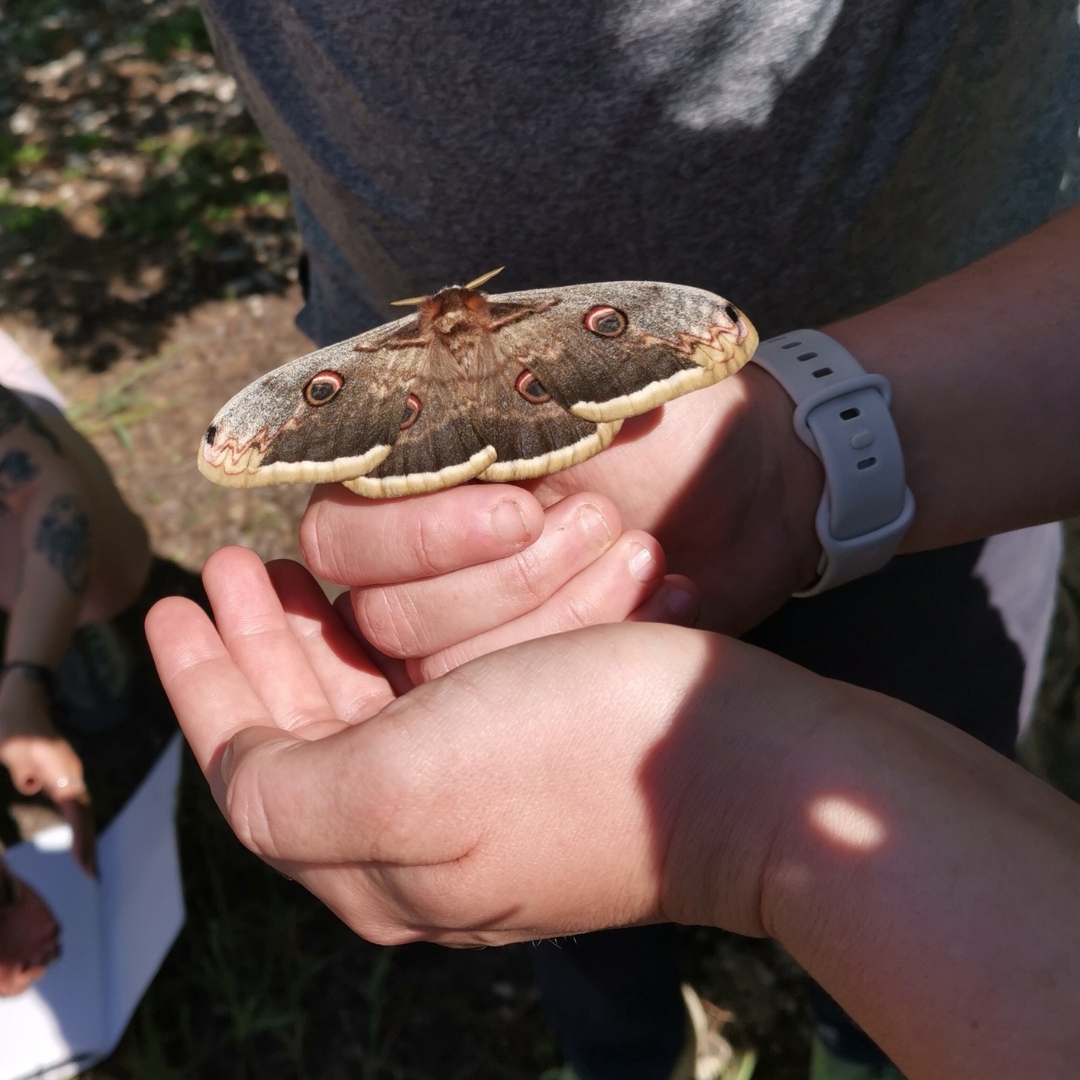
The area was so biodiverse and a memorable part of the trip for all of us was interacting with the sheer abundance of wildlife we encountered. The lecturers were just as enthusiastic as we were, with Dr Kratina pointing out all the animals he had found and Dr Montgomery frequently catching butterflies for closer observation. My favourite day was birdwatching in the wetlands because the discussions we had on the conservation challenges of these vital habitats brought into perspective that what we were learning had real-world importance. Alongside the birds, the area was teeming with tortoises and invertebrates, but the definite highlight was the beautiful four-lined snake we discovered. That evening, a few students also had the opportunity to go on a night walk to collect data on marsh frogs, and it was an incredible experience to be out under the stars and hear the night come to life with all the different sounds.
.jpg)
Although the extensive time spent travelling to each destination, the long hours in the field, and unpredictable schedule were tiring, I think it gave a realistic sense of what conducting ecological research in the field is actually like, and the adaptability required for it. Beyond the fieldwork, it was also just really lovely to spend the week alongside lecturers and peers, getting to know each other better in an environment where everyone genuinely wanted to learn from one another. I truly had such a rewarding time and can say that, for me, this trip was one of the most memorable highlights of my degree so far, and an experience that I am so grateful to have had the opportunity to take part in.