
My Journey into Gharial Research and Conservation
/filters:format(webp)/prod01/channel_120/school-of-biological-and-behavioural-sciences/media/sbbs/j-hunt-image-1.jpg)
Joseph Hunt with his dissertation poster
My first visit to Queen Mary’s Mile End campus was as an A-level student scouting university open days before my applications. In that first visit I learnt about some of the undergraduate research that had been formally published, specifically on the morphology of gharial, a large fish-eating crocodilian from the Indian subcontinent. In large part because of these research topics and opportunities presented by SBBS, I eventually chose Zoology at Queen Mary. When the time came to pick my third-year research project, I had no idea that I would be offered a chance to follow up on that original crocodilian paper and address some of the unanswered questions proposed.
Using 3D digital scans of real skulls, I measured the size of every tooth, skull length and width to map relative tooth size over different age groups of gharial. This would show how tooth size changes over time and could also be linked to changes in niche, diet and general ecology. These are important to understand as the gharial is critically endangered, has extremely fragmented distributions, and a current wild population estimated at around 600 mature individuals. 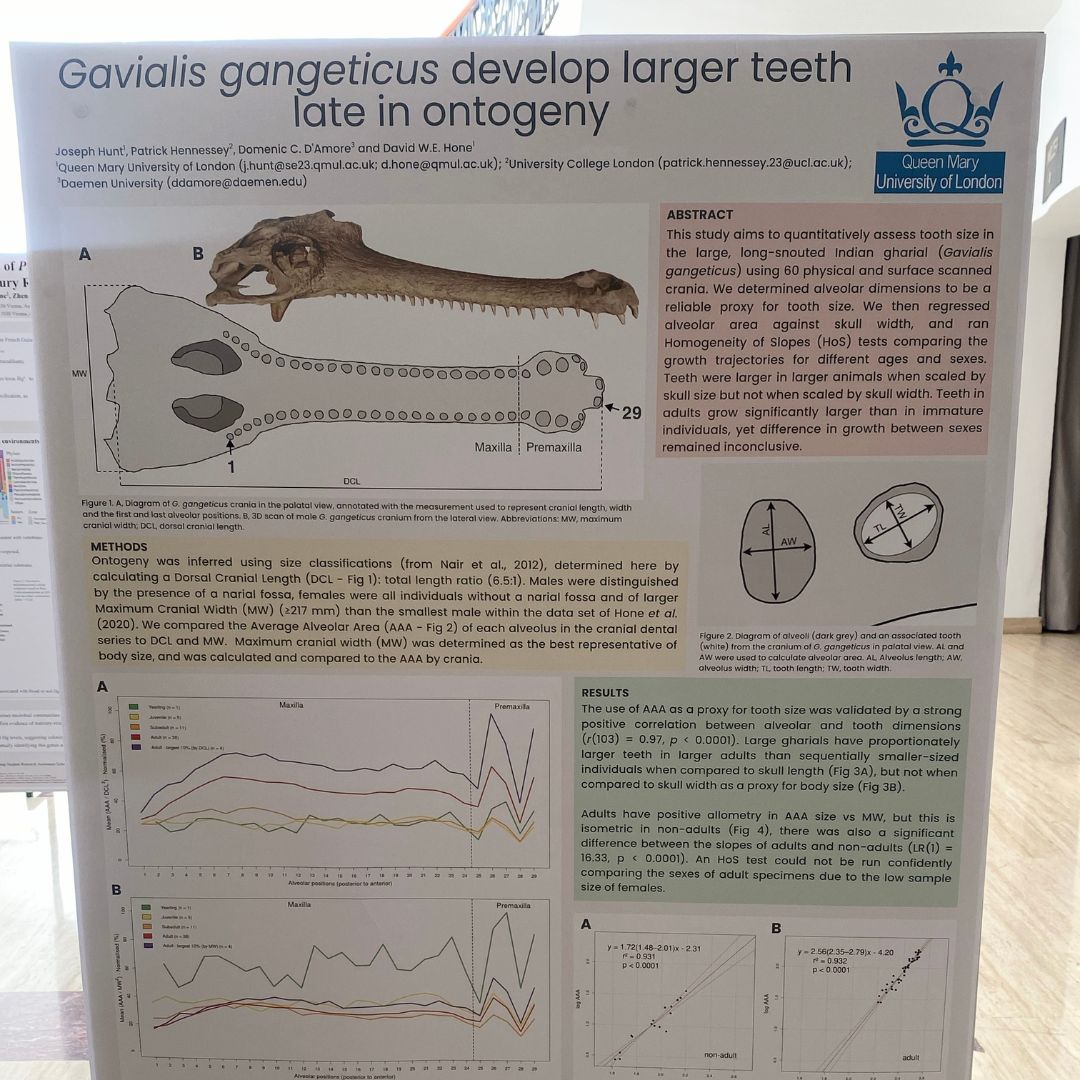
I found that gharial teeth grow disproportionately larger in adults than in non-adults. These larger, thicker teeth can likely both tolerate higher bite forces, resist stress and remain functional over longer periods on time, important as tooth replacement slows throughout adulthood in crocodilians. Furthermore, these changes in tooth size could facilitate dietary shifts, allowing for the capture and processing of tougher tissues or larger prey. These results are relevant to current gharial conservation, both to ensure that appropriate prey are present when assessing the suitability of ecosystems marked for reintroduction, or to support a natural population that includes large, high fitness individuals.
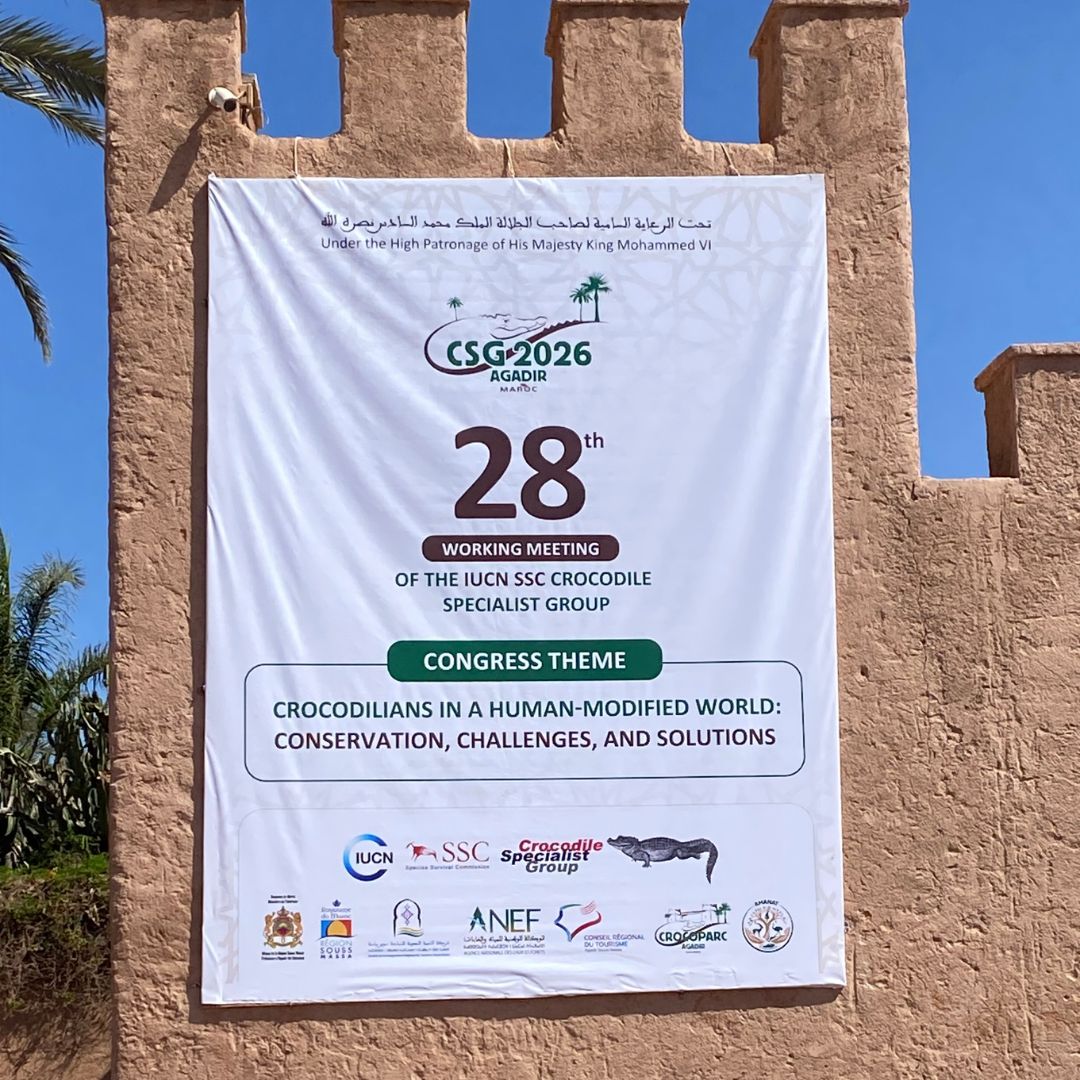
A really important step for me in understanding crocodilian ecology and conservation was attending the European Crocodile Network Meeting 2026 in Berlin. Encouraged by one of my project supervisors, I was fortunate enough to be gifted a free student ticket by the ECN and met a number of conservation, husbandry and ecology specialists. It was there that I was exposed to a number of postgraduate presentations and was interested in getting some formal dissemination experience of my own.
During the final stages of my dissertation write-up, I learnt that the Crocodile Specialist Group was holding its 28th meeting in Agadir, Morocco. Eager to share my research, I worked alongside my supervisors to produce a short abstract and poster that summarised the key points and results of my research. Through my dissertation module, I had some experience presenting my work, so understanding how to build a flow between each concept and section was straightforward.
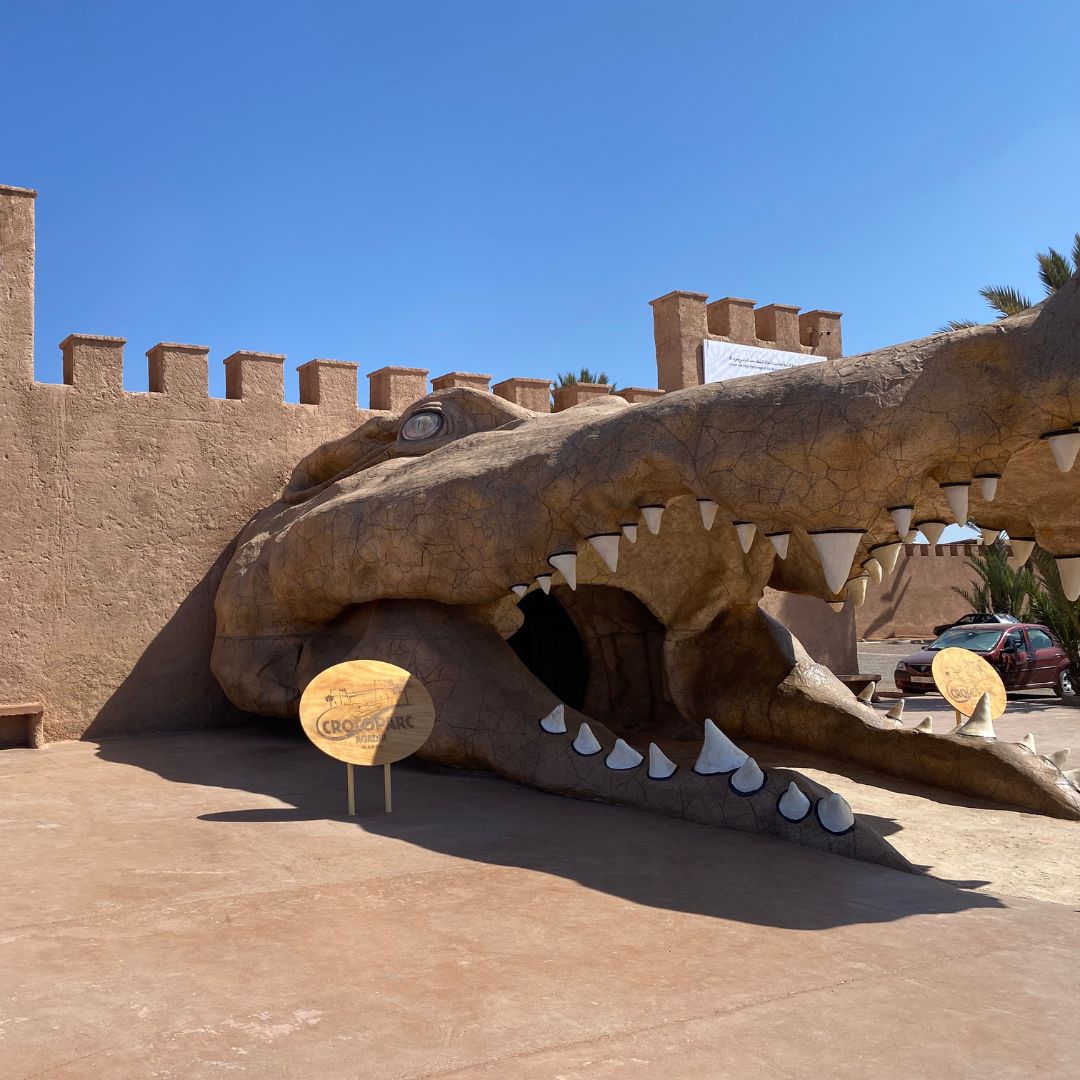
The meeting was hosted at Sofitel Agadir, and interesting talks and workshops were bookended by famous Moroccan mint tea, cake and lunch buffets, and excursion dinners to local restaurants with musical entertainment. The two workshops that really caught my attention were on updating the IUCN Red List, which classifies extinction risk for different species and the taxonomy meeting, where the validity or possibility of naming new species was discussed (definitely some interesting work coming over the next few years!). I even had time to visit the local Croco Park, which keeps hundreds of crocodiles (with a zipline over their enclosure) and has some amazing arid and aquatic gardens. On the final day I came to present during the cocktail poster session, and it was incredibly rewarding being able to talk about how these results correlate with real-world observations of gharial ecology with experts in the field. Coming away from the experience, I have definitely developed my presenting skills and made friends across the community, from crocodile farmers and population geneticists, to vertebrate palaeontologists.
Joseph Hunt, BSc Zoology