
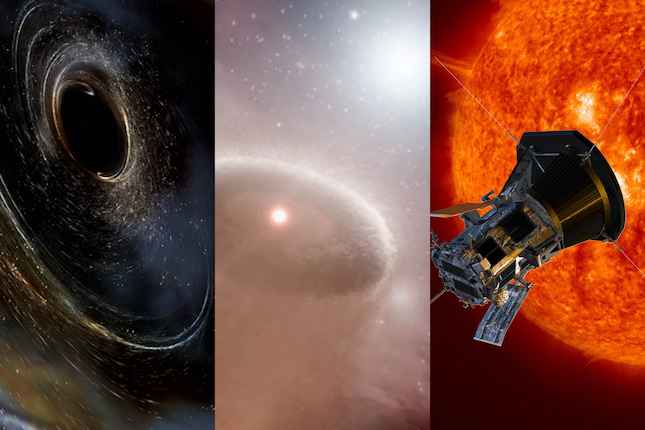
 The QMUL Astronomy Unit offers postgraduate research opportunities across a wide range of areas of Astronomy and Astrophysics, leading to the degrees of PhD and MPhil. The Astronomy Unit has a large and thriving community of postgraduate research students, numbering about 20 at any one time.
Eligibility: The normal minimum entry requirement is an upper second class honours degree in Physics, Astronomy or Astrophysics, Mathematics, or in a subject with substantial physics and/or mathematics content. Candidates with alternative qualifications or an appropriate level of research experience gained in the workplace may also be accepted, subject to College approval. See Applications and Eligibility for further details about the application procedure and criteria used to select candidates.
Application deadlines: To be considered for an STFC or China Scholarship Council studentship applications should be submitted by 28th January 2026 for entry in the following academic year. Applications made after that date may still be considered for studentships depending on availability. Other studentship opportunities sometimes arise at other times of year, and will be advertised on this web site.
Research projects: Projects are offered across a wide range of areas of Astronomy and Astrophysics covering the major research activities within the Astronomy Unit. See our list of research projects below for more details.
About our PhD programme: Research students in the Astronomy Unit PhD programme are assigned a supervisor who has closely related interests, and with whom they agree a programme of study and research. That programme includes advanced courses provided as part of the Astronomy Unit's MSc in Astrophysics. Advanced courses at other University of London colleges may also be taken. The University and the Astronomy Unit provides opportunities for acquiring skills through short courses, and students will be encouraged to attend international conferences to present the results of their research. Students will also have the opportunity to gain experience in teaching, for example, leading tutorial classes and laboratory demonstrating for undergraduate students, and involvement in project supervision for MSc students, while at the same time supplementing their income.
See below for a list of staff who may be available to supervise new PhD students, and a list of possible research projects (note that the project list is not exhaustive, and other topics are also possible). All of our staff welcome enquiries about their specific research interests and PhD projects, and we recommend contacting potential supervisors in advance of your application. For more general enquiries please contact the PhD admissions tutor, Dr Timothy Clifton.