
Digital Learning with CARE: Co-creating digital futures in the age of AI
/filters:format(webp)/prod01/channel_387/digital-education-studio-/media/digital-education-studio/images/banners/Digital-Learning-with-CARE-Symposium-Banner3.png)
Digital Learning with CARE:
Co-creating digital futures in the age of AI
Date: 31 March 2026 (Tue)
Time: 9am to 2pm
Venue: Old Library, Garrod Building, Turner St, London E1 2AD
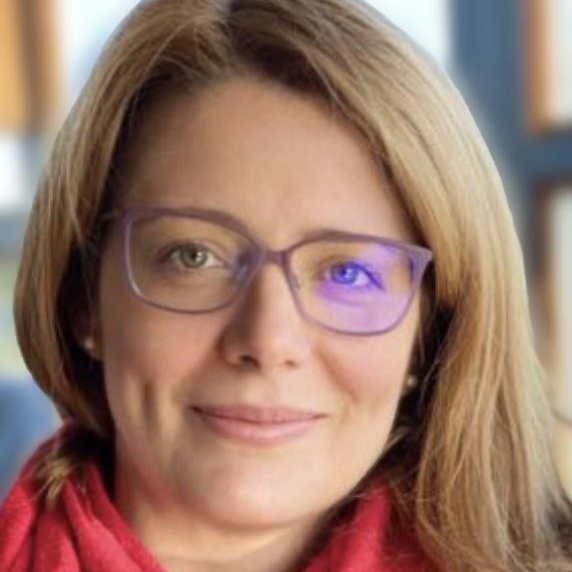
Prof. Lorainne Tudor CarKeynote:
Prof. Lorainne Tudor Car is Professor of Digital Health and Health Data Science and Principal Medical Research Scientist in the EMBRACE programme at King’s College London. A medical doctor with academic training in public health and health economics, she has held roles at Imperial College London, NTU Singapore, and Harvard T.H. Chan School of Public Health, and has worked with the World Health Organization and Ministries of Health. Her research spans digital health professions education and digital health interventions, with particular interests in conversational agents, generative AI and VR. She has co-led a large programme of evidence syntheses on digital education, informing the development of the WHO Academy and guidelines, and has published over 140 peer-reviewed articles with 80,000+ citations. She serves on the editorial boards of JMIR Medical Education and BMJ Evidence-Based Medicine and has designed and delivered innovative digital education for healthcare professionals and medical students.
Overview
Higher education is in a period of rapid change. Students are navigating the cost-of-living crisis, staff are working through shifts in attendance and engagement, and generative AI is prompting all of us to rethink familiar approaches to teaching, learning, and assessment. But alongside the disruption sits opportunity: new tools, new practices, and new ways of working that can strengthen learning if we shape them intentionally. What worked before may no longer be enough—and there are no templated or out-of-the-box solutions. The only sustainable way forward is to find them together.
This symposium brings together educators, students, learning designers, and sector partners to explore how co-creation drives high-quality digital learning across health and medical education. Grounded in the lens of the Digital Education Studio’s CARE principles—Co-creation, Active and Authentic learning, Relational practice, and Evidence-based design—the event showcases how collaborative approaches are already improving learning experiences within and beyond Queen Mary and invites attendees to interrogate how successful practices can be scaled across programmes and institutions.
For colleagues in higher education, teaching, healthcare education and clinical training and digital learning, this symposium offers a focused space to share expertise, build cross-institutional connections, and explore how co-designed practice can advance the future of digital learning in a changing sector.
Agenda
MC: Jorge Freire, Senior Learning Designer (FMD, QMUL)
Time |
Session(s) |
Speaker(s) |
|---|---|---|
09:00- 09:15 |
Welcome & Opening Remarks |
Prof. Chie Adachi, Dean for Digital Education, Faculty of Medicine & Dentistry (FMD), QMUL |
09:15- 09:45 |
Keynote: |
Prof. Lorainne Tudor Car MD PhD MSc (LSE), Professor of Digital Health, King’s College London |
09:45- 10:30 |
Student–staff panel: What co-creation looks like |
Facilitator: Tom Hinks, Senior Learning Designer (FMD, QMUL) Students: Aisha Ashraf, Rachel Nelan, Rahma Hegy, Vandy Widyalankara Staff: Prof. Andrejs Braun, Dr Annie Noble Denny, Dr Vanessa Muirhead and Elise Gasser |
10:30- 10:35 |
Introduction of Showcase |
|
10:35- 10:50 |
Showcase 1: Designing the CARE Agenda |
Dr Jo Elliott, Reader in Learning Design (FMD, QMUL) |
10:55- 11:10 |
Showcase 2: Enhancing digital assessment and student success: Cadmus pilot |
Dr Joanna Riddoch-Contreras, PhD, Reader in Neuroscience Education, Deputy Dean of Education: Undergraduate science studies (FMD, QMUL) and Violet Chan, Digital Learning Manager (FMD, QMUL) |
11:15- 11:30 |
Showcase 3: Student-led co-creation: Onboarding students through co-created guidance |
Vandy Widyalankara and Archisha Manchanda (Technology Enhanced Learning Team (TELT) Student Partners) |
11:35- 11:50 |
Showcase 4: Higher Order Prompting: A Pedagogic Toolkit for Critical AI Literacy |
Karen Hudson, Innovation & Learning Manager (QMA AI Excellence Centre, QMUL) and Jonathan Jackson, IoT Lead, Senior Lecturer in Software Engineering and Management (QMUL) |
11:55-12:10 |
Tea/ Coffee Break |
|
12:10-12:20 |
Introduction of world café sessions |
|
12:20-13:20 |
World Café Session |
|
World Café 1: |
Gian Paulo Canale, E-Learning Technology Officer, Giles Barber, Interactive Web Designer, Michele Dessi, E-learning and Media Manager and Victoria Burns, Multimedia Producer (FMD, QMUL) |
|
World Café 2: |
Dr Joanna Riddoch-Contreras, Violet Chan, Mia Bella Galea and Cadmus representatives |
|
World Café 3: |
John Seamons, Learning Technologist (TELT, QMUL), Vandy Widyalankara and Archisha Manchanda |
|
World Café 4: |
Dr Sushma Saksena, Deputy Director MBBS (FMD, QMUL), Paula Funnell, Academic Skills and Liaison Librarian (FMD, QMUL), Karen Hudson and Joshua Eric Soane |
|
13:20- 13:30 |
Closing remarks |
Prof. Chie Adachi |
Till 14:30 |
Lunch & Networking |
|