/filters:format(webp)/prod01/channel_262/queen-mary-university-of-london/media/hss/aao-600.png)
“We wanted to understand how autistic people themselves interact online, rather than assuming that they might be different or poor communicators.”— Professor Nelya Koteyko
Designing digital spaces for everyone
Digital platforms increasingly determine how we communicate, work, learn and access essential services. Yet many remain inaccessible to autistic adults.
When platforms are not designed with neurodiversity in mind, they can unintentionally exclude autistic users. Sensory overload, confusing layouts and unclear social expectations can turn everyday online tasks into stressful experiences and make digital spaces overwhelming.
Led by Professor Nelya Koteyko at Queen Mary University of London, and in collaboration with autistic people, the Autistic Adults Online project was created to address and overcome this problem.
/filters:format(webp)/prod01/channel_262/queen-mary-university-of-london/media/qmul/homepage/hero-campaign/Clearing-Whitechapel.jpg)
Understanding online experience
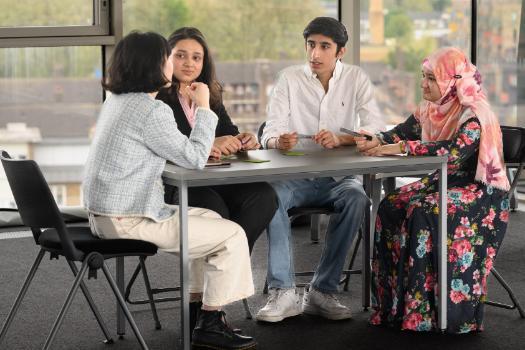
The Autistic Adults Online project used a participatory research approach, which was based on a partnership between autistic adults and their allies and academic researchers. By working directly with autistic adults the project ensured autistic perspectives did not just inform the research but shaped it.
Queen Mary researchers analysed social media posts and interviewed autistic users to understand how they communicate online, identifying the social media features that matter most to them, what kinds of things they usually do or say online and why, and how behaviours like masking show up in digital spaces.
This work informed the structure for a series of workshops that were co-designed by autistic adults, Professor Koteyko and other researchers. In them, autistic participants evaluated existing social media platforms and designed features they would prefer. Analysis of these workshops identified key challenges, coping strategies, and ways social media could be improved to better support autistic users’ digital media needs.
“For me, I think it's important for researchers and designers to realise that autistic people's communication isn't broken or lacking, it's just different.”— Jack Welch Contributor, Autistic Adults Online Project
Built in, not added on
Overall, the project showed that online accessibility is not a niche issue, but one that directly impacts people’s right to participate fully in society.
To overcome this issue, those creating online digital spaces must remember that accessibility must be built in, not added later. This can be achieved by co-designing these spaces with autistic people, which is essential for creating fair, usable and inclusive digital spaces.