/filters:format(webp)/prod01/channel_262/queen-mary-university-of-london/media/hss/Coastal_Landfill_001.png)
Shaping future landfill policy
"We have over 1,200 historic coastal landfills in the UK at risk of flooding and erosion."
Climate change unearths hidden waste
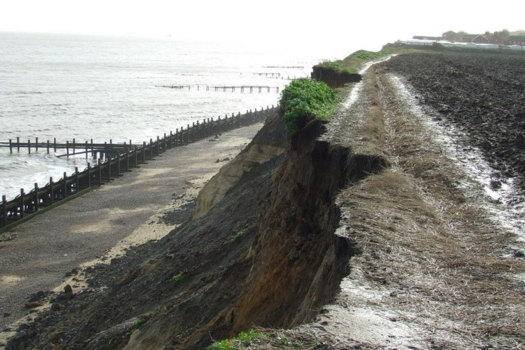
Across the UK over 1,200 historic coastal landfill sites, which pre-date current stringent environmental regulations, sit on the frontline of climate change. Rising sea levels, flooding and coastal erosion are unearthing these old landfills, increasing the risk of pollutants such as asbestos, plastics, PFAS(Per- and polyfluoroalkyl substances) and heavy metals being released into our seas and communities.
Research in action
Kate Spencer, Professor of Environmental Geochemistry at Queen Mary University of London, is leading research to understand and reduce the risks historic landfills pose to the environment and people’s health.
Through the Resilience of Anthropocene Coasts and Communities (ResAnth) project, which is backed by £2.9 million in funding from UK Research and Innovation (UKRI) and the Department for Environment, Food and Rural Affairs (DEFRA), Professor Spencer and her team are working with the Environment Agency and university partners in Glasgow, Bradford, Sunderland and King’s College London, to build an evidence base for future coastal resilience.
Our legacy waste is an intergenerational problem. We need to look ahead to help future generations come up with solutions and make sure we don’t keep making the same mistakes.”— Professor Kate Spencer
Through field studies, data modelling and community engagement, the project identifies the landfill sites most at risk or being unearthed due to climate change. The team assesses their potential impact of these sites on ecosystems and human health, and helps local authorities prioritise interventions and develop policies for managing them.
/filters:format(webp)/prod01/channel_262/queen-mary-university-of-london/media/qmul/homepage/hero-campaign/Clearing-Whitechapel.jpg)
Protecting future generations
The work of Professor Spencer and her team is already having a positive impact. Their research has informed DEFRA and Environment Agency guidance, shaped shoreline management plans, and appeared in national conversations about pollution and resilience — including BBC Panorama, and BBC Morning Live.
This research is not just about waste or coastlines, it’s about protecting the communities who live there and ensuring policy keeps pace with the realities of climate change.”— Professor Kate Spencer
But at its core, the research is about people. Many of these coastal landfill sites are located near communities already facing social and economic deprivation. By developing inclusive, evidence-based strategies and policies to limit the impact of waste leaked from exposed historic landfills, Professor Spencer and her team are protecting future generations, helping to ensure that no community is left behind as the climate crisis accelerates.
/filters:format(webp)/prod01/channel_262/queen-mary-university-of-london/media/hss/Coast_001.png)