
Training
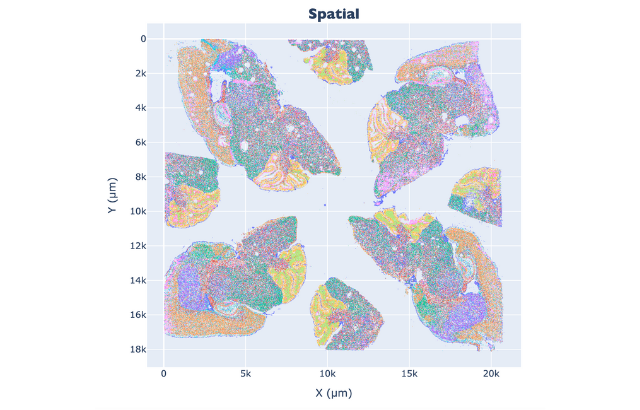 Our PhD student training is underpinned by the diversity of our team at Queen Mary University of London (QMUL), and partner organisations. Our world-leading expertise in the development of novel AI methods for biology includes advanced graph neural network models for spatial relationships (e.g. unique deep-learning approaches for multimodal fusion of imaging and omics data), and explainable AI methods to provide interpretability, and techniques to handle terabyte scale images with weak labels. Robust AI requires data at scale, and our numerous active SIT projects continue to generate terabytes of spatial data. These cutting-edge data and our novel methodologies directly feed into the training programme, ensuring students are exposed to emerging approaches and mentored by leaders in the field, provided with a theme which creates a genuine and interactive cohort.
This will be coupled with each student’s own learning needs analysis and design of a bespoke training plan to support their development as a scientist and future research leader.
The programme is delivered through a cohort-based training model, with groups of nine PhD students joining each year and progressing together through shared training, events, and milestones. Although students work on distinct research projects, they are united by the common challenge of analysing large-scale, multi-modal spatial biology data, creating a strong culture of collaboration, peer learning, and interdisciplinary exchange.
Training in Responsible Research and Innovation (RRI) is embedded throughout the programme, ensuring students develop AI methods that are not only technically advanced but also ethical, transparent, and trustworthy. Co-delivered with experts from Queen Mary University of London and The Alan Turing Institute, this training covers responsible and explainable AI, data governance, research integrity, reproducibility, and FAIR data practices, equipping students to understand and address the broader societal impacts of AI in bioscience.
A core goal of the DFA is to prepare students to succeed in both academic and non-academic sectors after they complete their PhDs. To achieve this the DFA will support skill development, including training on FAIR data and metadata management, careers development and communication. It will also equip students with real-life entrepreneurial knowledge, skills and business mindset, with a focus on translating innovations in AI into commercial and real-world applications, including development and application of AI tools for biology.